
Northwest China
Destinations / Northwest China
Shaanxi.
A strip of country 878 kilometres long, crossing three climates: the loess plateau in the north, the plain of the old capitals in the middle, and a green river valley in the south that drains to the Yangtze. One range in the middle decides which of the three you are standing in.
3,771.2 m on the roof of the Qinling and 168.6 m where the Han River leaves the province — 3,600 metres of relief, and three farming systems
01 / Read the province
Three belts on one strip of map.
Shaanxi is long and narrow, and the Qinling runs straight across the middle of it. North of the range is loess, wheat and cave houses; south of it is rice, tea and rain. The plain between the two is where the capitals were, and everything in this guide hangs off it.
- 01
Xi’an
The hinge · 13.74 km of wall
- 02
The Terracotta Army
The pits · 1974
- 03
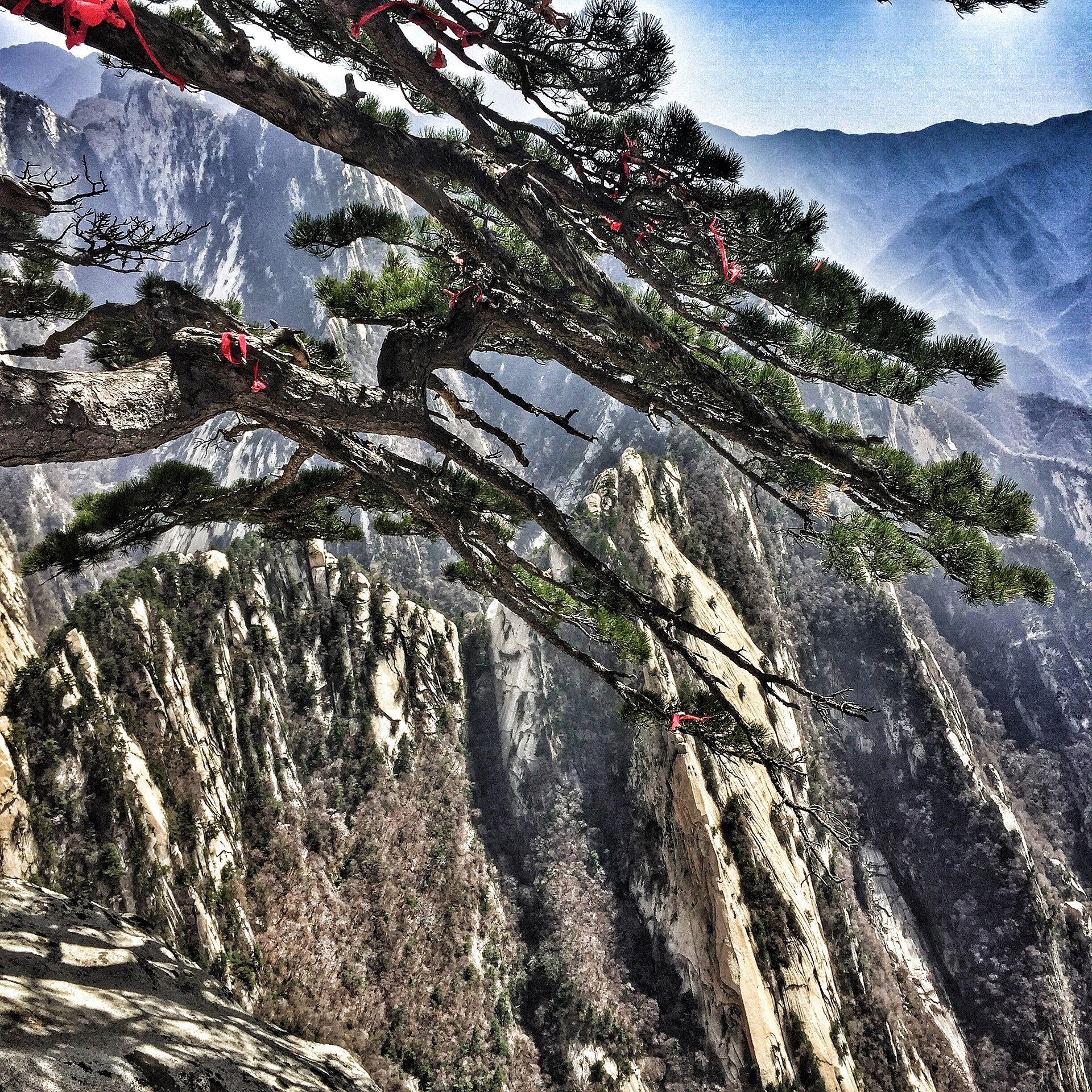
Huashan
The granite · 2,154.9 m
- 04
The Qinling
The divide · 3,771.2 m
- 05
Hukou
The river · 50 m wide
- 06
Hanzhong
The south · seven ibis
The plain is the hub: Xi’an to Huayin is 30 minutes by rail, to Yan’an two hours, and to Hanzhong ninety minutes through the tunnels under the Qinling. What used to be a two-day crossing is now a morning, which is why the province can be done in one trip at all — and why five days is enough for one side of it and not both.
What to see where ↓02 / Choose a landscape
Granite, clay and silt.
Three materials, three histories: a block of granite that became a sacred mountain, an army of fired clay buried beside an emperor, and a river carrying a plateau to the sea.
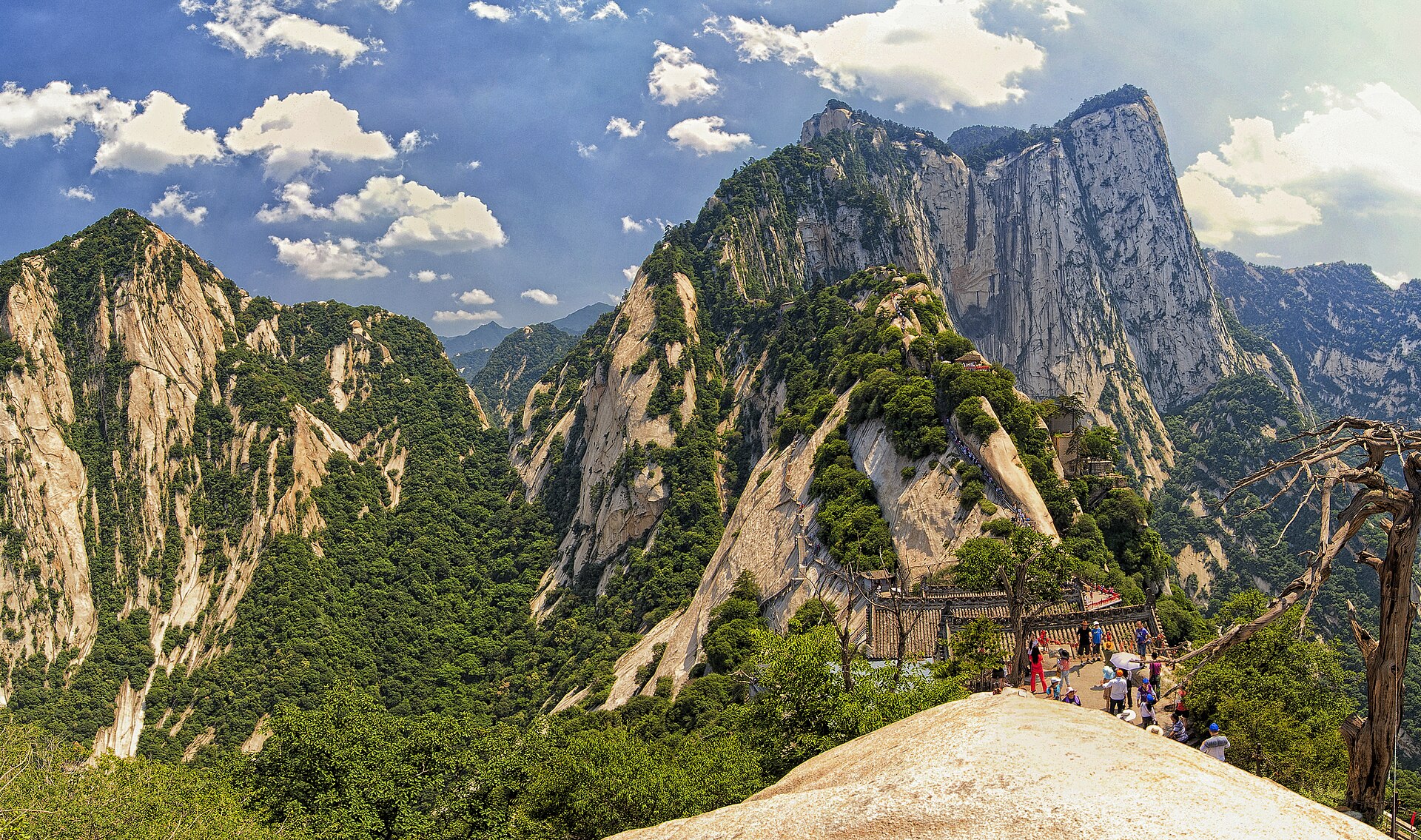
The granite
One intrusive block, 120 million years old, lifted along faults and cut into five summits. The highest is 2,154.9 metres — the roof of the five sacred mountains — with a plank walk bolted to the south face and 1,750 metres of stone stairs below it.
Up the five peaks ↗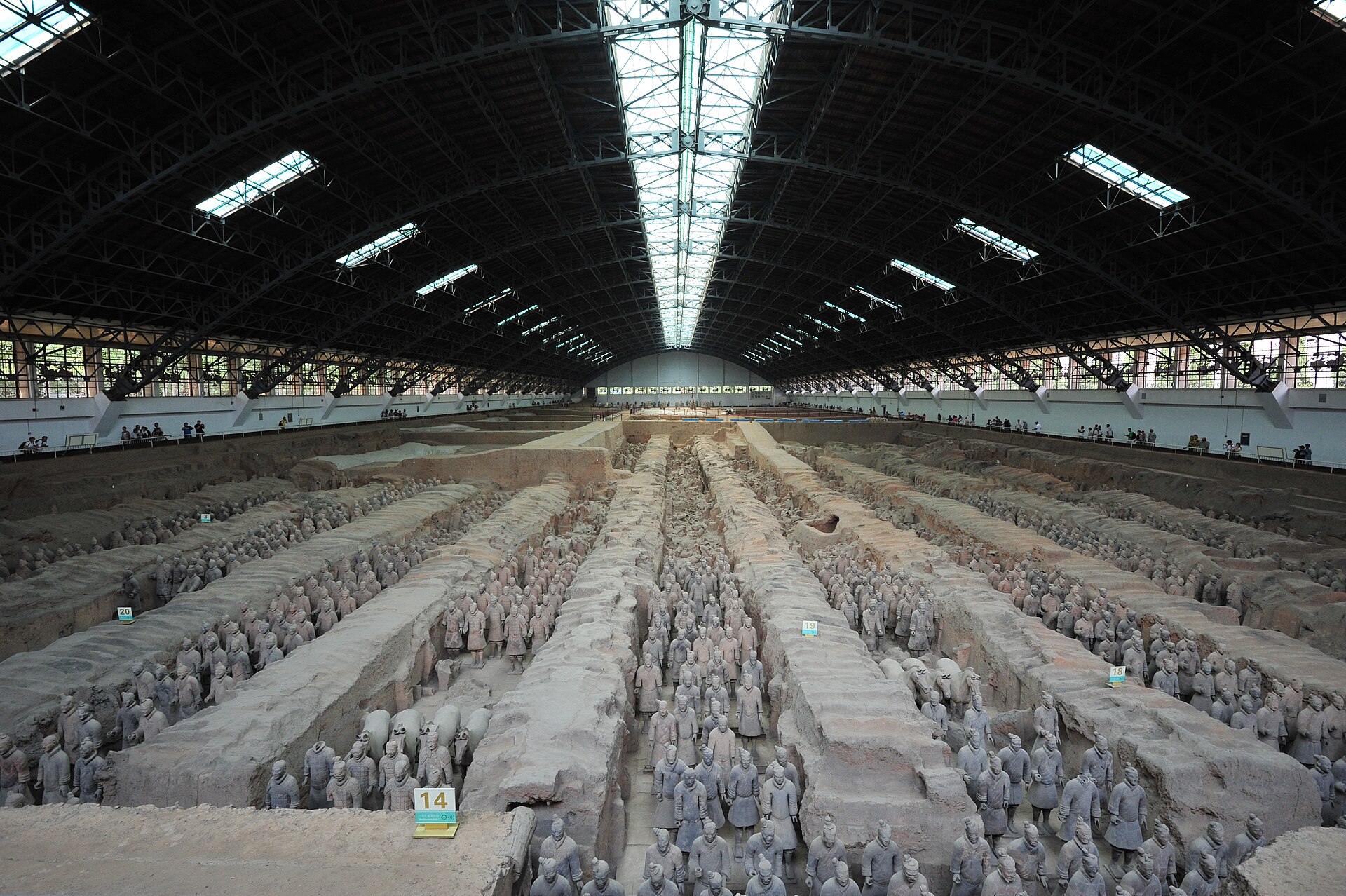
The clay
Six thousand life-size figures in battle order, painted once and buried for 2,200 years, in a pit 230 metres long beside the unopened tomb of the first emperor. Found in March 1974 by farmers digging a well.
Into the pits ↗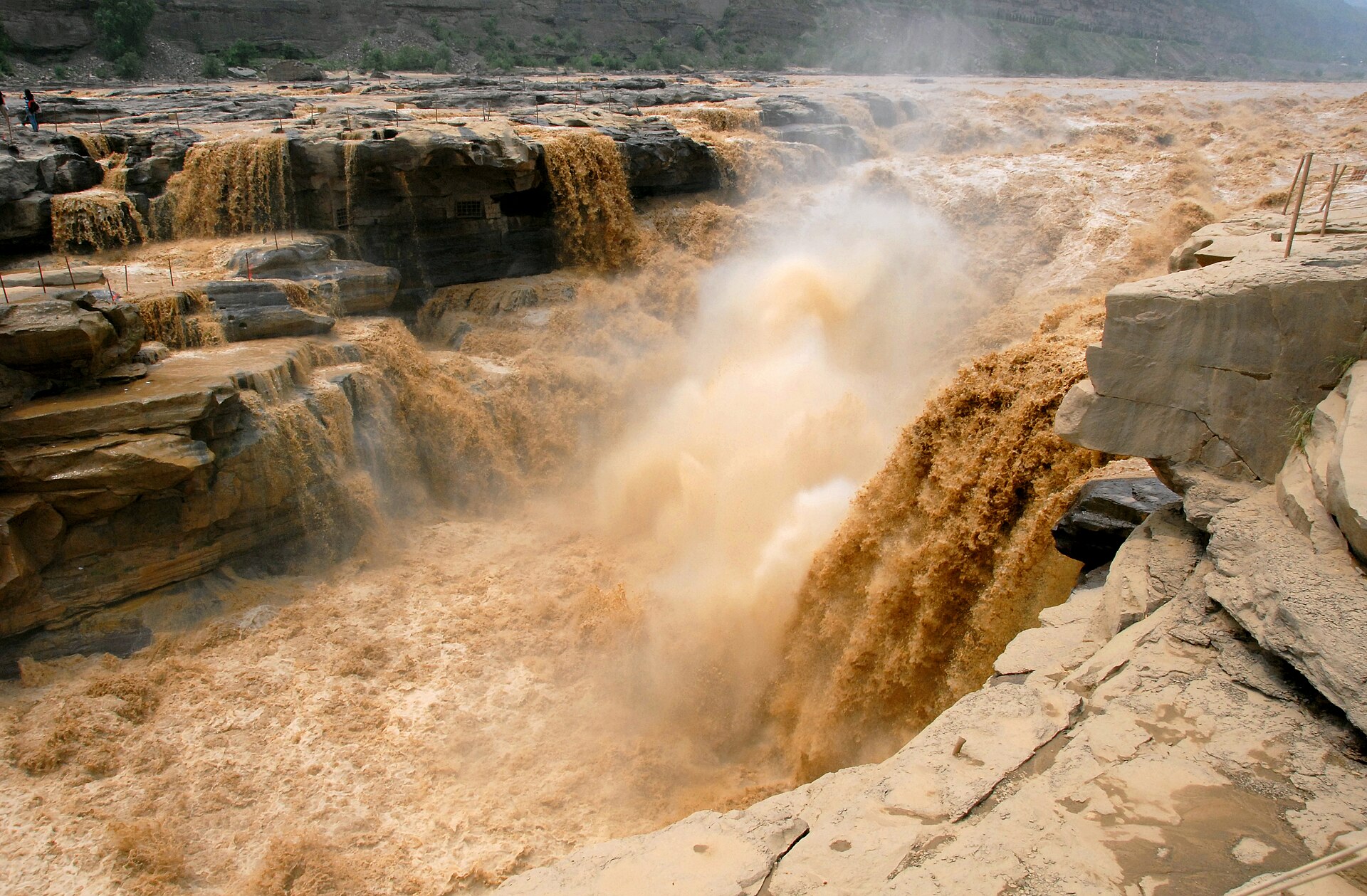
The silt
The Yellow River arrives 300 metres wide and leaves through a channel 50 metres across, thirty metres lower. Every grain of that water is loess from the north of this province and the provinces above it, on its way to the plain.
To the mouth of the pot ↗03 / Pick your month
Three springs, six weeks apart.
Shaanxi is a strip, and the season moves up it. The Han basin in the south greens in March while the loess is still brown; the plain is hot and hazy in July while the Qinling is ten degrees cooler; and October is the one month that works everywhere at once.
Open month Cold, closed or limited Best window
April – June · The dry window
The plain warms first, the Qinling foothills green up in April, and Huashan is at its most stable underfoot. May is the best month for the mountains; the first week of it is a national holiday.
July – August · The monsoon
Hot and humid on the plain, with afternoon storms on the ridges. The Yellow River is at its widest and loudest, the Qinling trails are green and slippery, and the mountains are where everyone goes.
September – November · Clear and dry
The haze lifts, the light improves, and the loess turns. October is the best month in the province; avoid its first week, and take the last two.
04 / Stay curious
Four capitals in fifty kilometres.
The plain around modern Xi’an has been the seat of government for four separate worlds — and each one left a different kind of monument, which is why the province reads as layers rather than as a single tradition.
- 01
The Zhou and the Qin, before the city
The Zhou capitals stood on the Wei at Feng and Hao, and the Qin built Xianyang on the north bank. The first emperor’s tomb and its army lie east of both, and the mound is still unopened: the histories describe mercury rivers under a ceiling of pearls, and the soil survey found the mercury.
- 02
Chang’an, 84 square kilometres
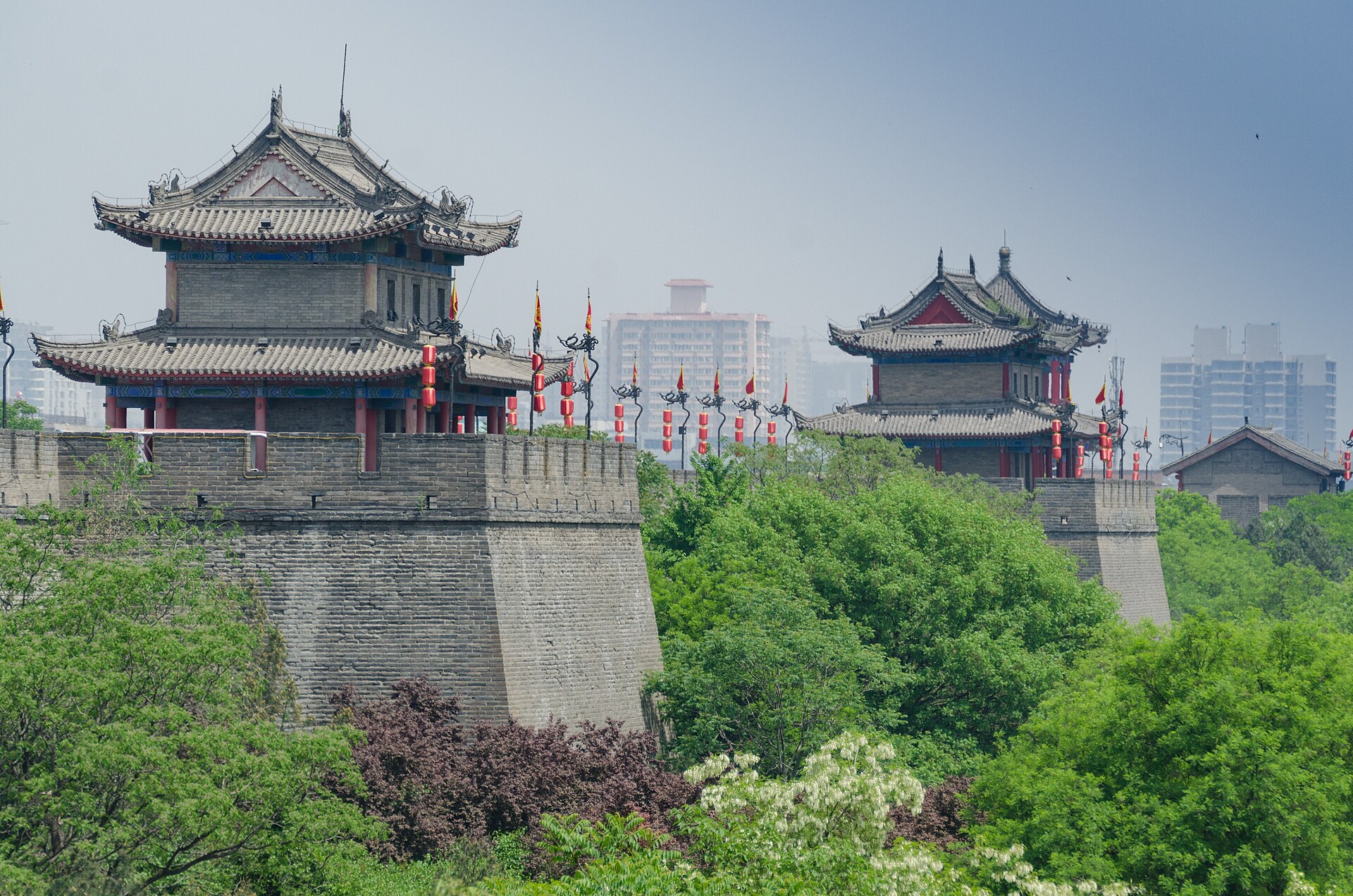
The Tang capital was the largest city in the world, with a grid of 108 walled wards and about a million people. The Ming wall you can ride round today encloses only the Tang imperial city, which is why 13.74 kilometres of rampart feels small against the name.
- 03
The pits, 1974
A farmer’s well at Xiyang hit fired clay in March 1974. What followed was the largest piece of archaeological excavation in the country: a battle formation of 6,000 figures, painted once, buried for 2,200 years, and now kept under a hangar that is itself an exhibit.
05 / Go deeper
Six shapes, no fixed departure.
Shaanxi has no scheduled trip yet. What we build instead is one of six shapes: the Guanzhong core, the Huashan add-on, the two together, the Qinling traverse, the northern loop, or the full crossing from the loess to the Han valley.
The rule that makes them work is to pick a side of the Qinling. The plain and the loess are one system, joined by fast rail; the Han valley is another, and the tunnel between them is a morning rather than a border. Six days that tries to do both ends up in the car.
All the Shaanxi route shapes
Comparison · six shapes, two to nine days
The Guanzhong core
Region guide · the wall, the pits and the museums
The mountain
Region guide · five peaks and a night on top
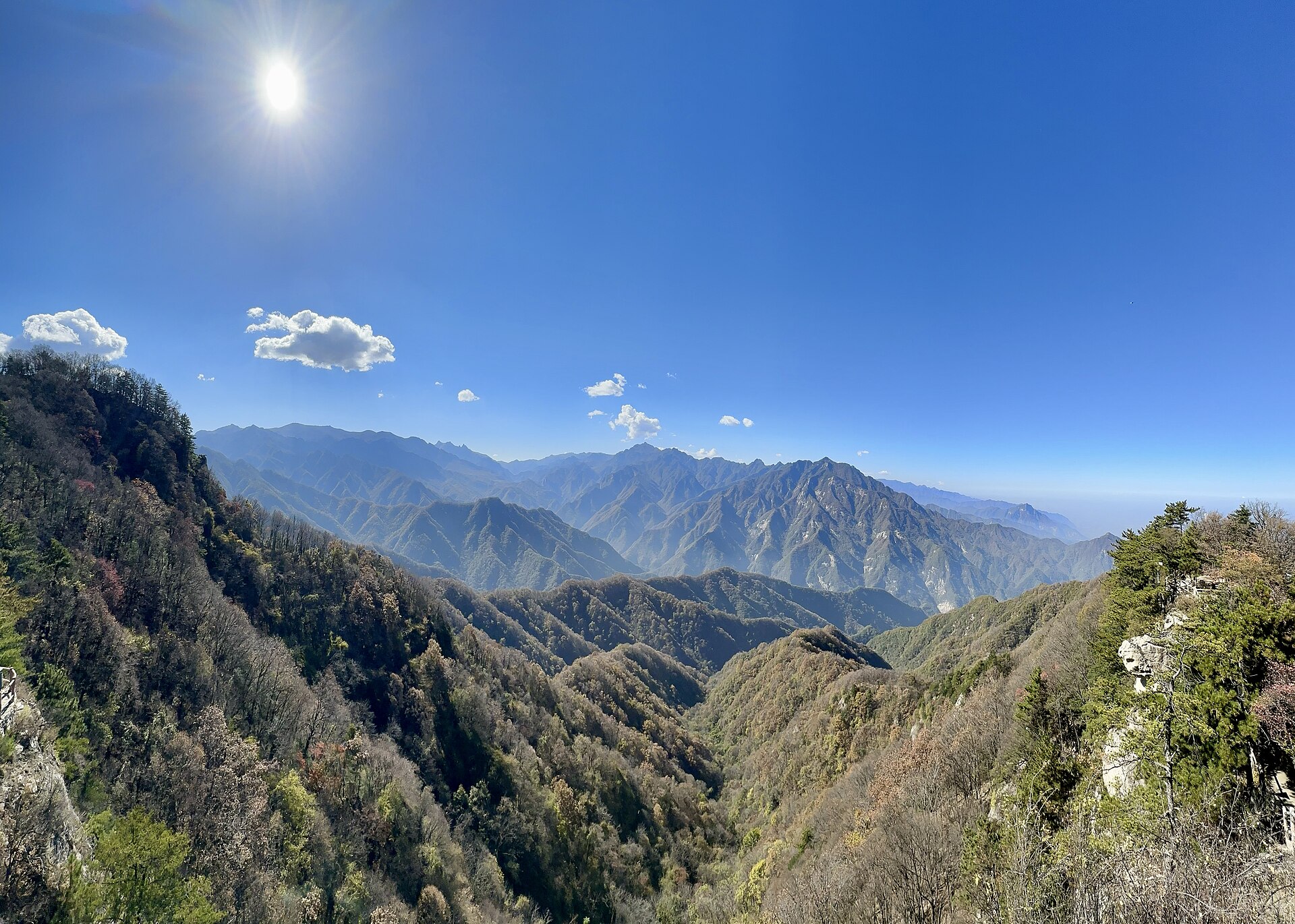
The divide
Region guide · Taibai, the lakes and the old roads
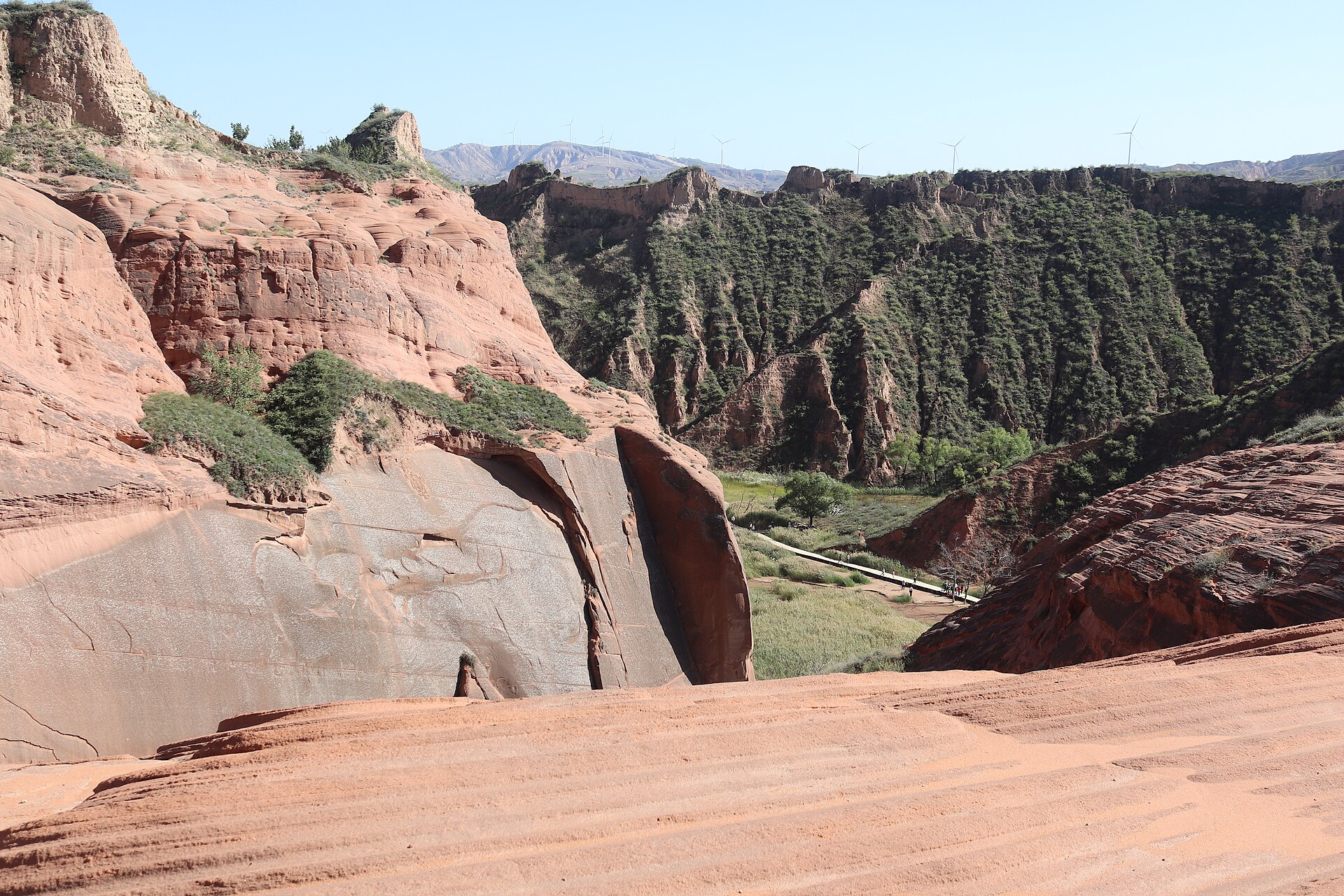
The north
Region guide · the loess, the wall and the white city
06 / Before you go
The useful details.
Shaanxi rewards a route that respects the Qinling line, and punishes one that treats the map as a distance.
Xi’an is the front door, and the hinge
The high-speed station runs to Huayin in 30 minutes, to Yan’an in two hours, and to Hanzhong in ninety minutes through the tunnels. Lintong is 40 minutes east. Almost every itinerary in this guide starts and ends inside the wall.
Nothing needs acclimatisation
The roof of the province is 3,771.2 metres, reached by cable car to 3,511 and then on foot. Huashan is 2,154.9 from a valley at 400. What replaces altitude here is stairs — 1,750 metres of them at Huashan, cut into granite and polished by feet.
Watch the holiday weeks
May Day, the first week of October and Spring Festival fill the cable cars, the pits and the wall. The Terracotta Army takes tens of thousands a day and needs a timed ticket in high season; Huashan’s west car can queue for 90 minutes by nine in the morning.
Keep exploring
Go one layer deeper.
07 / Common questions
The questions that come up first.
What travellers ask before a Shaanxi route takes shape.
01How many days does Shaanxi need?
Four for the plain and Huashan done properly, five for the northern loop, nine for the whole crossing. Two days is enough to see the wall and the pits and to understand why you should have allowed four.
02Is Xi’an the same as Shaanxi?
No. Xi’an is one city on the Guanzhong plain; Shaanxi is a province 878 kilometres long that also contains the loess plateau and a subtropical river valley. The confusion is worth getting past, because it changes what you pack.
03Do I need to be fit?
Not for altitude, yes for stairs. Huashan is 1,750 metres of ascent on stone steps, with a cable car that removes most of it; Taibai is a cable car to 3,511 and three hours on foot; the loess sites are flat. Every one of them has a shorter version.
04Is the Terracotta Army worth a whole day?
Half a day is enough for the pits and the mound, and it is the half-day most people remember. Go at opening, do Pit 1 first, and include the bronze chariots that everybody walks past.
05When is Huashan least crowded?
Weekdays in April, May, September and October, at the gate when it opens. Avoid the first week of May, the first week of October and the whole of August, when the queue for the west cable car is 90 minutes by nine.
06Can I see the crested ibis?
Yes, at Yangxian in the Han basin, with a guide and at the right time of day — breeding sites in March and April, winter roosts from December. The reserve is working conservation, not a zoo, and the birds are wild.
07Is the north worth the distance?
Yes, if you like landscapes more than monuments. The loess, Hukou, the white walls of Tongwancheng and the red rock of the wave valley are unlike anything else in the province, and five days covers them.
08What is the best month?
October, then May, then late April. October has the clearest air and the best light on both the granite and the loess; May has the most comfortable temperatures for the stairs. March is the month for the rapeseed in Hanzhong.
Something not covered here? See how a private route is put together ↗ or send us your question ↗
Your Shaanxi.
Tell us whether the mountain or the plateau matters more, and whether you want the south side of the divide. Those two answers decide the shape, and the province is compact enough that the rest follows.
Start my journey brief