Yangxian and the ibis
The valley where the species was rediscovered, with a reserve, a breeding centre and winter roosts that can be visited with a guide. The most important conservation site in the province.
 Start your enquiry
Destinations / Shaanxi / Hanzhong
South of the divide, in a basin on the Han River: rice, tea and citrus, a walled town that thinks it is in the south, seven birds that saved a species, and a road cut into the Qinling cliffs.
Explore the guide ↓Southwestern Shaanxi · the Han valley
The Han River rises in the mountains west of Hanzhong and runs east across a basin about 100 kilometres long and 20 to 30 wide, at roughly 500 metres. Everything about the place reads south: rice paddies instead of wheat, tea on the slopes, citrus in the yards, and a wet, warm climate that comes from the same monsoon the Qinling blocks from reaching the north.
Historically this was the end of the road. The only ways in from the Guanzhong plain were the plank roads through the Qinling passes — timber galleries bolted to the cliff above the Bao and Shimen rivers, some of which are still visible and walkable — and the whole point of holding Hanzhong was to hold the road. The Han dynasty was founded from here, and the name of the dynasty is the name of the river.
The modern reason to come is a bird. In May 1981 a survey team found seven wild crested ibis in a valley at Yangxian, north of the basin: four adults and three chicks, the last wild population on earth. A county-wide ban on pesticide and logging followed, protection stations were built, and the species went from seven to more than seven thousand in Shaanxi alone. The valley is still there, the birds are still there, and the rice is still grown the way the birds need it.
A bird valley, a set of stone gates, and the old roads.
The valley where the species was rediscovered, with a reserve, a breeding centre and winter roosts that can be visited with a guide. The most important conservation site in the province.
A section of the old Baoye plank road cut through the cliff above the river, with the stone gate that gives it its name and a museum of the inscriptions that were cut into it.
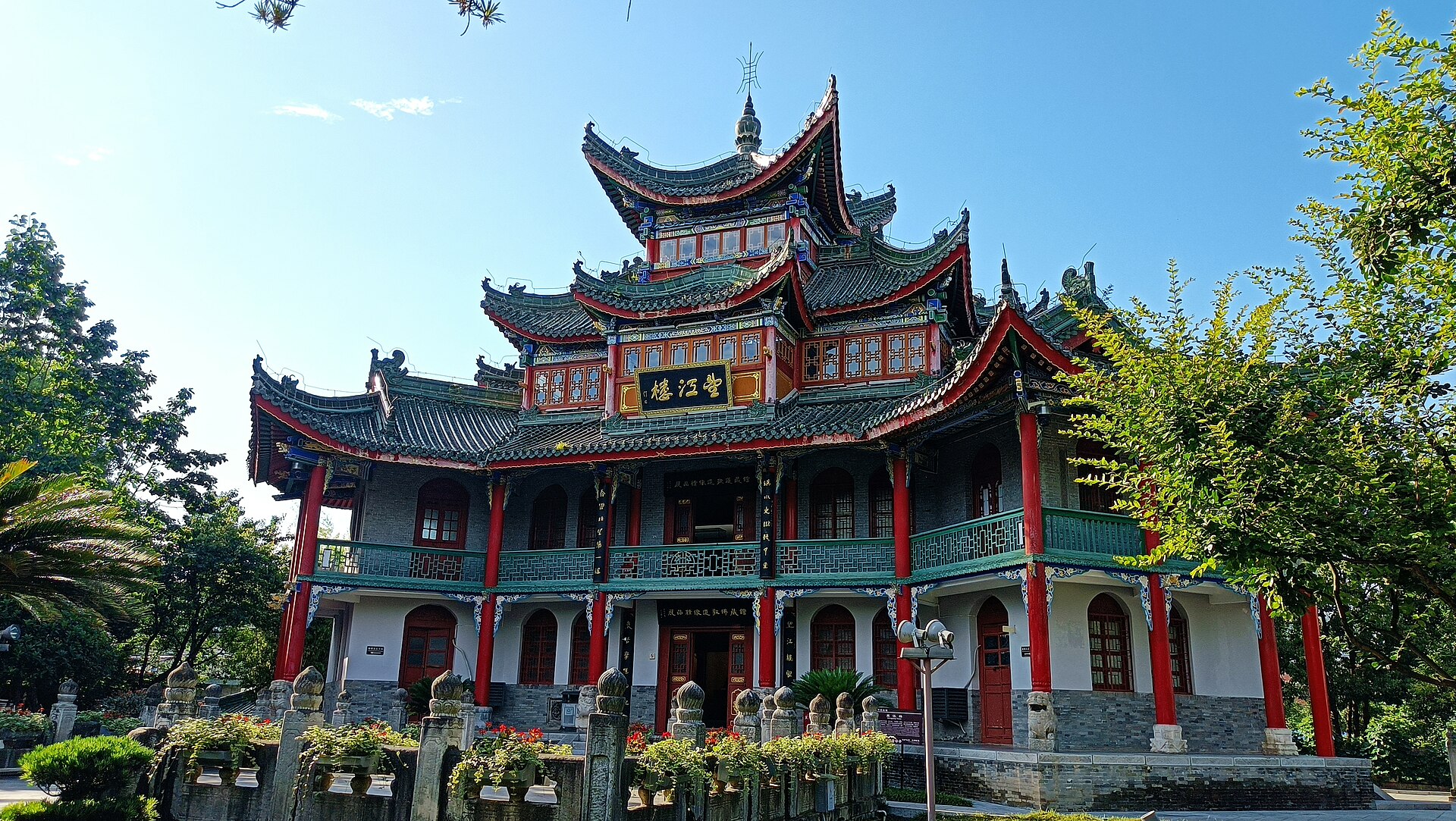
The terrace that Liu Bang used as his base before he went north to found the Han dynasty, now the city museum, with the Wangjiang tower and the stone inscriptions of the Shimen gallery.
The fields around Hanzhong turn yellow in the second half of March, and the villages hold a festival for it. The best reason to time a visit to the south.
A river town of timber houses and stone lanes at the province’s western edge, on the old Sichuan road. Two hours from Hanzhong and a world away from it.
The river that gives the dynasty its name, running clear between poplar banks. The riverside park in Hanzhong is where the city walks in the evening.
Two windows: the rapeseed, and the autumn.
Rapeseed in flower across the basin, warm days, and the ibis at their nests. The busiest two weeks of the Hanzhong year.
Green and wet, with the rice planted and the valley at its most workmanlike. Few visitors and the best light on the fields.
Rice harvest, clear air, and the hills turning. The most comfortable months and the best time for the old roads.
Cool but rarely freezing, with the basin grey and quiet. The ibis are easiest to see at the winter roosts, which is the argument for coming now.
One night in the city, one in the valley.
Ninety minutes from Xi’an by high-speed rail through the Qinling tunnels — the crossing that used to take two days by plank road.
The Hantai museum, the riverside and the food. Half a day, and the base for the valley and the cliff road.
Yangxian is an hour east. Stay a night there if you want the dawn roost and the reserve without a 5am drive.
West to Qingmuchuan and the Sichuan border, or north by the old road through the pass to Baoji. Both are half-day drives.
Why the food, the accent and the farming are different.
Liu Bang was made king of Han here in 206 BC and took the name north with him. The Han dynasty, the Han river, the Han people: one place name, three thousand years of use.
The plank galleries at Shimen and Baohe were the engineering that connected the basin to the north, and the inscriptions cut into the cliff there are among the most studied stones in Chinese calligraphy.
The crested ibis is a large, slow-breeding wader that needs tall trees to nest in and clean paddy fields to feed in. The protected population is now the template for Chinese species recovery, and the county’s farmers are the reason it worked.
Rain, birds and the state of the fields.
This is the wettest part of Shaanxi, with most of it between June and September. Waterproofs in summer are not pessimistic.
The ibis are at the reserve year round but are easiest at the breeding sites in March and April and at the winter roosts in December and January. Midday is the wrong time for any of it.
The fields are working farmland, and the festival crowds do damage. Stay on the paths and pay for the parking rather than parking in a ditch.
The rail line crosses under the Qinling, and the climate on the far side is genuinely different. What you packed for Xi’an may be wrong by the time you arrive.
One night in Hanzhong, one in Yangxian, and the rapeseed if you can time it. The point of the place is that it is not the north: wet, green, and three hundred kilometres of tunnel away from the loess.
Start my journey brief ↗