Chengdu is the capital of a cuisine, not a restaurant scene. A half-day walk through the classic eating quarters, an evening that ends at the hotpot table, or a day at the stove learning what the flavour is actually doing.
The counters the city actually rates don’t carry English menus and barely show up online — they have been feeding the same neighbourhood for decades, and every dish comes with a story about who makes it. A guide is the difference between eating famous and eating well.
Follow the shift
Queue where locals queue
Ask whose wok it is
Food itineraries
Three ways into the cuisine.
All three are private, all run to your dates, and all slot around any itinerary that passes through Chengdu — one eats the street, one waits for dark, one works the stove. Each page carries the hour-by-hour and exactly what the price covers.
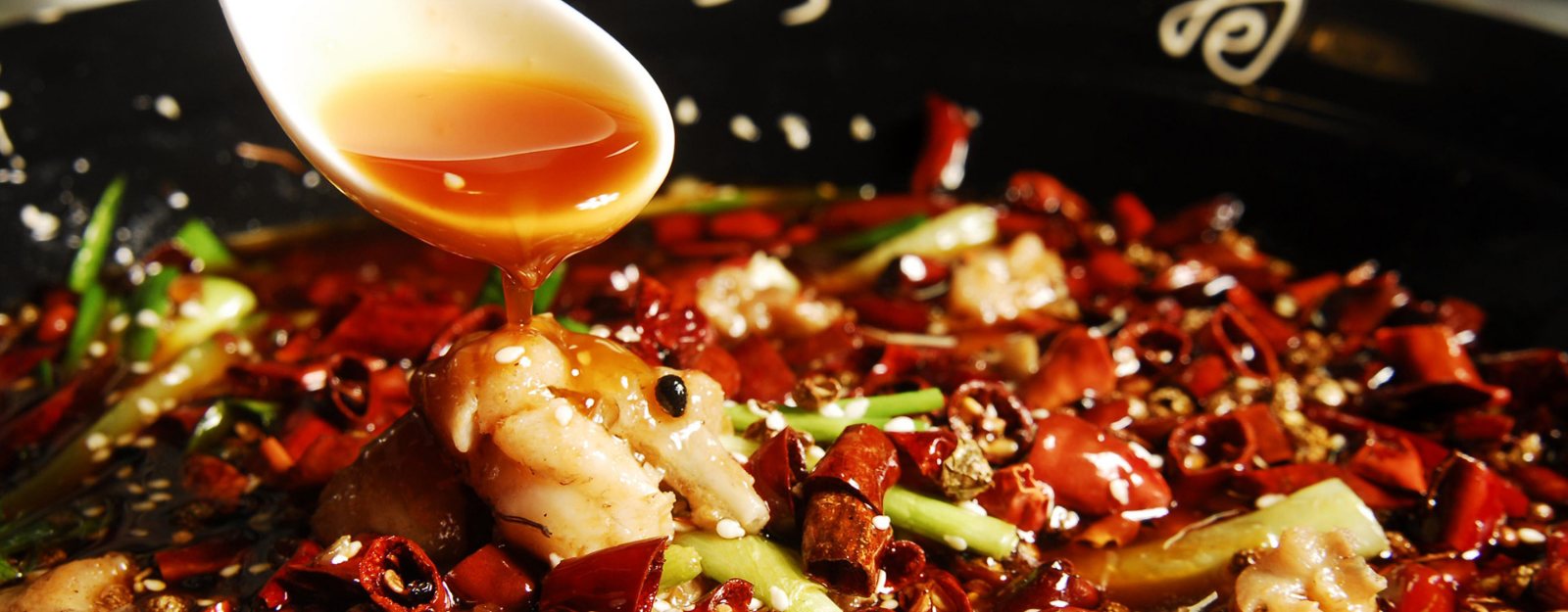
Chuan Cai is one of the four great cuisines of China, and its range runs far wider than chilli: sour, sweet, numbing and savoury, built from simple ingredients by cooks who have been doing this for centuries.
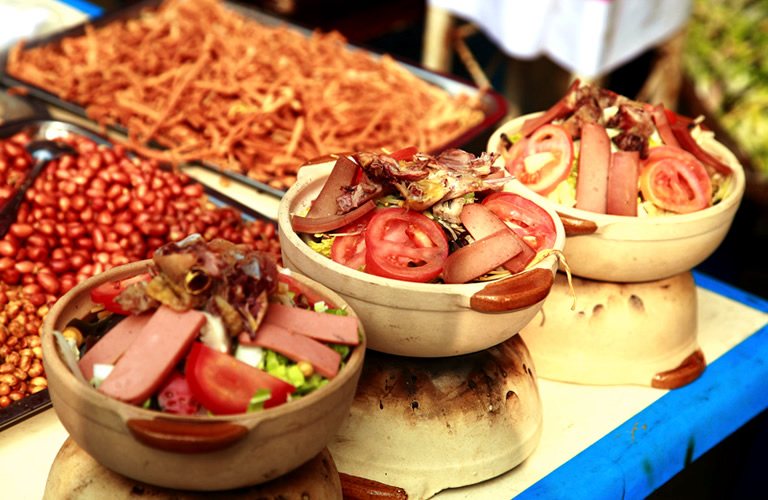
Snacks by the bowl — the street canon, stall to stall
The street canon
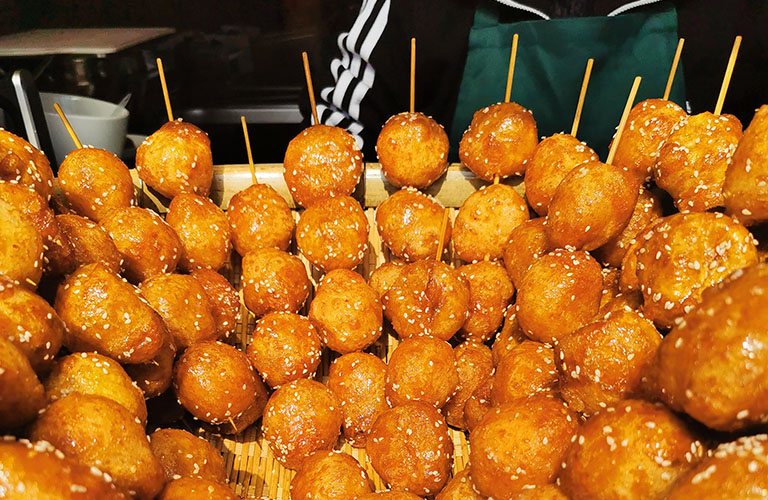
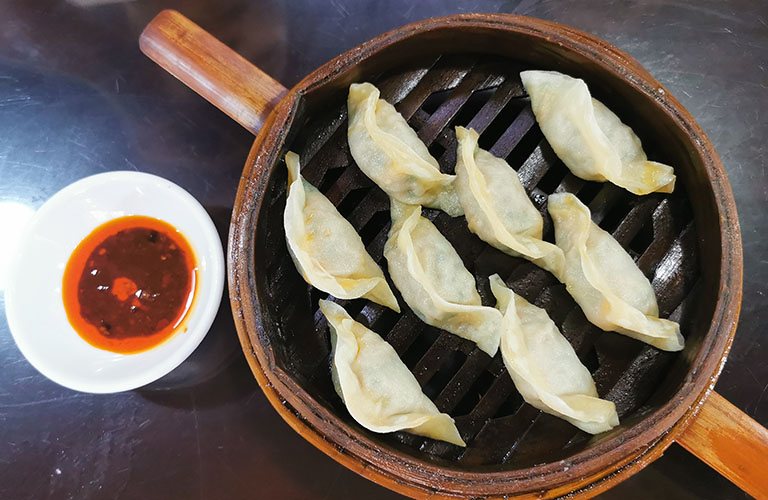
Cold-dressed skewers, snack trays of sweet water noodles and liangfen, dumplings out of bamboo steamers — the street food of Chengdu is a cuisine in miniature, eaten standing, bought stall by stall, and best walked rather than ordered.
Steamer baskets and dipping sauce — snack culture beyond the chilli
Beyond the heat
The chilli reputation undersells the kitchen. The same tables carry dishes that never touch a pepper: clear steamed dumplings, sweet rice bases, broths built on stock rather than fire. Ordering across the range is what a guide is for.
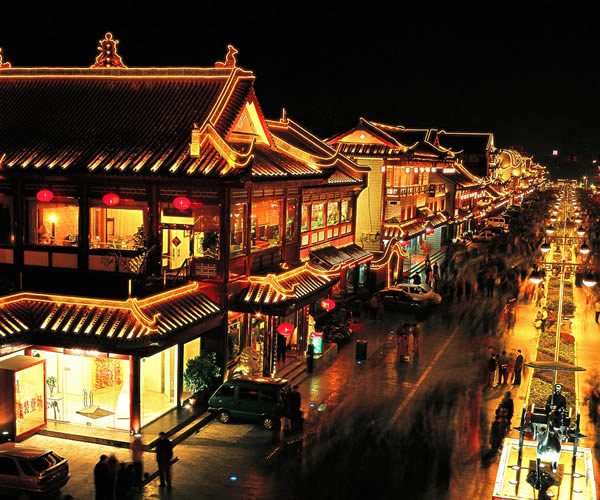
The old quarters after dark — the walk runs the evening shift too
The quarters themselves
People's Park for teahouse life, Kuanzhai Alley for lanes of hundred-year-old houses worked into food quarters, and Jinli, the old street at the foot of the Wuhou Shrine that ranks among the top three sights in the city for many visitors — its food street is the reason.
Make it count.
Sichuan food — Chuan Cai — is one of the four great cuisines of China, and its reputation for chilli undersells it: the cuisine runs on dozens of flavour profiles built from simple ingredients. We plan food days the way we plan walking days — around the quarters that hold the classics, the hours the stalls actually work, and how much the group wants to watch versus cook.
Flavour firstChuan Cai is more than chilli — the classics range across sour, sweet, numbing and savoury profiles.
QuartersPeople’s Park, Kuanzhai Alley and Jinli hold the street-food canon within a short drive.
CookingA working class with a Sichuan chef at the cuisine’s own museum, twenty kilometres west of the city.
PaceHalf a day, an evening or one: food days slot around any itinerary without taking one over.
Route ideas.
These are ingredients, not off-the-shelf promises. We connect them only when conditions, timing and your group make sense.
The food quarter walk
People’s Park, Kuanzhai Alley and Jinli in one loop — snacks stall to stall, with teahouse time built in.
The cooking day
The Sichuan Cuisine Museum: history halls in the morning, a hands-on class after, and lunch is what you cooked.
Beyond Chengdu
Tea country on the old horse road, monastery kitchens in Kham — food threads run through every journey we build.
Find your fit.
Start with the version of this activity that sounds most like you. This gives us a better first brief; it does not replace the on-the-ground checks a responsible plan needs.
A half-day street walk through the three classic quarters — eating done for you.
Start your route.
Share your dates, group, relevant experience and the kind of day you want. We will reply with a thoughtful starting point and confirm what is appropriate for the season.