Getting there
Yangxian has its own station on the Xi'an–Chengdu high-speed line; Xi'an is about an hour, Chengdu under three.
 Start your enquiry
Wildlife / Field guide
In May 1981, the world's known wild crested ibis population was seven birds, in one valley of the Qinling foothills. Forty-five years later, more than twelve thousand fly — most of them descended from this county's nests.
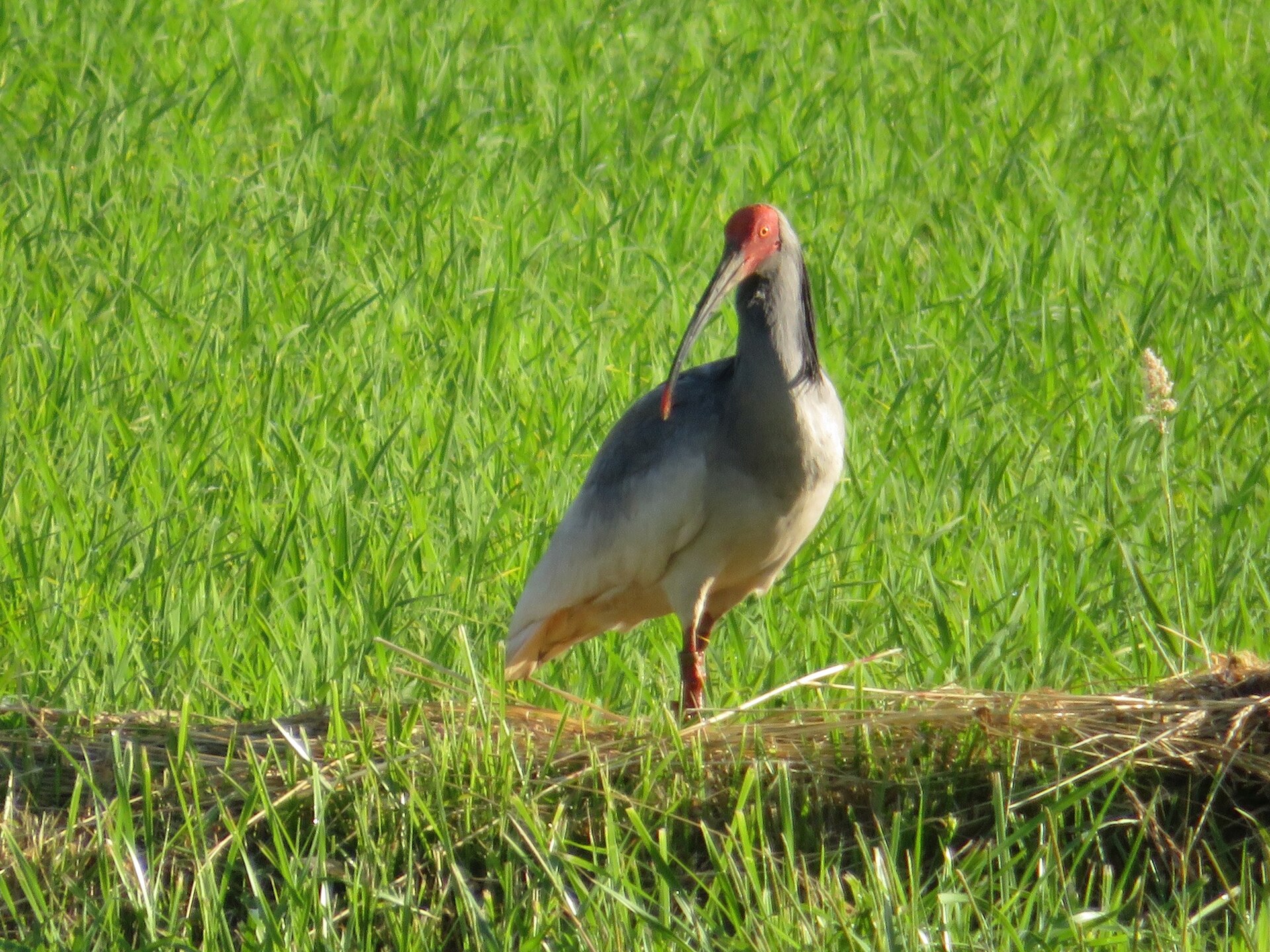
Start this journey briefCrested ibis · rice paddies below the Qinling, Yangxian county
the Han river valley on the south side of the Qinling — a high-speed-rail stop on the Xi'an–Chengdu line
seven wild birds found on 23 May 1981; a global population over twelve thousand by the end of 2025
Yangxian banned hunting, logging and — decisively — agricultural pesticides; the ibis feeds in working rice paddies
down-listed from Critically Endangered as reintroductions rebuild populations across 15 provinces
The crested ibis once bred across Japan, Korea, the Russian far east and most of eastern China; by the late 1970s it was presumed extinct in the wild everywhere. The search that found the last seven birds — in a pine on a hillside above Yaojiagou village, Yangxian county, on 23 May 1981 — is one of the founding stories of Chinese conservation, and so is what came after: a protection order in the valley, round-the-clock watches at the nest trees, and then the decision that made it work. The birds feed in rice paddies, so Yangxian banned agricultural pesticides county-wide and built its farm economy around organic rice instead.
The result is the best conservation comeback in Asia. From seven birds the population passed a hundred in 2000 and a thousand in 2010; by the end of 2025, the global count exceeded twelve thousand, the species had been down-listed from Critically Endangered, and descendants of Yangxian stock now breed in Japan and Korea as well as across fifteen Chinese provinces. And unlike almost every other recovery story, the wild bird is visible to a traveller: ibis feed in ordinary working paddies along the county's roads, through most of the year.
Ibis feed in flooded winter paddies near the reserve's core valleys; the routine is dawn and late afternoon, with the birds' favourite fields known locally.
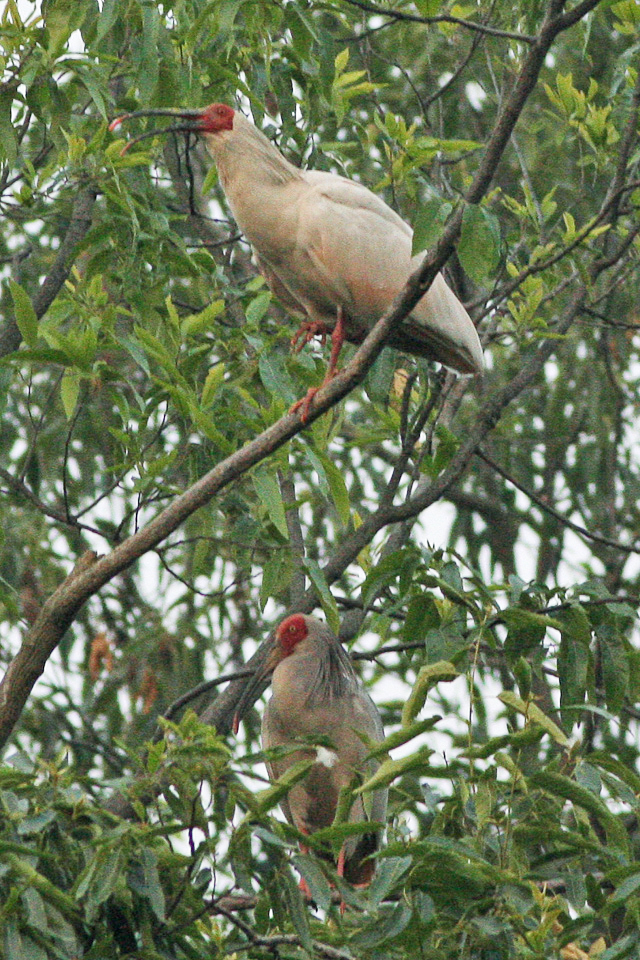
February to June, the grey adult turns pinker and pairs nest in tall trees near villages — the closest, most reliable watching of the year.
The reserve's centre shows the half-wild aviaries and the ringing work behind the recovery — worthwhile context, clearly separated from wild watching.
The ibis share this valley with the rest of the 'four treasures': golden monkey, takin and panda forest over the ridge — our Foping guide covers the other side.
Yangxian has its own station on the Xi'an–Chengdu high-speed line; Xi'an is about an hour, Chengdu under three.
Year-round works; nesting season February–June is the most rewarding, autumn paddies the most photogenic.
Wild ibis tolerate distance watching in the paddies — keep it that way; the centre's birds are for the close views.
Xi'an's terracotta army is 90 minutes away; the natural pairing is our Foping reserve guide over the Qinling ridge.
We fold an ibis morning into Qinling and Sichuan overland routes — the bird sits almost exactly on the rail line between Xi'an and Chengdu, and it earns the stop.
Start a journey briefThe Foping reserve guide · Seeing pandas in China · Start a journey brief