January
The Hukou falls freeze, the pits are empty and the wall is at its bleakest and best. Cold, with the plain often under haze.
 Start your enquiry
Destinations / Shaanxi / Calendar
Twelve months across a province 878 kilometres long, where spring arrives six weeks later in the north than in the south and the plain has a summer that the mountains do not.
Explore the guide ↓Northwest China · three climate belts
Time a trip to Shaanxi badly and you will spend it in haze on a plain at 35 degrees, or on a mountain in cloud, or in a coach queue on a public holiday. Time it well and it is one of the most rewarding provinces in the country. The complication is that the province is a strip: the difference between the loess plateau in the north and the Han valley in the south is about six weeks of season, and the Qinling in the middle is a third climate again.
The rule of thumb: April to June and September to October will work almost anywhere. July and August are for the mountains and the waterfalls, not the cities. November to March is for museums and walls, with the north closed by snow and the south still green.
What each month is actually good for.
The Hukou falls freeze, the pits are empty and the wall is at its bleakest and best. Cold, with the plain often under haze.
The busiest two weeks of the year and half of the province closed. If you are here, do the cities and forget the mountains.
The Hanzhong basin turns yellow in the second half of the month, the peach-blossom flood comes down the Yellow River, and the loess starts to green.
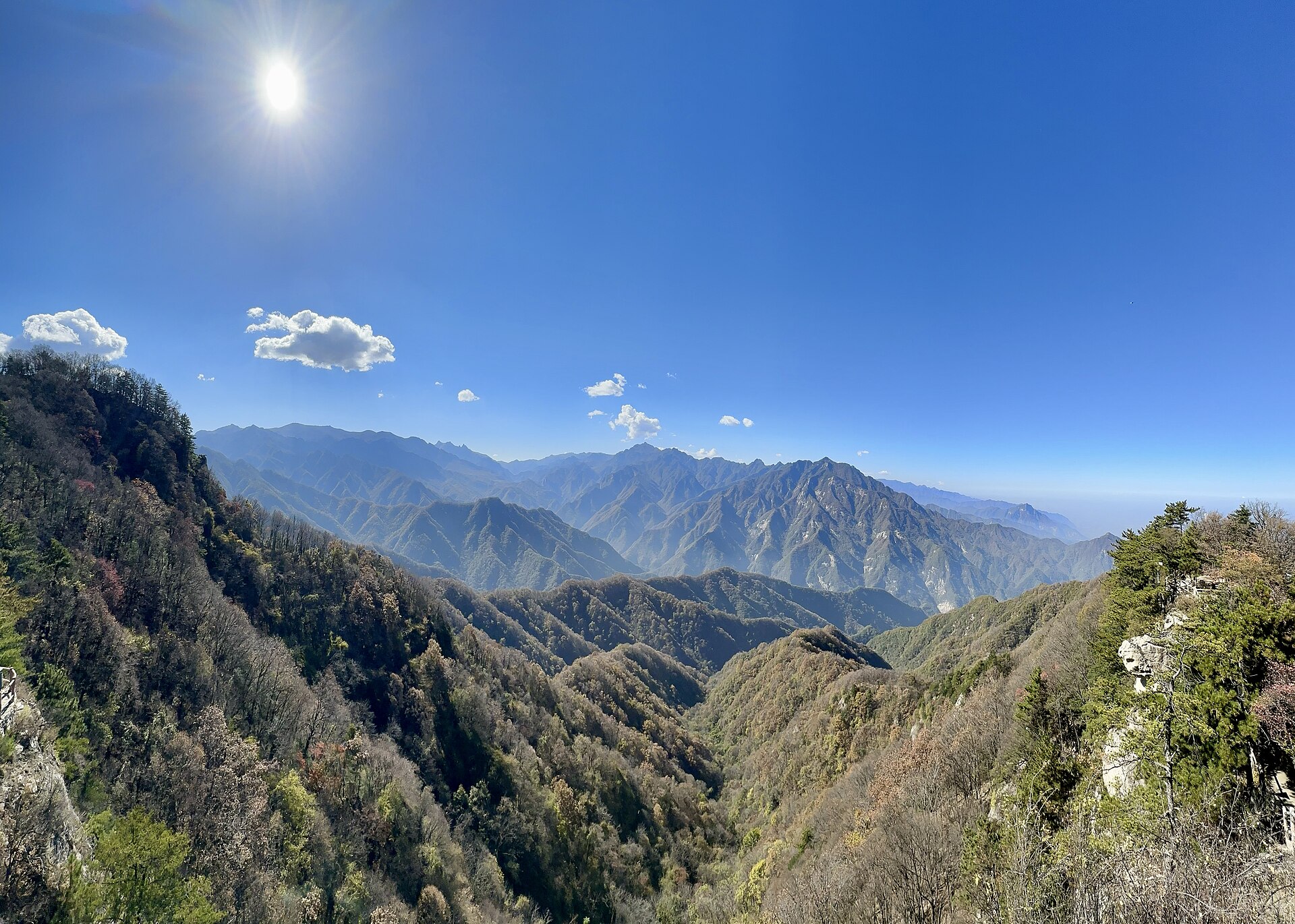
Dry, 12 to 24 degrees on the plain, the Qinling foothills in leaf, and Huashan at its most stable underfoot.
Long days and settled weather. The first week is a holiday and everything is full; from the 6th it is ideal.
The last comfortable month before the rains. The Qinling high route opens fully and the loess is at its greenest.
Hot, humid and wet, with the biggest water at Hukou and the biggest crowds at Huashan. The mountains are 10 degrees cooler and worth it.
The summer flood on the Yellow River, storms on the Qinling ridge, and the school holidays. Book everything.
The haze lifts, the light improves, and the plain becomes walkable again. The best month for photography on the Qinling.
Dry air, low sun, harvest in the south and the loess at its most legible. Avoid the first week; the last two are superb.
The first snow on the plateau, the passes closing, and the plain still workable. Few visitors anywhere.
Cold and quiet, with the Qinling under snow and the south still mild. The ibis are at their winter roosts.
July and August, and not everywhere at once.
The summer monsoon arrives from the south-east in July and is stopped by the Qinling, which is why the southern slopes get twice the rain of the northern ones and the loess country is semi-arid.
Afternoon storms close the Huashan plank walks and the exposed ridges, make the Qinling trails slippery, and turn the loess roads to slurry. Mornings are usually clear.
The rain is what makes Hukou worth seeing in August and the wave valley vivid. Plan the wet season around water rather than around cities.
Cold, clear, and much better than its reputation.
Snow from November, with the plateau roads and the Tongwancheng track affected. The sites stay open; the villages shut.
Taibai’s high route closes and Huashan’s plank walks close in ice, but the mountain itself stays open and is spectacular in snow. Crampons, not optimism.
The Han basin rarely freezes, stays green, and is at its best for birdwatching. This is the season to see the ibis without a crowd.
Three weeks a year when the province is full.
The first week of May. Everything from the pits to the cable cars runs at capacity and hotel prices double.
The first week of October, the busiest week of the year. Avoid Huashan and the Terracotta Army entirely, or book in June.
Late January or February. Transport is fully booked for a week and many small businesses close. The cities are quiet; the sites are not.
Late April to early June, or the last two weeks of October. Add the Hanzhong basin in March if you want the rapeseed, and the north in May or September if you want the loess.
Start my journey brief ↗