
North China
Destinations / North China
Hebei.
The province that wraps around Beijing: a plateau in the north, a mountain range across the middle, a plain of wheat and bridges in the south, and 487 kilometres of coast where the wall walks into the sea. Almost every landscape in northern China is inside one border.
2,882 m on the East Peak of Xiaowutai and 0 m where the wall meets the Bohai — and 2,500 km of wall in between
01 / Read the province
A ring around the capital.
Hebei is what is left when you take Beijing and Tianjin out of the map: a province that surrounds both, and stacks a plateau on a mountain range on a plain on a coast. The order matters, because it is also the order of the seasons.
- 01
Chengde
The summer capital · 5.64 km²
- 02
Jinshanling
The wall · 10.5 km
- 03
Shanhaiguan
The pass · 1381
- 04
Baishi Shan
The marble · 2,096 m
- 05
Xiaowutai
The roof · 2,882 m
- 06
The Bashang
The plateau · 1,200 m
The distances are short and the geography is not: Beijing to Chengde is two hours by rail, to Jinshanling two and a half by road, to Shanhaiguan three by fast train. What makes a route work is picking two bands rather than four — the wall and the plateau go together, the plain and the pass go together, and the mountain in the middle is a separate trip.
What to see where ↓02 / Choose a landscape
Stone, marble and grass.
Three materials, three histories: a wall built and rebuilt for eighteen hundred years, a forest of dolomite pillars at the end of the Taihang, and a plateau that was forest, then dust, then forest again.
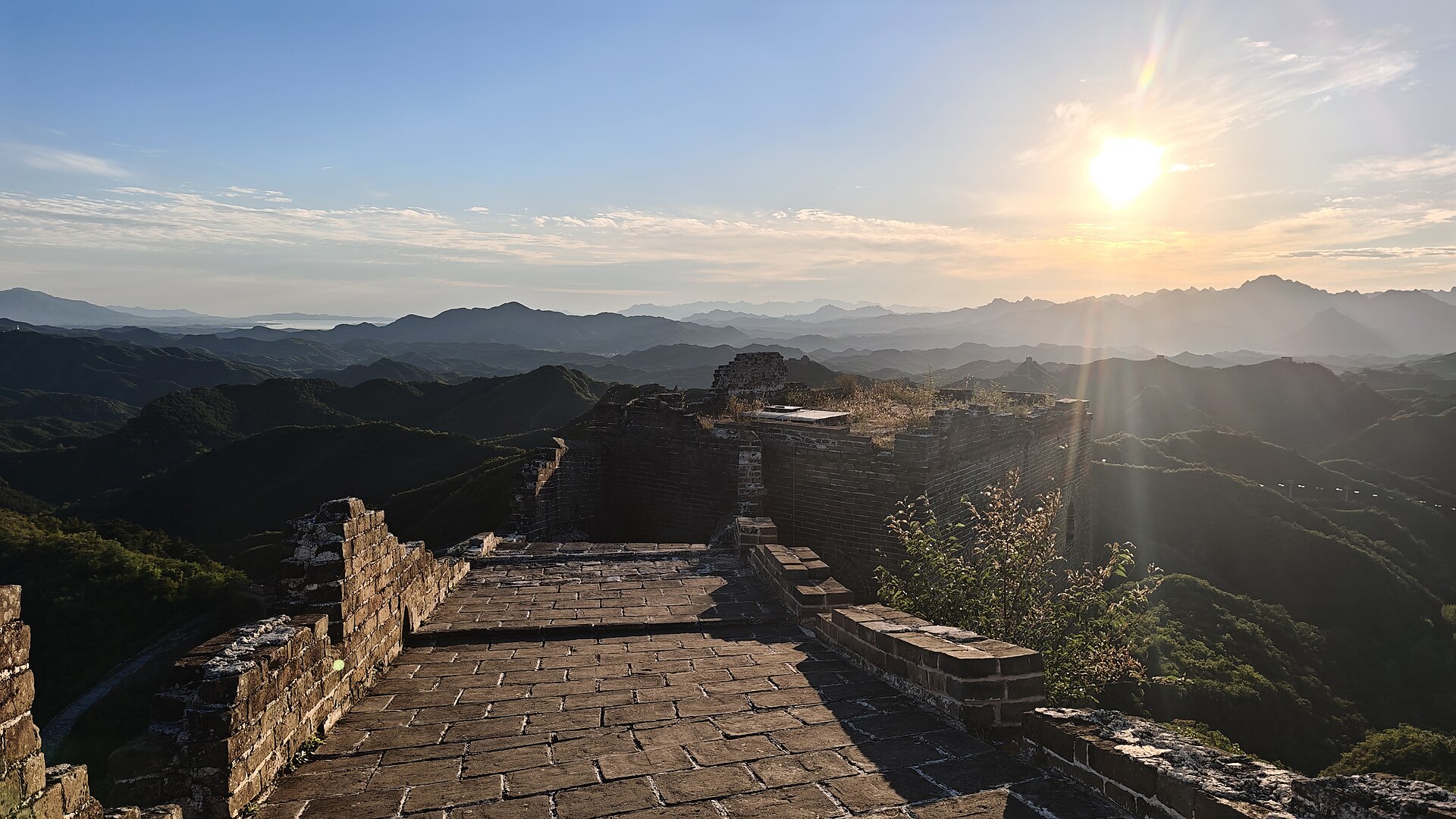
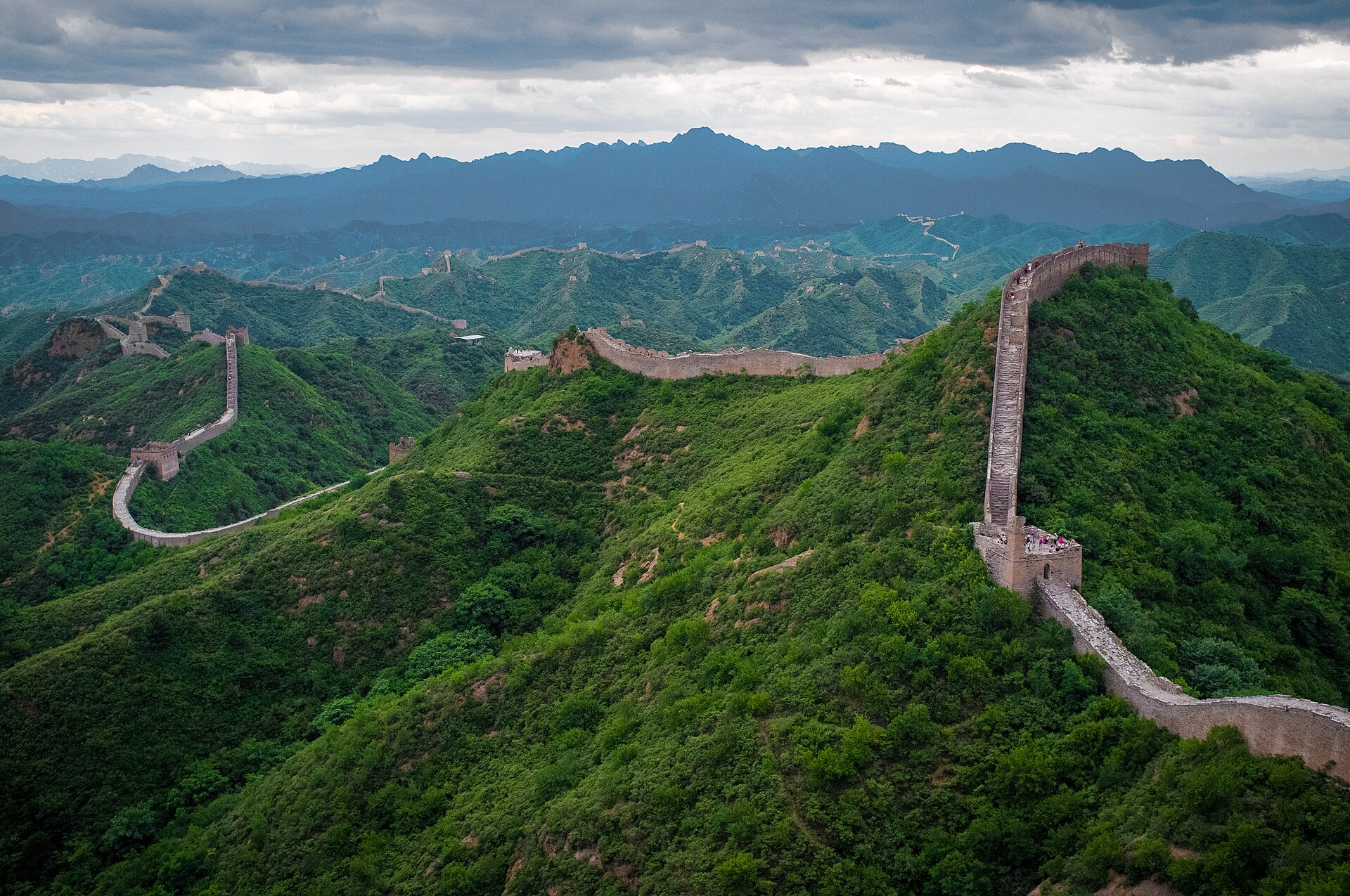
The wall
Ten and a half kilometres from Longyukou to Wangjinglou, sixty-seven towers, five passes, and a stretch rebuilt by Qi Jiguang between 1567 and 1582 that has not been touched since. The best-preserved walkable wall in the country, and the one that still looks like a military line.
Walk the wall ↗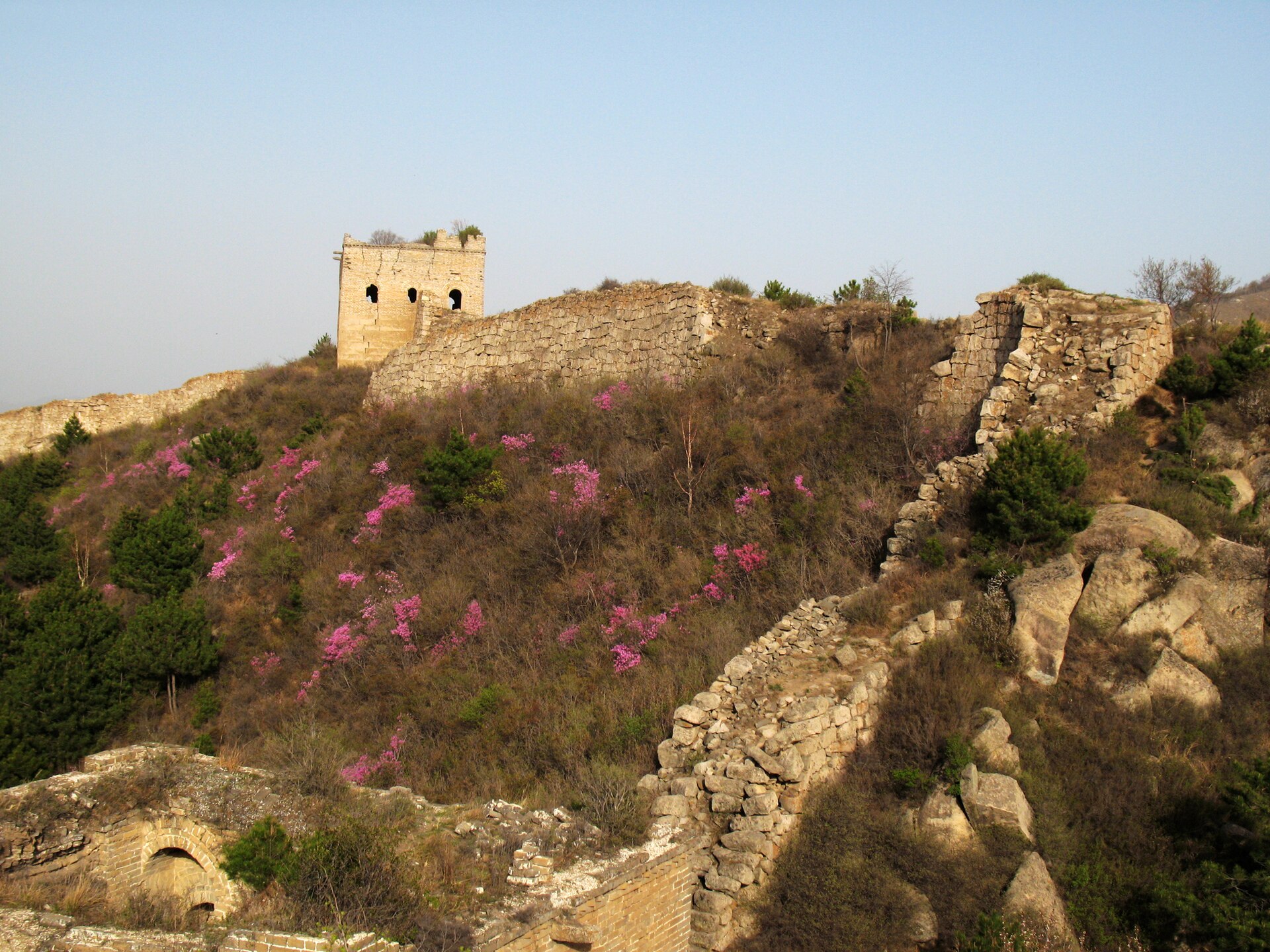
The marble
The wall runs along this mountain’s eastern shoulder, but the rock is why it is known: a peak forest of white dolomite at the northern end of the Taihang, 2,096 metres at Foguangding, with eighty-one summits counted along a main ridge of seven kilometres. The only marble karst landscape in the country, and two glass walkways bolted to the cliffs below it.
Up the pillars ↗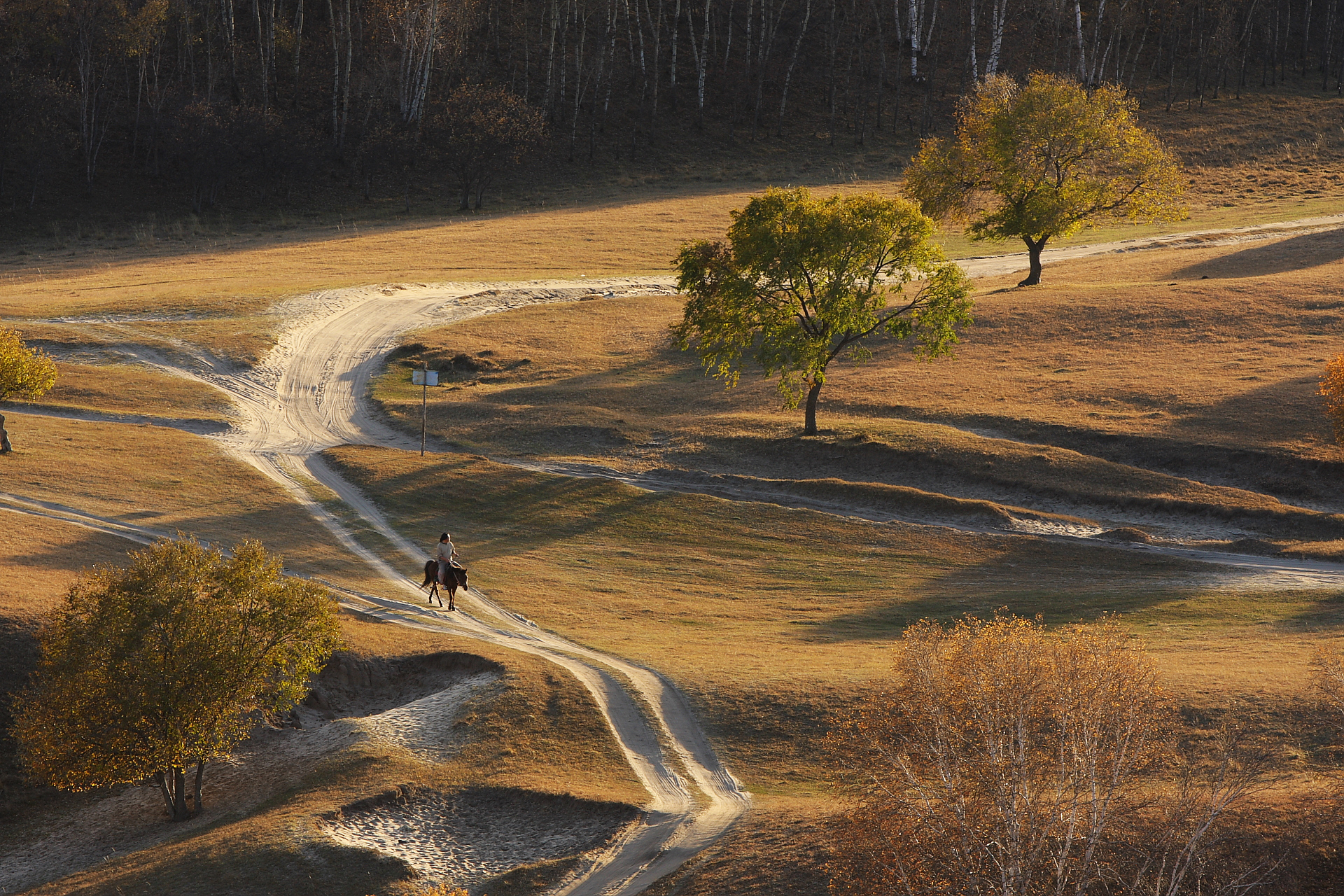
The grass
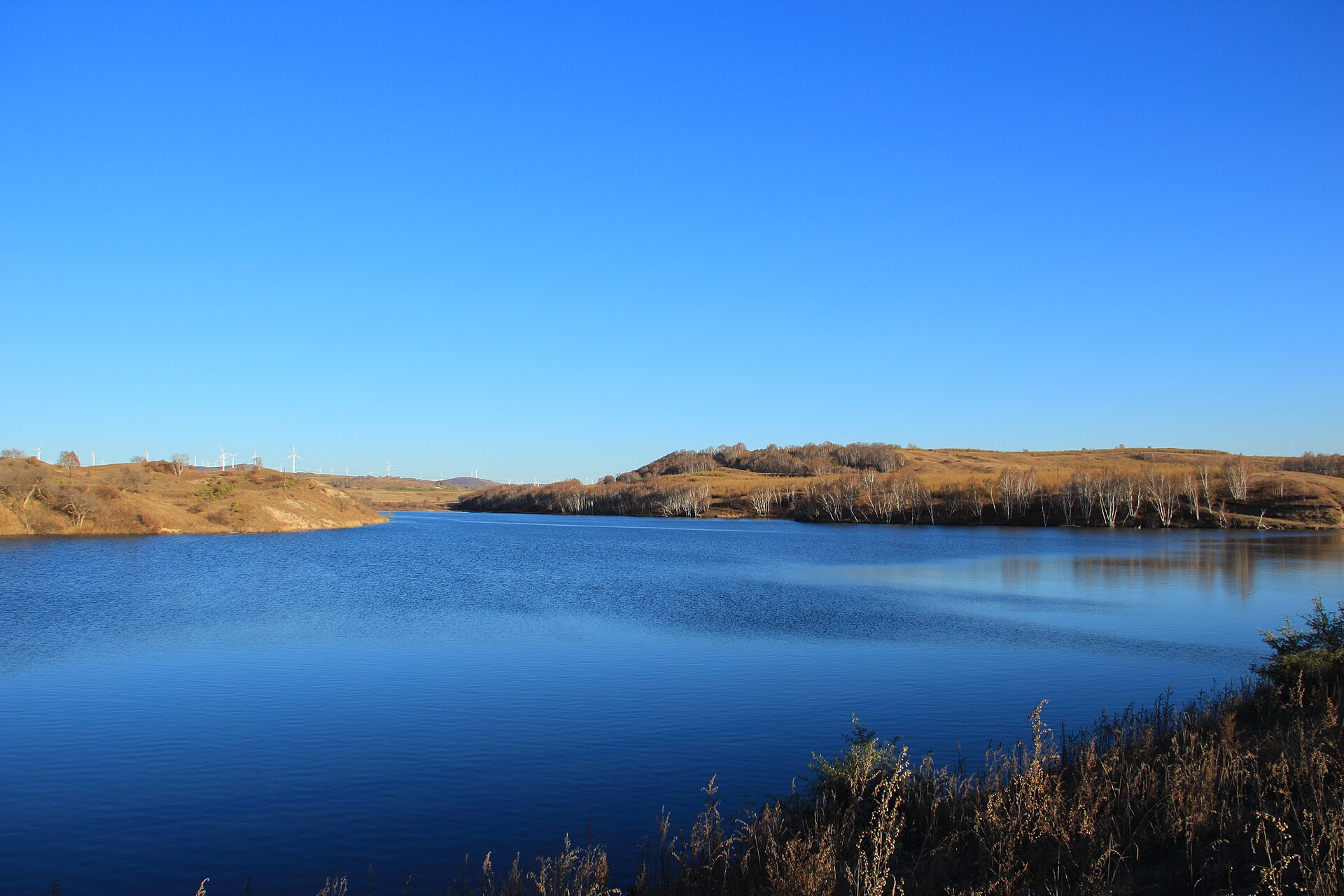
The southern rim of the Mongolian plateau: 15,954 square kilometres between 1,200 and 1,500 metres, where the grass ends and the birch begins. In the middle of it, a forest that was bare hill in 1962 and now covers eighty-two per cent of its ground.
Onto the plateau ↗03 / Pick your month
One province, four springs.
Spring arrives on the plain in late March and on the Bashang three weeks later, and the coast stays open a month after the high ground closes. That gap is the whole point: in any month, one of the four bands is at its best.
Open month Cold, closed or limited Best window
May – June · The dry window
The plain is green, the wall is warm enough to walk at six in the morning, and the plateau is coming out of dormancy. Long days, dry air, and the best light of the year on the ridges above Jinshanling.
July – August · Hot and wet
Thirty-five degrees on the plain with the humidity to match, and the rain that makes the plateau its greenest. This is the season for the Bashang and the coast, not for the plain or the marble.
September – October · Clear and turning
The haze lifts, the nights cool, and the larch on the plateau turns in the first half of October. September belongs to the coast and the wall; October belongs to the plateau.
04 / Stay curious
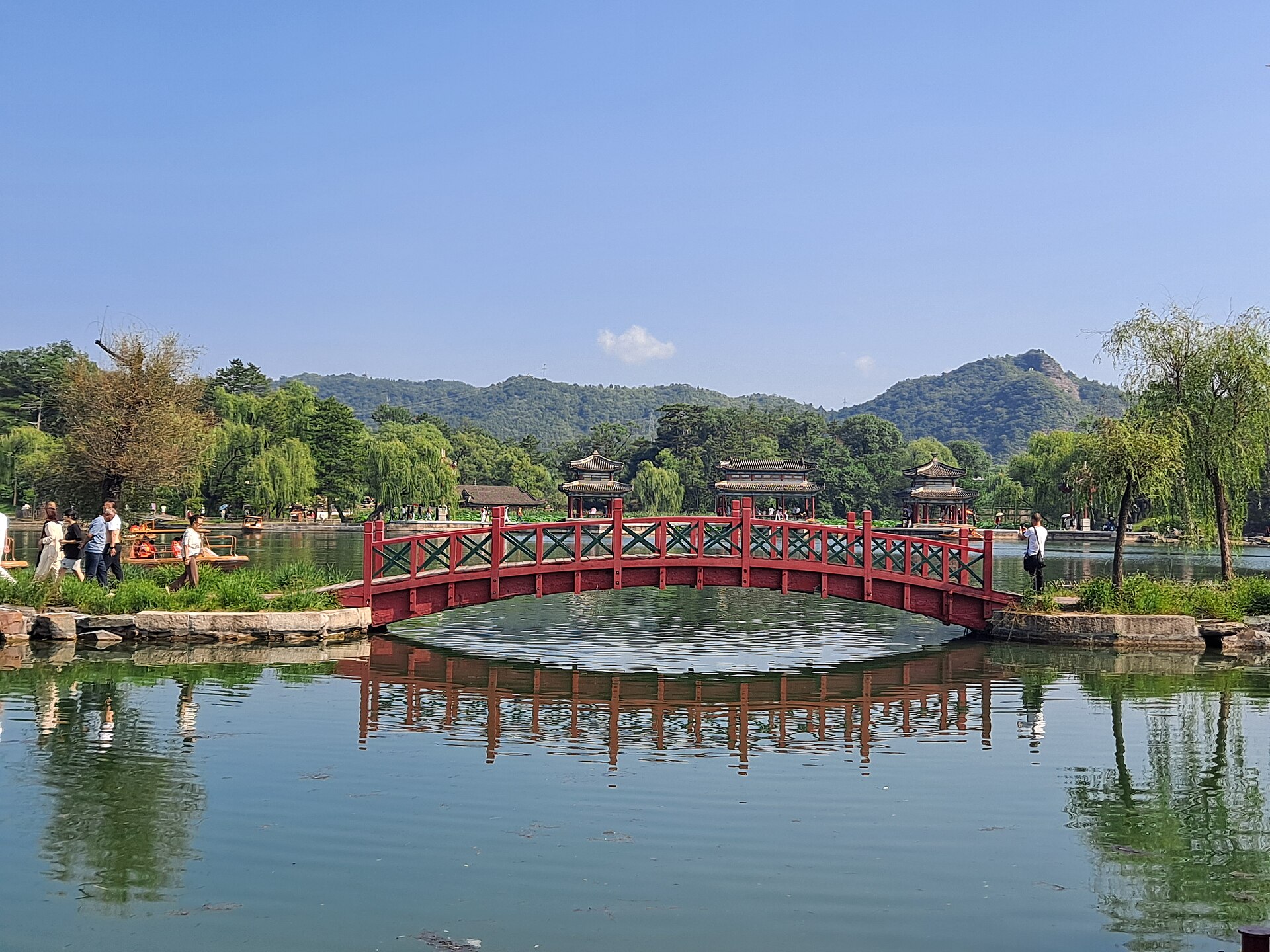
A summer capital, built to keep the frontier close.
Chengde was not a palace for pleasure. It was a second seat of government, placed where the emperor could hunt with the Mongol nobles, receive the Tibetan lamas and keep the northern border quiet without fighting for it — and the architecture says so.
- 01
Ninety years of building
Kangxi began the resort in 1703 and Qianlong finished it in 1792, across three reigns. The result is 5.64 square kilometres of park inside a wall, with a northwest corner built as mountains, a southeast corner built as lakes, and 120-odd structures scattered between them.
- 02
Twelve temples, five still open
The outlying temples were built one per frontier relationship: Putuo Zongcheng after the model of Lhasa in 1767, Xumifushou after Tashilhunpo in 1780, Puning with a 22-metre carved sandalwood Guanyin in 1755. Five are open; the rest are roofs in the trees.
- 03
A world heritage site since 1994
The resort and its temples were listed together, and the reason given was the way the landscape was used rather than the buildings in it — a park that borrowed the mountains outside its wall as scenery, which is a Chinese idea the listing text had to explain.
05 / Go deeper
Six loops, no fixed departure.
Hebei has no scheduled trip yet. What we build instead is one of six shapes: the wall and the pass, the Chengde loop, the plateau, the Taihang, the plain and its bridges, or the full ring from the Bohai to the grassland.
Because the province surrounds Beijing, every route is a loop rather than a line, and the loop you choose depends on which band you want to spend the nights in. The wall and the plateau belong together in autumn; the plain and the pass belong together in spring.
06 / Before you go
The useful details.
Hebei rewards a route that respects the bands, and punishes one that treats the map as a distance.
Beijing is the front door
The province surrounds the capital, so almost every route starts at a Beijing station. Chengde is two hours by high-speed rail, Shanhaiguan three, Shijiazhuang one, and the wall trailheads two to three hours by road. Nothing in this guide needs a domestic flight.
Nothing needs acclimatisation
The roof of the province is 2,882 metres on Xiaowutai, reached on foot from a roadhead at 1,200. The plateau sits at 1,200 to 1,500 and the pass at sea level. What replaces altitude here is distance along the wall — 10.5 kilometres of it at Jinshanling, with sixty-seven towers to climb.
Watch the holiday weeks
May Day, the first week of October and Spring Festival fill the wall, the resort and the trains out of Beijing. Jinshanling takes its crowds early; be at the gate when it opens, walk west to east, and the towers empty out after the third one.
Keep exploring
Go one layer deeper.
07 / Common questions
The questions that come up first.
What travellers ask before a Hebei route takes shape.
01How many days does Hebei need?
Three for the wall and the pass, four for Chengde and the wall together, six for the plateau added on. Two days is enough to walk Jinshanling and understand why the wall is a landscape and not a monument.
02Which stretch of wall should I walk?
Jinshanling, for the simple reason that it is original, continuous and walkable for ten and a half kilometres. Mutianyu and Badaling are nearer Beijing and far busier; Jiankou is wilder and closed more often than it is open.
03Is Hebei just the hinterland of Beijing?
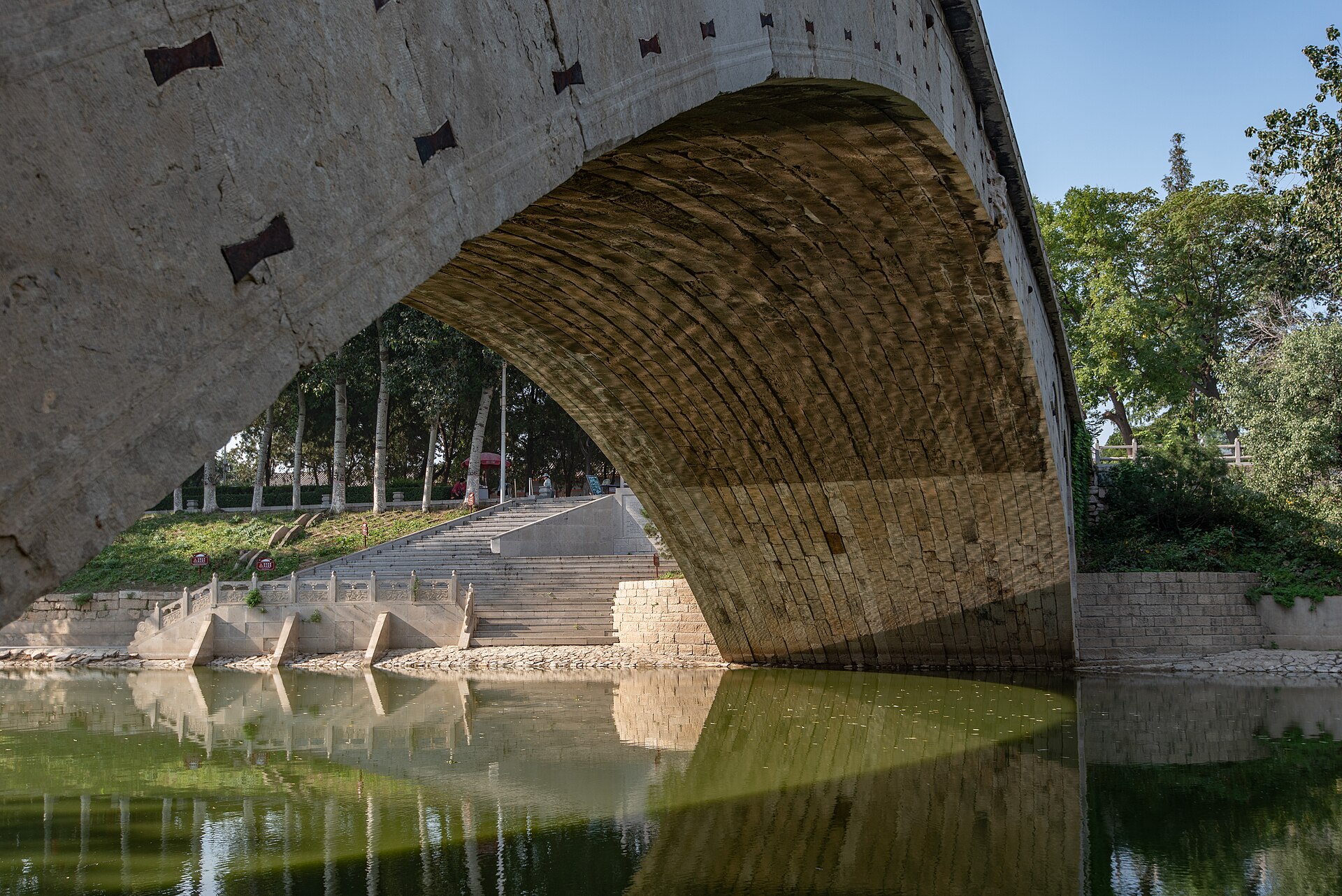
No, and the difference is the point. The province has the highest peak in northern China outside the Taihang, the largest royal garden in the world, the oldest open-spandrel stone bridge, and a coastline. Beijing has none of those.
04Can I see Chengde as a day trip?
You can, and it is a poor use of two hours each way. The resort alone is 5.64 square kilometres of walking; with two of the temples it is a full day, and the town is worth a night.
05How cold is the Bashang?
Cold enough that the season is May to early October. At 1,200 to 1,500 metres the nights drop below freezing from late September, the larch turns in the first half of October, and the roads close with the first heavy snow.
06What is there to walk?
The wall first: 10.5 kilometres at Jinshanling with 67 towers, and shorter restored sections elsewhere. Then Xiaowutai, 2,882 metres with six vegetation belts in a day, and the marble trails at Baishi Shan where the cable car removes 1,400 metres of the climb.
07When is the coast worth it?
September, when the sea is still warm and the holiday crowds have gone. The beaches at Beidaihe and Changli are broad and the water is shallow; in July and August they are also the busiest in northern China.
08What is the best month?
Late May and June, then September and the first half of October. May and June have the longest days and the driest air; October has the larch on the plateau and the clearest light on the wall.
Something not covered here? See how a private route is put together ↗ or send us your question ↗
Your Hebei.
Tell us whether you want the wall, the plateau or the summer capital as the spine of the trip, and whether you are willing to sleep above 1,200 metres. Those two answers decide the loop.
Start my journey brief