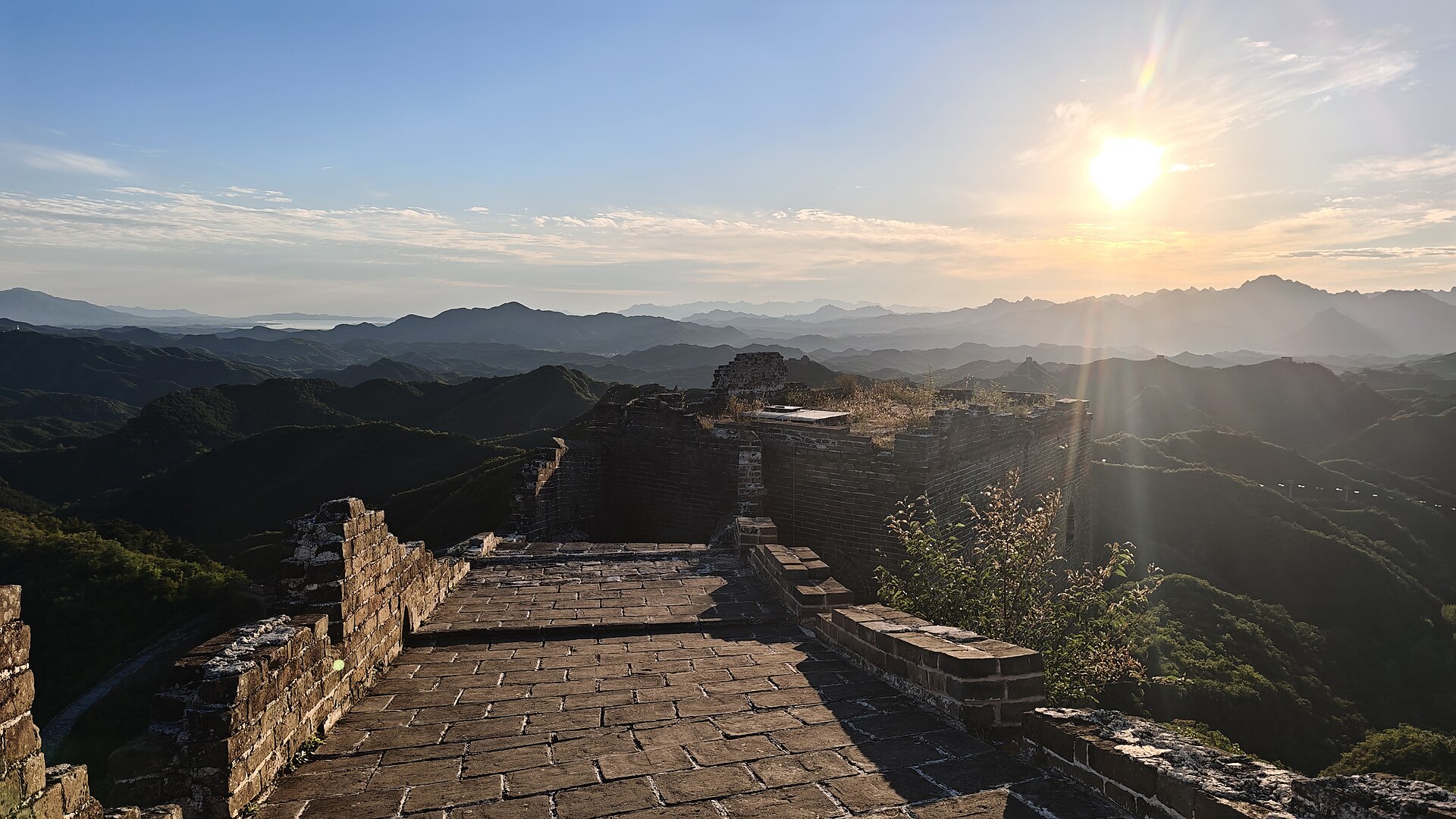
Jinshanling
The through-walk stays open in winter unless there is heavy snow; individual towers close after ice. The east cable car stops in high wind.
 Start your enquiry
Destinations / Hebei / Season board
The facts that move from year to year in Hebei: which wall sections are open, how the Bashang grass and larch are running, how much water is in the marsh, and when the coast is worth it.
Explore the guide ↓North China · updated each season
Most of what is written about Hebei stays true for decades: the height of a peak, the year a temple was built, the length of a wall section. Four things do not, and they decide whether a particular week works: the state of the wall sections, the state of the plateau, the state of the water, and the state of the roads on a public holiday.
This board is what we check before confirming a route. It is deliberately short. If a fact is not here, it is either permanent or it does not matter.
Which sections are open, and when they are not.
The through-walk stays open in winter unless there is heavy snow; individual towers close after ice. The east cable car stops in high wind.
The gate and the city wall are open every day. The Old Dragon’s Head closes the outer rocks at high tide, which is a tide-table question rather than a seasonal one.
The glass sections close above about force 6 and in thunderstorms; the cliff gallery stays open. The upper cable car stops in wind and in ice.
The Ming wall on the Taihang ridge and much of the wild wall elsewhere is walkable but unmaintained: no railings, no rescue, and no legal access in some reserves.
Grass, larch, and what the weather has done.
Green from late June; at its height in July and August; turning from the second week of September. The first hard frost is usually in the last week of September.
Gold in the first half of October, with the peak in the second week. Wind or early snow can strip it in three days, so the window is genuinely short.
The forest farm’s inner roads close after snow, usually from late October. The sand tracks off the paved roads are impassable after rain at any time of year.
The marsh and the coast.
Kept filled since 2017 by the Yellow River diversion, with levels highest after the summer rains and lowest in June. The reed harvest runs from November.
Swimmable from June to early September, warmest in August. The Bohai is shallow and silty: expect 24 degrees in August and a brown-green sea, not blue.
Baiyangdian and Beidaihe are both on the East Asian flyway, with the strongest passage in April and October. Beidaihe in May is one of the best birding sites in east Asia.
Check three things before booking: whether the wall section you want is open, whether the larch has turned, and whether your dates fall in a holiday week. The rest of Hebei holds still.
Start my journey brief ↗