Wuyuan & the north-east
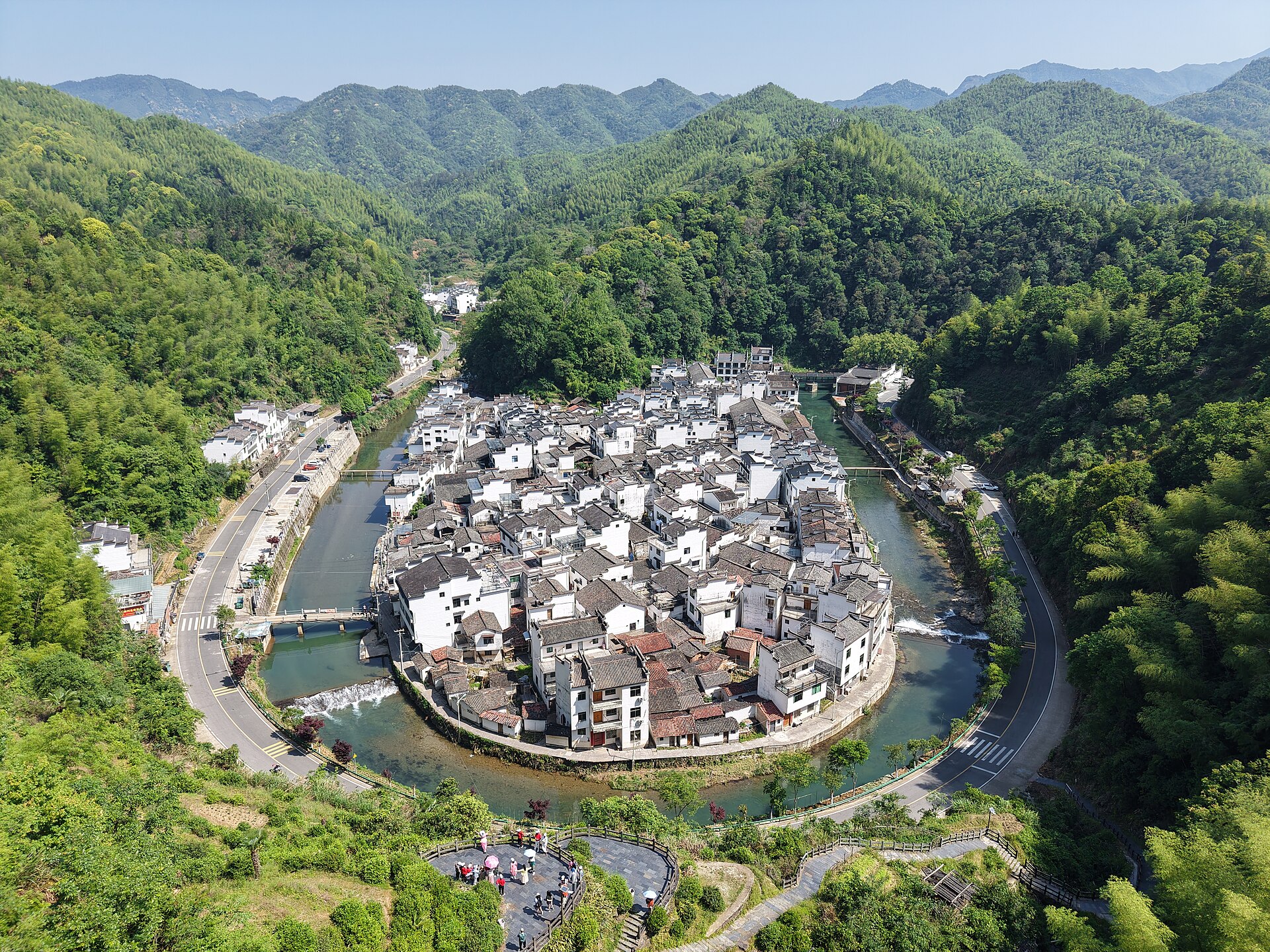
Huizhou villages in river bends and terraced valleys, with Huangling on its hillside and the rapeseed fields that made the county famous.
 Start your enquiry
Destinations / Jiangxi
White-walled villages and yellow terraces in the north-east, granite spires on the eastern rim, a porcelain city that has been firing for a thousand years, and a lake that holds most of the world’s Siberian cranes.
Explore the guide ↓South-east China · the Gan basin
Jiangxi is a bowl. Mountains run along the provincial borders on three sides — the Wuyi to the east, the Luoxiao to the west, the Mufu and Jiuling to the north — and the Gan river drains the middle north into Poyang Lake and then the Yangtze. That shape explains almost everything about travelling here: the plains are wet and agricultural, the rims are cool and forested, and the old roads ran along the rivers.
The north-east is the part travellers come for. Jingdezhen has fired porcelain since the Song and supplied the imperial court from 1369; forty minutes away, Wuyuan’s villages are the best-preserved group of Huizhou architecture anywhere, white walls and black tile in valleys of terraced fields. In late March the fields turn yellow and the province fills up.
The mountains are the other half. Sanqingshan’s granite pillars are a UNESCO site; Lushan is a Victorian-era hill station with Chinese poetry attached; Wugongshan is a fifty-kilometre ridge of alpine meadow that has become the country’s most popular backpacking weekend. Between them they cover every kind of walking Jiangxi offers.
Three clusters, joined by a high-speed line.
Huizhou villages in river bends and terraced valleys, with Huangling on its hillside and the rapeseed fields that made the county famous.
The porcelain capital: imperial kiln ruins, working workshops, the Taoxichuan district in a converted factory, and a craft economy that never stopped.
Granite pillars and pines above the cloud, inscribed by UNESCO in 2008. Cable car up, stone stairway circuits on top.
A ridge above the plain with 1920s villas, a poetry anthology’s worth of inscriptions, and the waterfall that every Chinese schoolchild can quote.
China’s largest freshwater lake, which drains to a maze of channels each winter and hosts almost the entire world population of Siberian cranes.
A grass ridge running for fifty kilometres above 1,600 metres, with a long-distance trail, tent camps and a 2,888-metre cliff walkway.
Two fixed trips, and private shapes around them.
Wucheng and the lakeshore in December and January, with hides, wardens and a guide who knows the rotation. The best birding week we run in China.
Up through the forest, along the meadow ridge, a night in a tent camp and down the other side. Hard walking, no technical ground.
Rapeseed weeks, village-and-kiln long weekends, the two mountains, and how they combine with Anhui and Fujian.
What our team has written about the villages, the lake and the mountains.
The cliff-and-waterfall valley in Shangrao that has become the province’s most photographed new site.
The rapeseed fortnight, Qingming and May Day, and why the village roads seize up in late March.
Rain shells, grippy soles and dry bags: Jiangxi is the wettest province on most itineraries.
The old merchant routes over the mountains, half of which start on the Jiangxi side of the border.
Rapeseed, plum rain and cranes.
The rapeseed window at Wuyuan, moving uphill through the month. Beautiful, and the busiest three weeks of the Jiangxi year.
Green, warm and wet, with the mountains in cloud and the villages back to normal. The best all-round window for the north-east.
Plum rains, then heat. The mountains are ten degrees cooler than the plains and the waterfalls are at full volume.
Clear, dry and cold, with the cranes arriving at Poyang from late October and peaking in December and January.
The Jiangxi facts that move each year: the rapeseed date and the water.
Rapeseed timing, the lake level, the mountain closures after snow, and the holiday weeks that fill the villages.
Why the yellow moves uphill, which terraces peak first, and how to see them without the coach parties.
Tell us the month first. Rapeseed, plum rain and cranes are three different provinces, and the route changes completely between them.
Start my journey brief ↗