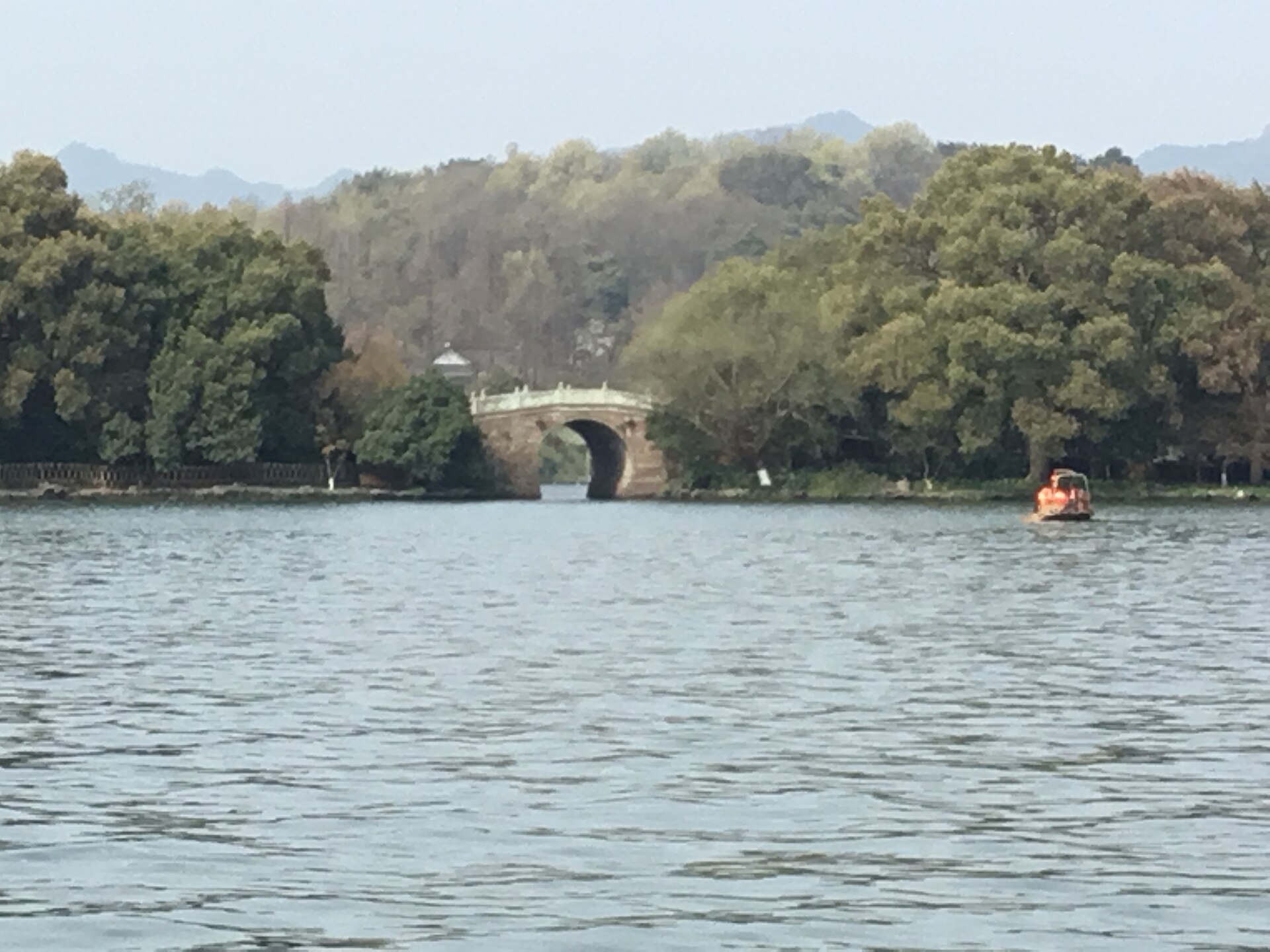
West Lake on foot
The Su and Bai causeways, Solitary Hill and the Leifeng and Baochu pagodas, best at first light or after the day visitors leave.
 Start your enquiry
Destinations / Hangzhou
West Lake has been the definition of a beautiful landscape in China for a thousand years. Hangzhou pairs it with tea hills, temples and a genuinely walkable city.
Explore the guide ↓Zhejiang · East China
Hangzhou was the capital of the Southern Song and, in Marco Polo’s telling, the finest city in the world. West Lake — UNESCO-listed in 2011 — is still the reason: a shallow lake of causeways, pagodas and willow banks ringed by hills, mapped by ten classical scenes.
The city’s second landscape is agricultural. The Longjing (Dragon Well) tea hills west of the lake grow China’s most famous green tea, and the villages among them — Meijiawu, Longjing village itself — are working tea country with pickers in season and pan-fired leaves everywhere.
Hangzhou is also the southern terminus of the Grand Canal and sits on China’s densest high-speed rail node: Shanghai in under an hour, Suzhou and Huangshan both practical day-line extensions on a longer journey.
What Hangzhou rewards, in and beyond the lake ring.
The Su and Bai causeways, Solitary Hill and the Leifeng and Baochu pagodas, best at first light or after the day visitors leave.
Walk the tea-terrace paths between Meijiawu and Dragon Well village, and taste the spring pick at a farmer’s table. March–May is harvest.
One of Chan Buddhism’s great monasteries, with grotto carvings from the tenth century in the cliff across the stream.
Gongchen bridge, canal-side lanes and the old warehouse district at night — the working-city counterpoint to the lake.
A 1,000-year-old managed wetland west of the lake, toured by boat through reed channels. A quiet half-day in any season.
Hangzhou has real seasons; two are famous for good reason.
Tea harvest, blossom on the causeways and the soft light the lake is painted in. Book early around the Qingming holiday.
Osmanthus scent across the hills, clear skies and comfortable walking temperatures.
July is hot, humid and crowded; winter is grey but empty, with the lake at its most painterly in mist. Workable with the right plan.
Connections, bases and the practical details that hold a good route together.
Hangzhou East is 45–60 minutes from Shanghai by high-speed rail, and the stop between Shanghai and Huangshan or Wuyishan. We build the line, not the detours.
A lakeside base for two or three nights covers the classic ring; a second night in the tea hills changes the trip’s rhythm for the better.
Lakeside hotels, courtyard guesthouses in the tea villages and design hotels by the canal — all of it an easy taxi or metro ride from the walking.
Make room for local life, food and cultural encounters.
Longjing is tasted, not drunk in haste. A proper tasting covers the spring pick, water temperature and the pan-firing craft.
The Southern Song court made this the capital in 1138; silk, painting and cuisine still carry it. The museums are good; the food is better.
West Lake vinegar fish, Dongpo pork, longjing shrimp, lotus root. A food-focused evening in Hangzhou is a serious pleasure.
Useful details to discuss when shaping your trip.
The lake ring empties before 8 am and fills by 10. We schedule the walks and leave the interiors for midday.
Drizzle is part of the lake’s aesthetic — pack a light shell and keep the tea houses as shelter stops, not retreats.
Tell us how the east fits your China — lake mornings, tea hills, temple walks — and we will draw the line through it.
Start my journey brief ↗