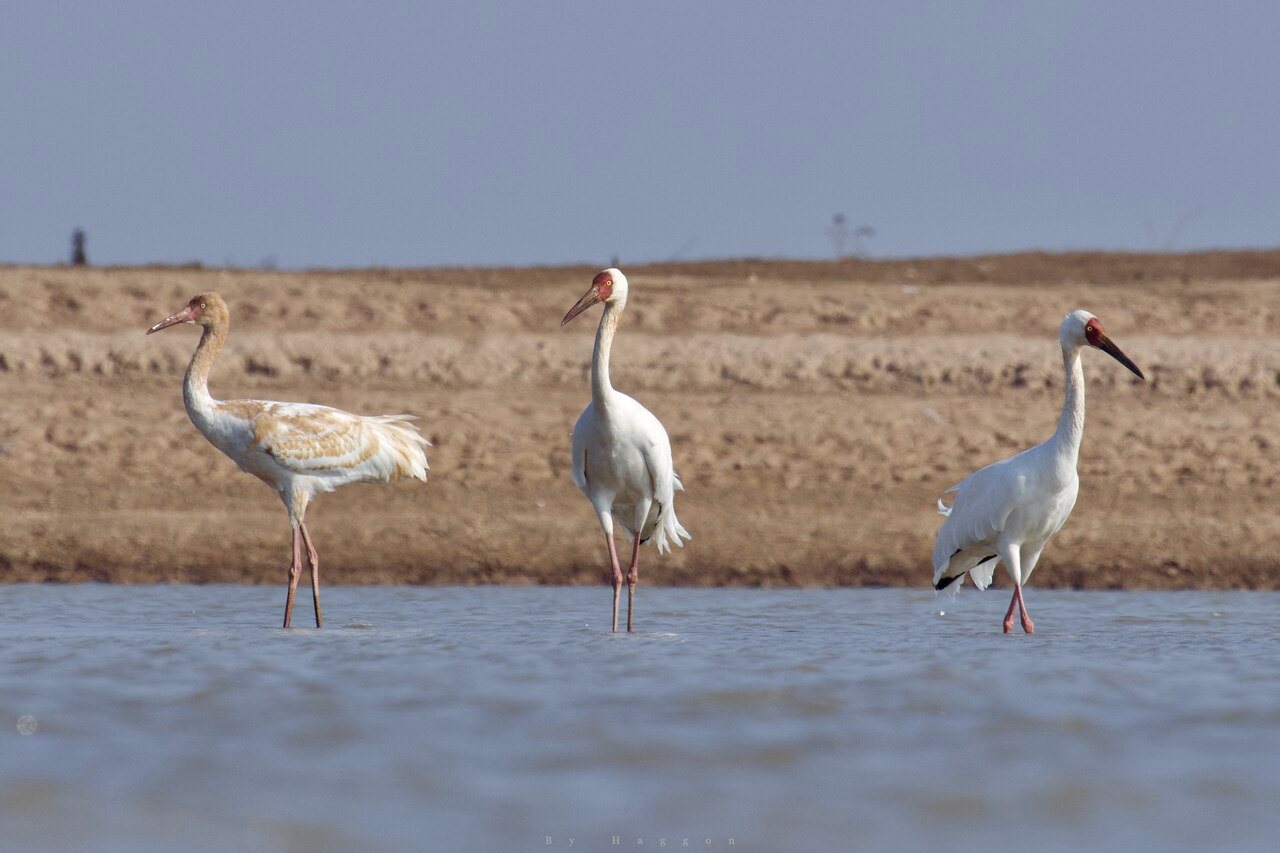
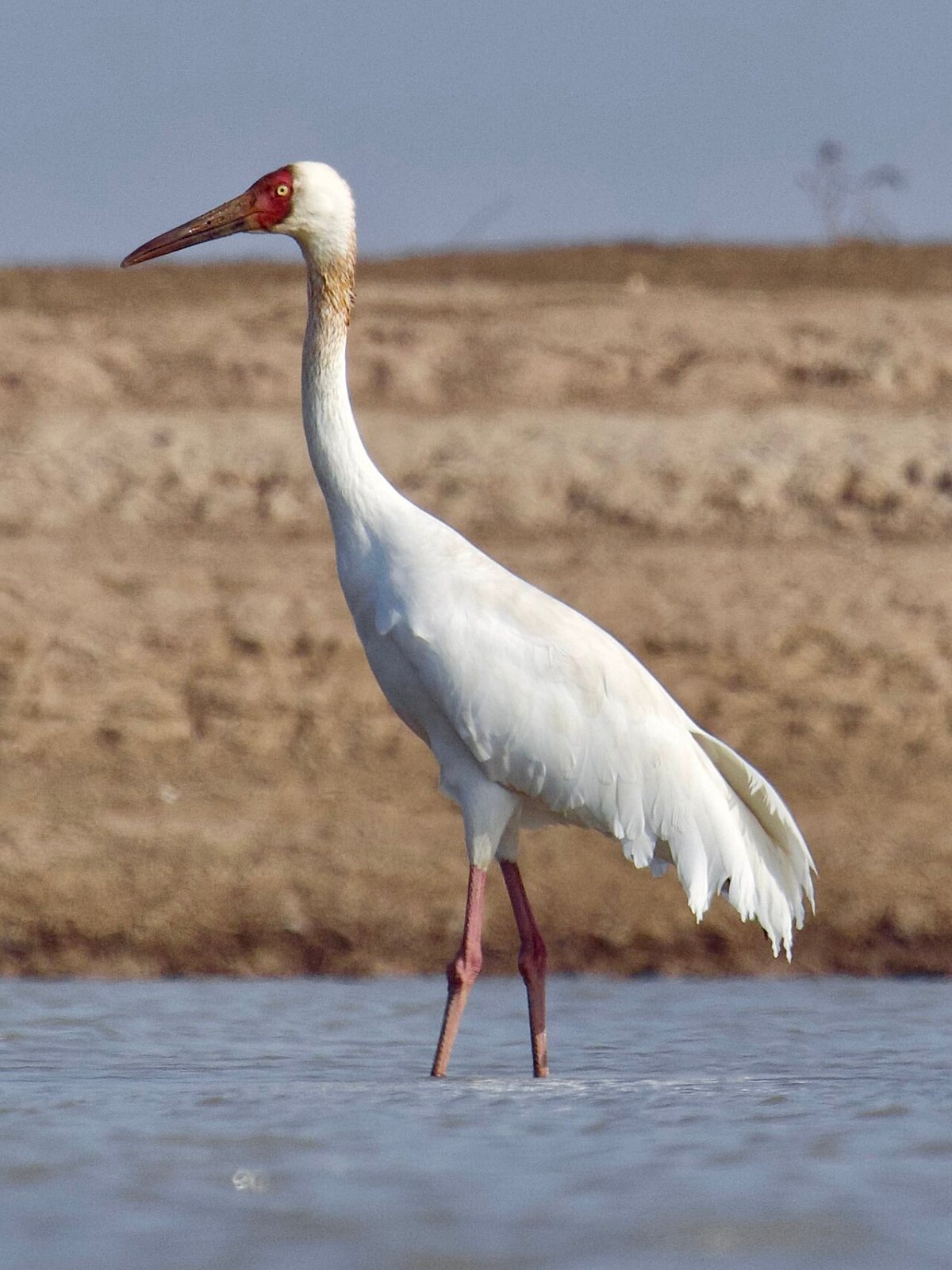
Five winter days around China's largest freshwater lake, spent with the world's largest concentration of Siberian cranes: flooded lotus fields at arm's length, national-reserve watchtowers, and a plan that follows the water rather than the map.
Siberian cranes on the Poyang flats · the season runs mid-December to the end of January
The bird≈5,800 Siberian cranes
the 2025–26 winter count — more than 80% of the world population, on one lake
Best windowMid-Dec – end Jan
birds arrive from late October and peak once the water bottoms out
ViewpointsFree
the hides and watchtowers charge nothing; only Wucheng's museums sell tickets
WalkingNone required
hide-based mornings; the effort is standing still, not covering ground
Why this route
The lake at its smallest, and the birds at their closest.
Poyang is a seasonal lake, and winter is when it empties. What the receding water exposes is food — tuber beds, snails, the roots of submerged plants — and that is why roughly 5,800 Siberian cranes, more than four fifths of the world population, winter here alongside hundreds of thousands of other waterbirds. Roughly 102 seasonal sub-lakes keep shallow water at the right depth while the main lake drains, and since around 2012 the cranes have also taken to feeding in flooded lotus and rice fields on the shore, where the tubers are easier.
This trip is built around that behaviour. Two mornings at each of the three best grounds — the flooded fields of Five Star outside Nanchang, the watchtowers of Nanji national reserve on the south shore, and the free viewpoints of Wucheng — because mid-morning fog can wipe out a whole session, and the flat that is holding birds changes with every week of the drawdown. A guide who was out that morning is worth more than any fixed itinerary, so the plan is allowed to move.
It is a private departure — you choose when to come, inside the window when the birds are at their peak. Pairs naturally with a Jiangxi or Anhui add-on; the lake is one of the easiest wildlife add-ons in the country.
Route Briefing
In and out of Nanchang, three grounds on the lake, two mornings at each. Five stages, one vehicle.
Day 01Nanchang → Five Starthe 30-km drive out, first session in the flooded lotus fields
Day 02Five Star → Nanjisecond morning at the hide, then south to the reserve shore
Day 03Nanjiwatchtower mornings over the sub-lakes, Changhu the one to ask for
Day 04Nanji → Wuchenganother reserve morning, then the free viewpoints with mounted telescopes
Day 05Wucheng → Nanchanga final fog-insurance session, road back to the city
Species odds
What the lake actually offers.
The field estimates we plan the winter around — not a survey and not a promise.
Five Star · the flooded fields
Nanchang side · the trip's first and closest ground
High
Siberian cranes, feeding at close range in season
Medium
the shore-field flocks the cranes arrive with
In season this is the most reliable ground on the lake — the birds leave the flats to feed on the flooded lotus and rice fields, and the two-storey hide keeps people off the birds' ground.
Nanji wetland · the reserve
South shore · watchtowers over the sub-lakes
High
wintering waterbirds on a reserve scale — around 141,000 of them
Medium
crane flocks on whichever flat holds water that week
Which flat is holding birds changes with every week of the drawdown. The Changhu tower is the default ask, and the guide's morning scout is the real instrument.
Wucheng · the viewpoints
Yongxiu shore · free, built-up, weather-proof
Medium
lake-wide views through mounted telescopes
Low
a guaranteed fog-free session — nowhere on the lake offers one
Good with children or in bad weather, busier at New Year. The indoor museums are tickets and context; the birds are all outside.
The season is the promise: cranes arrive from late October and peak in the weeks after the water bottoms out, which is why the tour's window runs mid-December to the end of January. The birds themselves keep the final vote.
Day by day
The five days.
Hide mornings and watchtower mornings, with the midday kept for warmth and the plan kept loose. Two mornings at each site is the fog insurance, not padding.
01Day 01
The flooded fields outside the city
Nanchang → Five Star
Meet in Nanchang and drive the thirty kilometres to Five Star, the protection area that began when 500 bird photographers crowdfunded the rent of a lotus field in 2017 to keep it flooded for cranes. A two-storey hide looks over the fields, and the local claim is the shortest viewing distance on the lake — birds sometimes feed a few dozen metres away.
The first session runs into the late afternoon light. In season this is the most reliable ground on the lake, because the cranes leave the flats to feed here on their own schedule.
OvernightNear Five Star, Nanchang side
DriveAbout 30 km
SessionAfternoon into dusk
02Day 02
A hide morning, then south to the reserve
Five Star → Nanji
Five Star · flooded lotus fields, sometimes a few dozen metres
The second morning at the hide — first hours after sunrise, which is when the fields are at their best. Fog is the honest risk of every wetland morning here; a second morning at the same ground is how the trip absorbs it.
After lunch, south to the Nanji wetland, a national nature reserve on the lake's south shore where around 141,000 waterbirds winter among the sub-lakes.
OvernightNanji area
SessionSunrise hide, afternoon transfer
The groundWatchtowers over four sub-lakes
03Day 03
A full day on the reserve shore
Nanji
A full day on the reserve: morning and late-afternoon sessions from the watchtowers over Zhanbei, Changhu, Baisha and Beishen lakes. The Changhu tower is the one to ask for, and the guide's morning scout decides which flat is holding birds this week.
Midday is deliberately slow — warm rooms, long lunches, and the telescopes doing the work when the light flattens.
OvernightNanji area
On footTower platforms only
If fog winsThe afternoon session takes the morning's place
04Day 04
Another reserve morning, then Wucheng
Nanji → Wucheng
One more morning on the reserve shore — the second chance at the sub-lakes — then across to Wucheng on the Yongxiu shore, the most built-up base on the lake.
Wucheng's lakeshore viewpoints — Shizishan, Changhuchi, Zhushihu — are free and carry mounted telescopes, which makes them good with children or in bad weather. The town's four indoor museums sell tickets and are optional context, never the reason to come.
OvernightWucheng
The groundFree viewpoints, telescopes in place
OptionalThe indoor museums, roughly ¥29–78
05Day 05
The last session, and the road home
Wucheng → Nanchang
A final morning at whatever ground held birds best this week — the plan has been allowed to move for exactly this reason — then back to Nanchang for flights or trains out.
If the lake has been generous, the last session is the souvenir one. If it has been foggy, this is the trip's fifth chance, which is the whole arithmetic of two mornings per site.
OvernightNone — trip ends in Nanchang
SessionSunrise, then the road
Pairs withA Jiangxi or Anhui add-on
What's included
What is included, and what is not.
A short list for a winter trip. The left column is arranged before you leave; the right column is either yours or a question we are glad to answer.
Included
Arranged and paid for before you arrive.
A birding guide, all five days
English-speaking, on the ground scouting mornings before you reach them.
Private transfers
Nanchang door to door — your own vehicle between the three grounds.
Four nights' lodging
Twin share, positioned for the sunrise sessions rather than the city centre.
All viewpoint access
The hides, watchtowers and viewpoints on the plan are free; we handle the coordination.
Arrangement and logistics
The moving plan itself — which flat, which tower, which morning.
Not included
Yours, or yours to ask us about.
Meals
Not in the quote; Wucheng and the shore towns eat simply and well.
Optics
Bring binoculars first, a long lens second — 400 mm is a sensible minimum for frame-filling portraits.
Getting to and from Nanchang
Flights and high-speed rail are yours to book.
The indoor museums
Optional, roughly ¥29–78 a combination, and not required to see a crane.
Personal expenses
Everything from heat packs to extra batteries — winter mornings chew through both.
Ask about any line above and we will answer it in writing before the trip.
Enquiry
Ask us about this one.
Tell us your dates and how much time you want on the flats. We will come back with what the water level is doing this winter, which flats are holding birds, and a written outline with a price.
Response time
One business day
Private tour
Your own dates
Best window
Mid-Dec – end Jan
Enquiry sent
Thank you — your enquiry is with us.
We reply within one business day. A copy of what you sent has gone to your inbox.