Wildlife / Poyang Lake
The lake at its smallest.
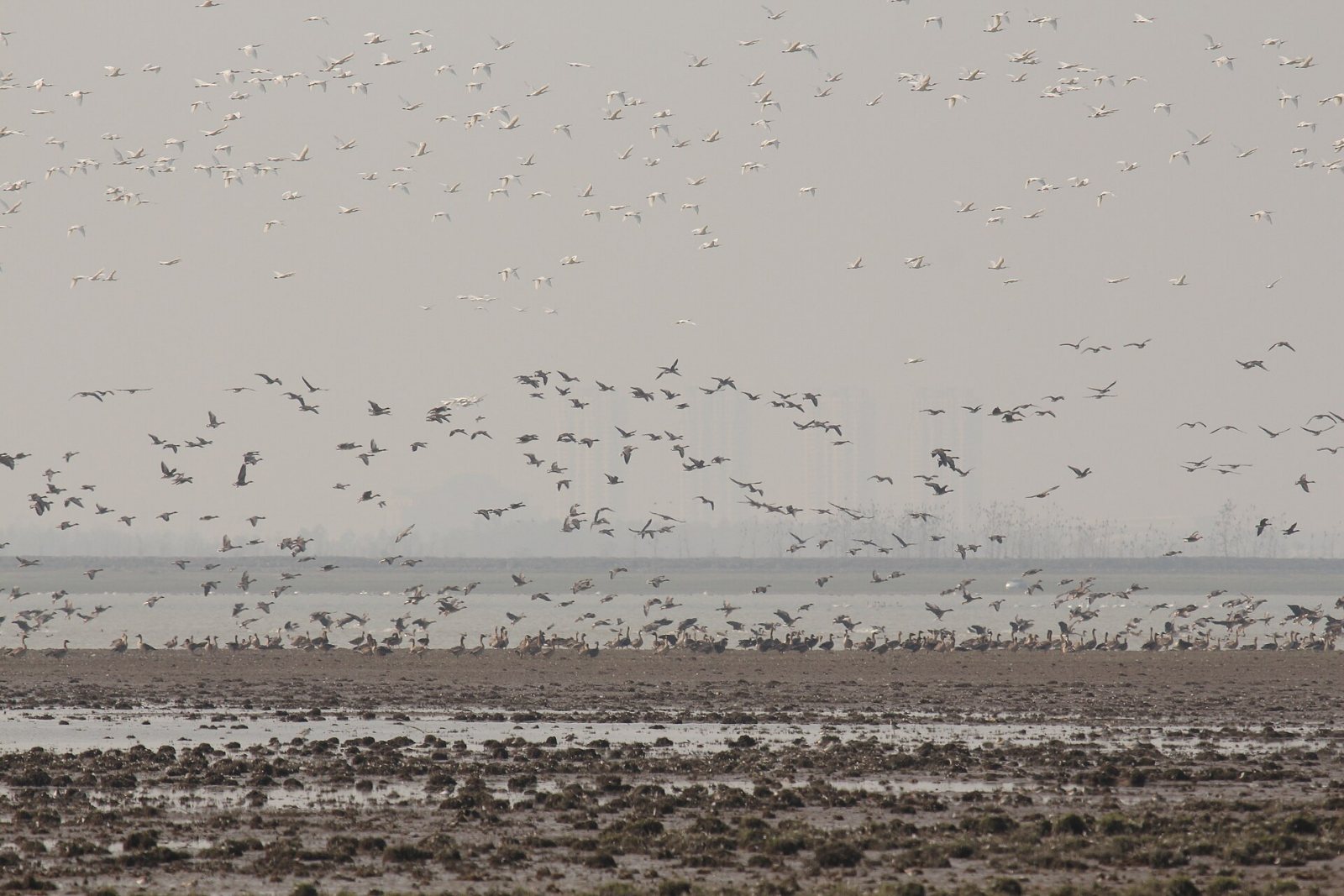
China's largest freshwater lake spends winter looking like a field. That is precisely why the cranes are here.
Start this journey brief →Poyang Lake · December · A Dim Light Chaser, CC BY 4.0
Best windowMid-Dec – end Jancranes arrive from late October and peak after the water bottoms out
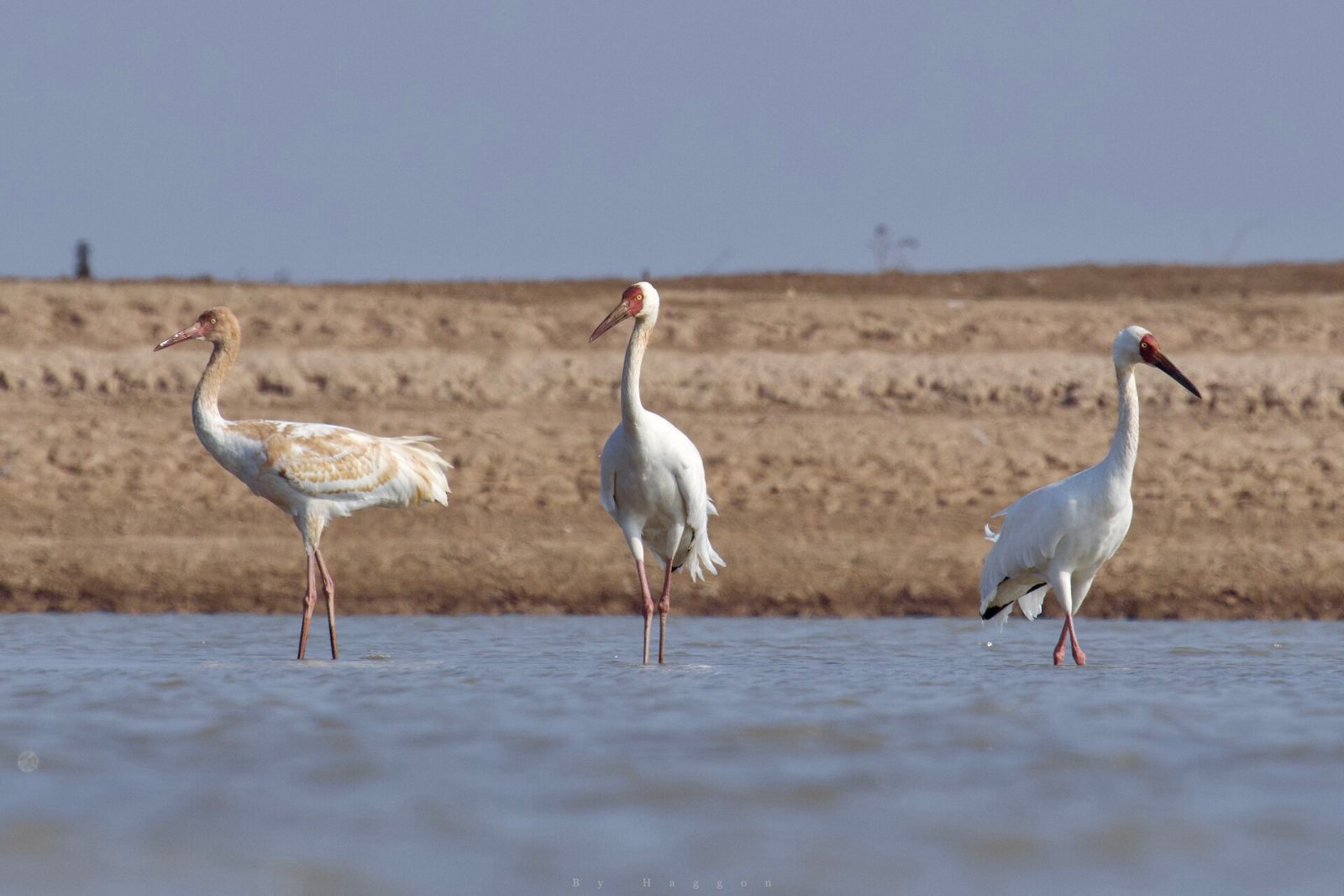
Siberian cranes≈5,800 birdsthe 2025–26 winter count, more than 80% of the world population
Water level8 m and fallingXingzi gauge broke the extreme-low mark on 14 December 2025
Viewpoint feesFreethe hides and watchtowers charge nothing; only Wucheng's four museums sell tickets
A dry lake is a working lake.
Poyang is a seasonal lake, and winter is when it empties. In 2025 the Xingzi gauge fell below the 12 m low-water line on 8 August — eighty-seven days earlier than average — and below the 8 m extreme-low line on 14 December. The lake spent 217 days of the year below the low-water mark, and the water surface connected to the Yangtze shrank by nine tenths. The mudflats that appear are not a disaster scene. They are the reason the birds come.
What the receding water exposes is food: tuber beds, snails, the roots of submerged plants. Roughly 102 seasonal sub-lakes larger than a square kilometre, holding more than 800 km² between them, keep shallow water at the right depth while the main lake drains — six tenths of the wintering birds are in those basins. The cranes then do something that surprised observers a decade ago: since around 2012 they have increasingly left the lake altogether and fed in lotus and rice fields on the shore, where the tubers are easier. In 2017, when one such field near Nanchang was about to be ploughed, 500 bird photographers crowdfunded the rent to keep it flooded for cranes. That field became the Five Star Siberian Crane protection area.
Where to stand, and when.
- Five Star, Nanchang
About 30 km from the city and free. A two-storey hide looks over flooded lotus fields where birds feed close — the local claim is the shortest viewing distance on the lake, sometimes a few dozen metres. Best in the first hours after sunrise.
- Nanji wetland
A national nature reserve on the lake's south shore, free to enter, with watchtowers over Zhanbei, Changhu, Baisha and Beishen lakes. Around 141,000 waterbirds winter here. The Changhu tower is the one to ask for.
- Wucheng, Yongxiu
The most built-up option: four paid museums and a cluster of free viewpoints — Shizishan, Changhuchi, Zhushihu — each with mounted telescopes. Weekends bring a shuttle between them. Good with children or in bad weather, busier at New Year.
- Follow the water, not the map
Which flat is holding birds changes with every week of the drawdown. A guide who was out that morning is worth more than any fixed itinerary, and the plan should be allowed to move.
What the lake asks of you.
What is free, what is not
Viewpoints at Five Star, Nanji and Wucheng's lakeshore are free and many have telescopes fixed in place. Wucheng's four indoor venues — the wetland bird museum, the space hall, the aerospace hall and the town memory hall — sell separate tickets, roughly ¥29–78 depending on the combination. None of them is required to see a crane.
Optics, not megapixels
Bring binoculars first and a long lens second. 400 mm is a sensible minimum for frame-filling crane portraits; a 1.4× converter earns its weight. The birds are wild and unbaited, so the photograph is a function of patience and distance, not of equipment alone.
December cold, January fog
Wetland mornings sit near freezing with a wind that goes through layers. Mid-morning fog on the lake is common and can wipe out a whole session; plan two mornings at each site rather than one.
No drones, no playback
The reserve runs its own drone patrols against poisoning and netting, and private flights over wintering birds are both prohibited and counterproductive. No call playback, no flash at dawn, no walking out onto a flat to get closer. Our guide's working distance is a condition of the trip, not a suggestion.
Ready to take it further?
Tell us your dates and how much time you want on the flats. Poyang pairs naturally with a Jiangxi or Anhui add-on, and it is the easiest of our three wildlife areas to reach by high-speed rail. The snow leopard country of Sanjiangyuan is the same season, a very different altitude.
Start a journey brief →