Nanchang
The provincial capital, the rail hub, and the lowest ground on the trip. Hot in summer, humid all year.
 Start your enquiry
Destinations / Jiangxi / Altitude
A low province with three high mountains on its rim. The plains sit near sea level; the ridges go to 1,900 metres, and the walk between them is the only altitude on a normal route.
Explore the guide ↓Jiangxi, all regions
Most of Jiangxi is low. Nanchang sits at about 25 metres, Poyang’s shores at 15 to 20, Jingdezhen’s basin below 100, and the villages of Wuyuan between 100 and 500 metres depending on how far up the valley they are. Nothing here asks anything of anybody: the heat and the humidity are the constraints, not the air.
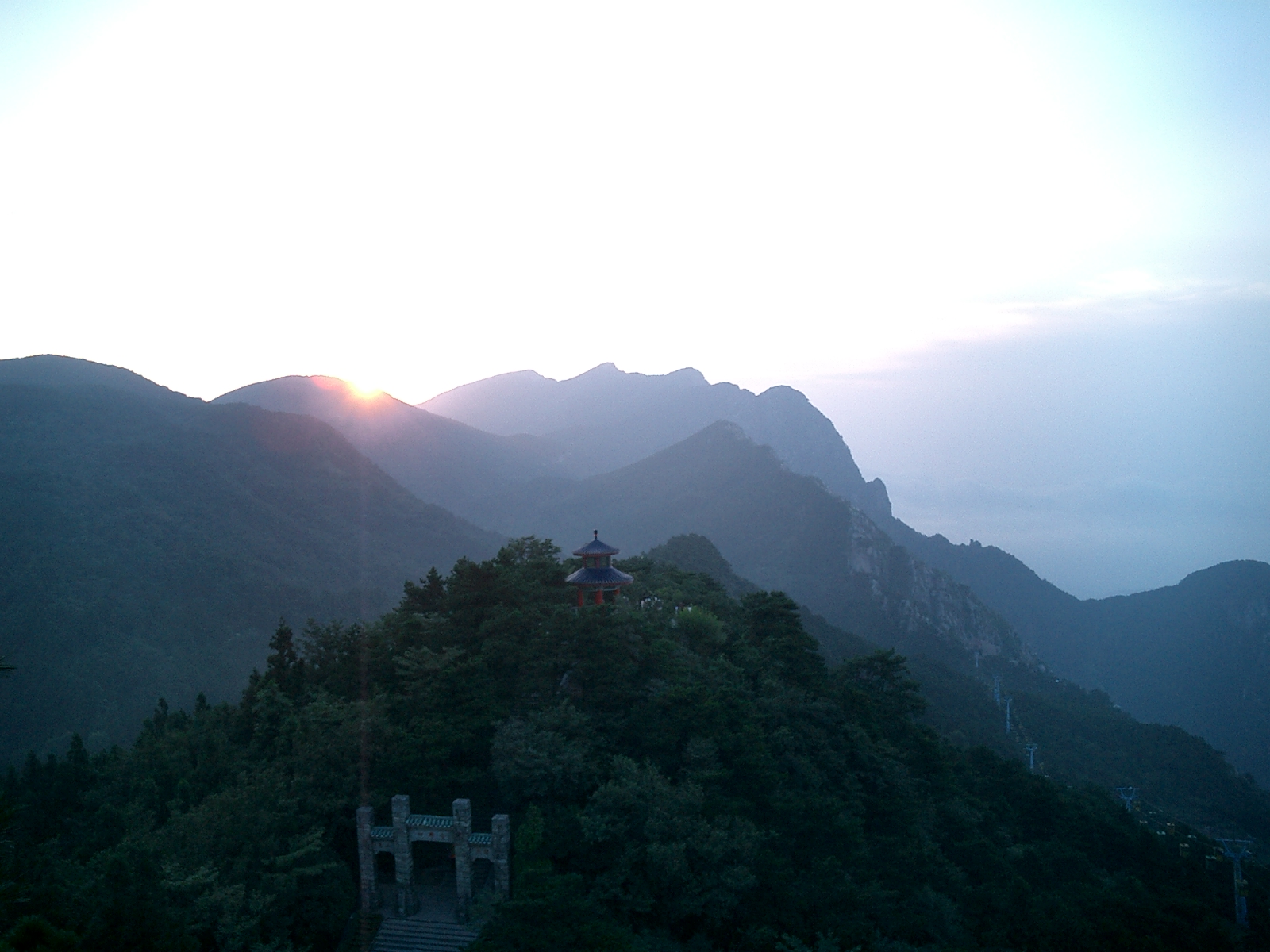
The mountains are abrupt. Lushan rises from the plain to 1,474 metres in a single massif; Sanqingshan’s ridge runs to 1,817; Wugongshan’s meadow ridge to 1,918. The highest ground in the province is on the Fujian border a little above 2,100 metres, in the Wuyi range, and it is not on any standard itinerary.
The practical consequence is that altitude is never a problem and always a surprise. You sleep at 30 metres and stand at 1,800 within a day, which is fine — the gain is fast enough to feel but not fast enough to matter for anyone without a heart or lung condition.
By place and by route.
The provincial capital, the rail hub, and the lowest ground on the trip. Hot in summer, humid all year.
Huangling sits at about 500 metres on its hillside; the valley villages are lower. Terraces, steps, wet stone.
A basin town on the Chang river. No altitude, plenty of humidity.
The villa town at about 1,150, the summit at 1,474. Ten degrees cooler than the plain, with cloud most afternoons.
Cable car to about 1,600, then stone stairways to the ridge and the summit. The most vertical day in the province.
The meadow ridge, the traverse, and the summit camp. Exposed, windy and cold at night even in August.
Nothing altitude-related. What goes wrong is underestimating the stairs: Sanqingshan and Wugongshan both involve 1,000 to 1,500 steps in a day, much of it on wet stone, and the descent damages more knees than the climb does. Poles, a brace if you have a history, and a realistic turnaround time are the useful preparations.
The second thing is temperature. The ridges are 8–12 °C cooler than the plain and exposed to wind; a July summit at dawn is 12 °C, and people arrive in shorts. A light down layer and a shell are the two items that decide whether the sunrise is pleasant.
If you have a heart or lung condition, tell us at enquiry. Lushan’s ridge town is at 1,150 metres and reached by road, which is the gentlest of the three; Sanqingshan’s stairways are the most demanding and can be shortened with the cable cars.