Wucheng reserve
The oldest and best-known reserve: dikes through the wetlands, observation towers, and wardens who know which pools hold which birds.
 Start your enquiry
Destinations / Jiangxi / Poyang Lake
China’s largest freshwater lake, which fills in summer and drains into a maze of channels in winter — which is exactly when the cranes arrive.
Explore the guide ↓Northern Jiangxi · the Yangtze floodplain
Poyang is the largest freshwater lake in China, and its defining feature is that it is not the same lake twice. In the summer flood it spreads over 3,000 square kilometres or more, connected to the Yangtze at Hukou; by January it has drained into a braided system of channels, pools and mudflats, with grass growing on the exposed bed and roads running where boats were.
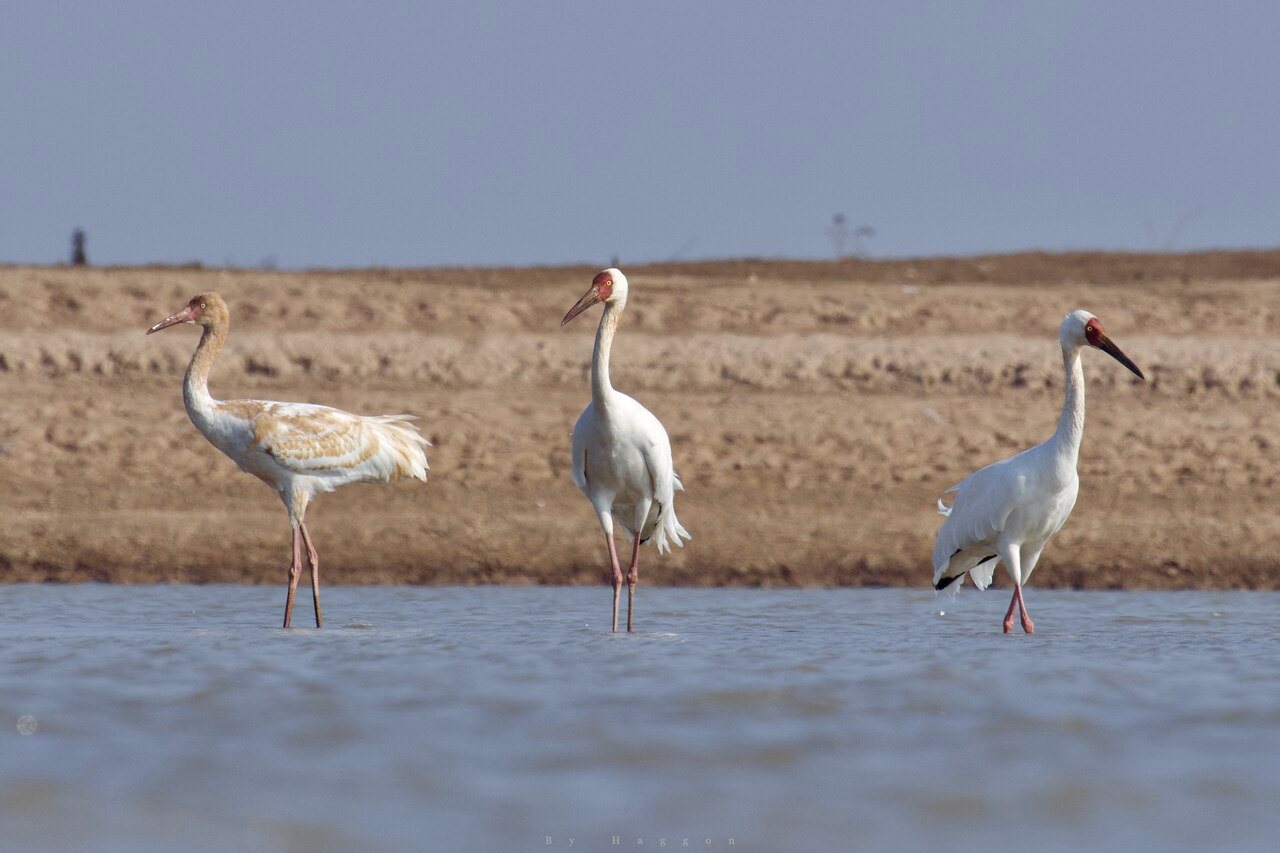
That annual draining is what makes it the most important wetland in the country. The mudflats and shallow pools hold tubers and fish, and the birds come for them: Siberian cranes, white-naped cranes, swans, geese and ducks in numbers that run to hundreds of thousands. Almost the entire world population of Siberian cranes winters here — a bird that breeds in the Russian Arctic and depends on this one lake for four months a year.
The reserves are at Wucheng, on the western shore, and around Nanji, on the southern arm. Neither is a zoo: you drive the dikes at dawn and dusk, stop where the wardens allow, and look through a scope at birds a few hundred metres away. It is the best birding week in China, and it requires patience.
Dikes, hides and a lot of early mornings.
The oldest and best-known reserve: dikes through the wetlands, observation towers, and wardens who know which pools hold which birds.
A second reserve on the other side of the lake, with huge flocks of geese and swans and fewer visitors.
Poyang holds a significant part of the remaining Yangtze finless porpoise population. Sightings are luck; the boat surveys are not tourism.
The junction with the Yangtze, with the old town, a pagoda and the water colour line where lake and river meet.
The birds decide the calendar.
The first arrivals, with the lake still high and the birds spread out. Quiet, and harder to see well.
The peak: cranes, swans and geese concentrated on the remaining water, with the best viewing of the year. Cold, damp and worth it.
The last weeks before departure, with birds in breeding plumage and the lake beginning to rise. Also the start of the rapeseed season, which combines well.
The lake at full flood, the birds gone, and the reserves mostly closed to visitors. Not the season.
Ninety minutes from Nanchang, then dikes.
Nanchang is the base: about 90 minutes by road to Wucheng, two hours to Nanji. Both are day trips in theory and two-day trips in practice.
By vehicle along the dikes, with stops at the towers and hides. A guide with a scope and a relationship with the wardens doubles what you see.
Nanchang for comfort; Wucheng town for proximity to dawn. The reserve guesthouses are basic and cold in winter.
A working floodplain.
The lake is not empty of people: fishing communities, buffalo grazing on the exposed bed, and rice on the margins. The reserve works around them, not instead of them.
The Siberian crane is a cultural icon in China as well as a conservation problem: a white bird with a red crown that appears in paintings and on posters. Seeing one at 300 metres through a scope is the point of the trip.
Poyang’s connection to the Yangtze at Hukou is what makes the flood pulse work. The dams upstream and the sand dredging downstream are the two arguments that decide its future.
Cold, damp and early.
The birds feed at first light and move to roost by nine. A 5.30 start is normal, and the light is the reason.
January on the dikes is 2–6 °C with wind off the water. A proper shell, a warm hat and gloves; the vehicle is never far but the waits are long.
A scope is essential and a good pair of binoculars helps. We bring both; if you have your own, bring it.
Tell us whether you want photographs or simply to see them. The two trips have different starts, different hides and different patience.
Start my journey brief ↗