Guiyang & the waterfall belt
The capital, the 77.8-metre Huangguoshu falls at Anshun, and the Ming-garrison villages where a seventeenth-century dialect is still spoken.
 Start your enquiry
Destinations / Guizhou
A green plateau province of limestone cones, waterfall gorges and stilted villages — the densest minority-village landscape in China, and the easiest place to be rained on.
Explore the guide ↓The Yunnan–Guizhou plateau · Guizhou Province
Guizhou sits on the Yunnan–Guizhou plateau at an average of about 1,100 metres — high enough to be cool in summer, low enough that nobody has to think about altitude. It is a province of limestone: cone karst, sinkholes, caves, rivers that disappear into the ground and reappear twenty kilometres later. The local saying is that there are not three clear days in a row, and in the wet months it is not far wrong.
The travel logic is unusual. There is one obvious hub (Guiyang), one obvious landscape (the waterfall belt around Anshun), and one dense cluster that needs its own two or three nights: the Miao and Dong village country in the southeast, around Kaili, Leishan, Liping and Zhaoxing. Between them are mountain roads that look short on the map and take two to four hours in practice. Routes work when they are built around two or three nights per base rather than a new bed every night.
What Guizhou has that nowhere else in China has in the same concentration is the village landscape: stilted wooden houses stacked up a hillside, drum towers and wind-and-rain bridges, silverwork, indigo dyeing, and a festival calendar that runs on the lunar year. It also has Fanjingshan, a 2,570-metre island of old forest with a Buddhist summit that was inscribed as a World Heritage site in 2018, and the karst country around Libo, which is quiet walking of a very high order.
The centre, the village southeast, the southern karst and the eastern peak.
The capital, the 77.8-metre Huangguoshu falls at Anshun, and the Ming-garrison villages where a seventeenth-century dialect is still spoken.
A thousand households at Xijiang, five drum towers at Zhaoxing, and the Dong grand song — the reason to give this corner three nights.
Cone peaks, forest reserves and a river that runs green between them. Walking country, with far fewer people than the guidebooks suggest.
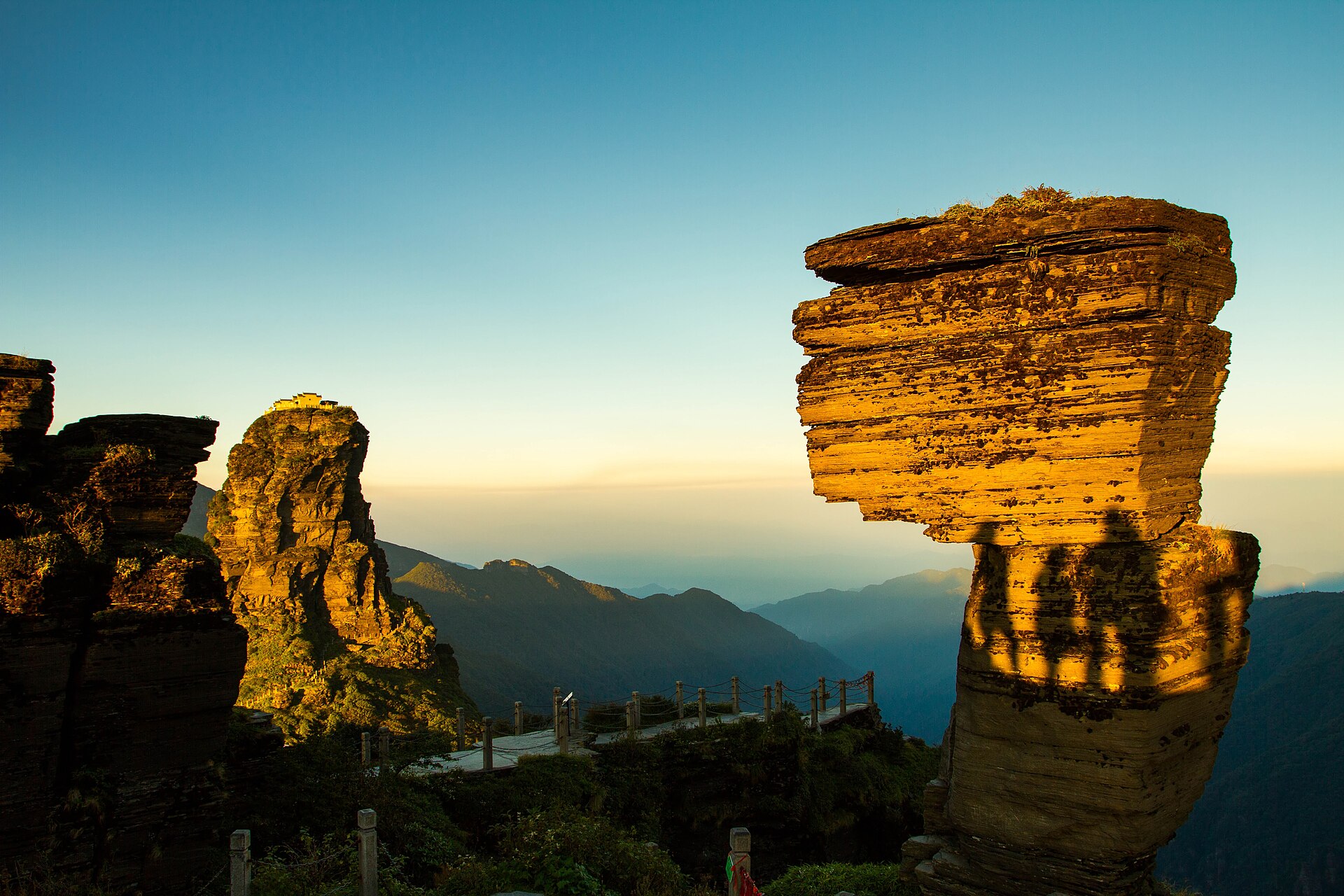
A World Heritage massif of ancient forest, a cable car to 2,100 metres, and a summit split in two by a cleft with a temple on each half.
Guizhou is built privately rather than run as fixed departures — the roads and the festivals decide the shape.
Waterfall and village country, the southeast in depth, or the karst south — the three shapes we build most often, with the days and seasons each needs.
The same province read as a single guide: the spine, the three landscapes, the season and the practical detail.
Libo to Guilin is a day by rail. The karst continues, the river traffic begins, and the two provinces make one southern arc.
The green season, the festival calendar and the two weeks a year when the province is genuinely crowded.
What we have written about the province and the karst under it.
Solubility, uplift and time: why southern China has the cone karst it does, and why Guizhou’s is the deepest.
How the Guizhou season compares with Guangxi, Yunnan and the plateau.
The two weeks a year when every village in the southeast is fully booked, and how to plan around them.
The province as one read: the spine, the three landscapes and the questions that come up first.
A long green season and a wet one.
The province turns deep green, the falls run at full volume and the village festivals cluster. Rain arrives in bursts rather than days.
The cool alternative to the rest of China’s summer: 25 °C days on the plateau, afternoon showers, and a full lunar festival calendar.
The cleanest month of the year: dry, cool, and the best odds of a clear summit at Fanjingshan. Also the busiest fortnight, around the national holiday.
Grey, damp and cold, with snow on the high ground and very few visitors. Villages are quiet, some guesthouses close, and the terraces are bare.
Two things move each year in Guizhou: the water and the festivals.
How much water is going over Huangguoshu, and which lunar festivals fall in your week.
Tell us whether the villages or the landscape are the point, and how much road time you will accept. The two answers decide the whole week.
Start my journey brief ↗