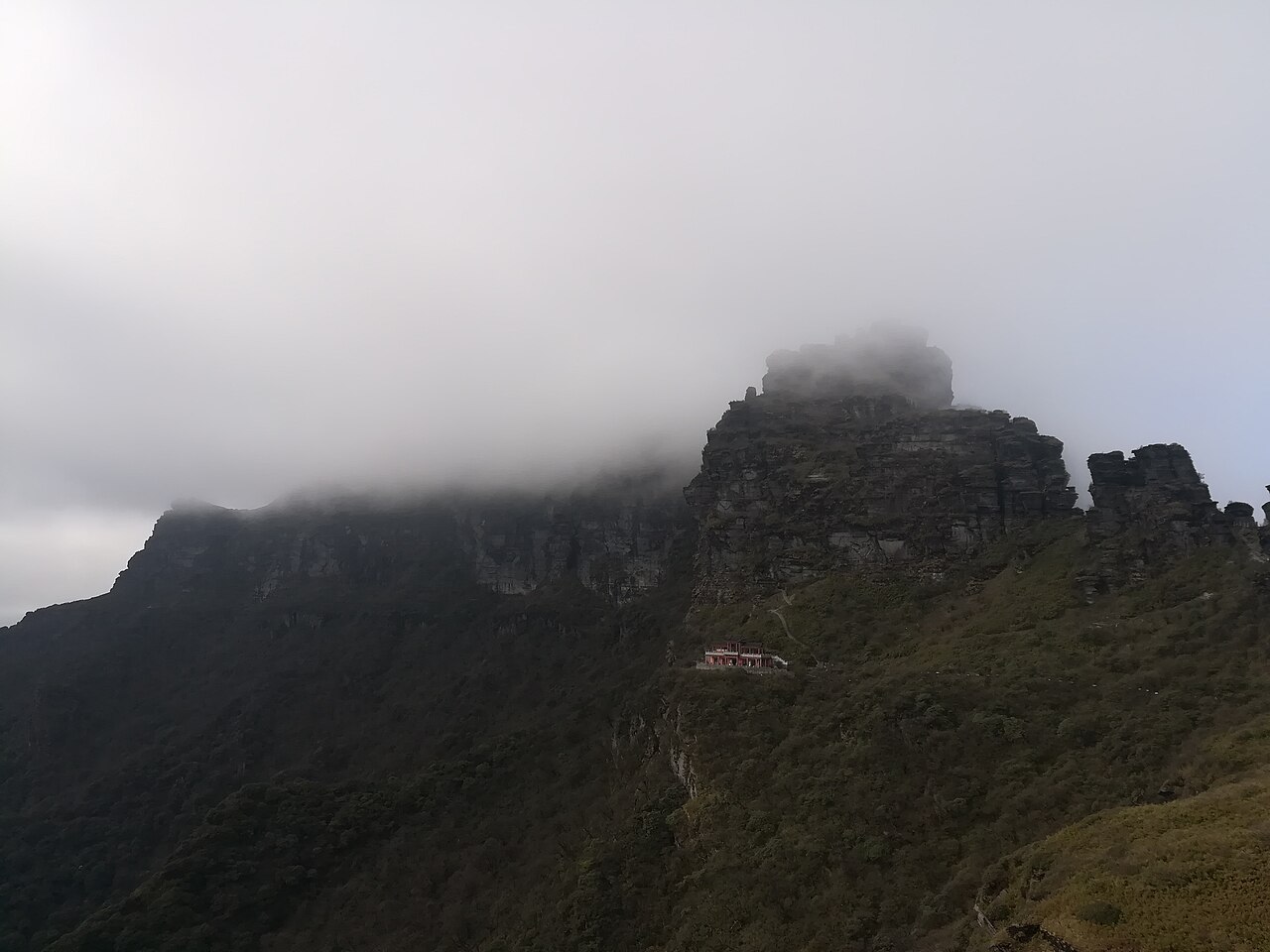
A UNESCO peak of stacked stone, Miao and Dong villages that still set their calendars by the fields, Asia’s biggest single waterfall and a karst interior almost nobody drives. Guizhou rewards slow, well-paced travel.
Guizhou sits on the Yunnan–Guizhou Plateau and is one of the least developed province-level landscapes in inland China — in the best sense. Limestone, forest and terraced fields cover almost everything; the cities are functional rather than scenic, and the reason people come is nearly always between them.
The province earned its second UNESCO natural inscription in 2018, when Fanjingshan — a 2,493 m island of metamorphic rock rising out of the Wuling range — was inscribed for its biodiversity and its strange vertical landforms. Southwest of it, the South China Karst listing covers the cone-and-forest country around Libo.
Guizhou journeys work best with two bases and patient road time. The southeast around Kaili and Zhaoxing holds the Miao and Dong village country; the centre holds Anshun and Huangguoshu; the northeast holds Fanjingshan. We shape routes so the driving earns its stops.
What to explore.
Regions and experiences to shape a Guizhou journey around.
Fanjingshan
A stone tower of a mountain, reached by stairways of several thousand steps (or cable car), with the Red Clouds Golden Summit temple perched on a slot of rock. UNESCO-listed in 2018 for species found almost nowhere else. Weekdays are calm; public holidays are not.
The Miao & Dong southeast
Around Kaili, Leishan and Zhaoxing: stilted wooden villages, drum towers, wind-and-rain bridges, silver festivals and the Dong grand song tradition. This is the densest minority-village landscape in China and the cultural heart of any Guizhou route.
Huangguoshu & Anshun
Asia’s largest single-drop waterfall at 77.8 m, with a walk-in cave system behind the curtain of water. Busy with domestic visitors midday — the fix is simple: arrive early or plan the water-day for the end of the trip.
The Guizhou karst
Cone peaks, sinkholes and forest reserves around Libo and Maolan, on the UNESCO South China Karst list. Quiet walking country, shared with bat caves, bean-paste workshops and rivers that disappear into the ground.
Cool-summer highlands
Liupanshui and the western plateau sit cool enough to make Guizhou a credible summer destination when most of China is hot. Mornings are often misty — pack for a mountain, not a beach.
When to go.
A long green season, judged by altitude and festivals.
April–June
The province turns deep green, waterfalls run at full volume and village festivals cluster. Rain is common but usually comes in bursts; Fanjingshan in clear weather is a matter of luck at any time of year.
July–September
The best answer to summer heat elsewhere. Expect afternoon showers and full village calendars — the sixth of the sixth lunar month brings Miao festivals across the southeast.
October
Clear, dry and cool — the strongest month for photography and the Fanjingshan stairways, though the national holiday week in early October is the busiest fortnight of the year.
November–March
Grey, damp and cold on the plateau. The villages keep their fires and their festivals, but walking days shrink; we usually steer winter journeys elsewhere.
Plan the journey.
Connections, bases and the practical details that hold a good route together.
Getting there
Guiyang is the hub, about two hours from Chengdu or three from Shanghai by high-speed rail, with direct flights from most major Chinese cities. Anshun, Kaili and Tongren (for Fanjingshan) are all on the rail network now.
Road time is the budget
The southeast villages still cost real driving time — two to four hours between good bases is normal. We build routes around two or three nights per base rather than daily moves.
Stays
Comfortable hotels in Guiyang and Anshun; in the villages, family-run guesthouses that are warm and simple rather than polished. We book the stays we would repeat ourselves.
Stay curious.
Make room for local life, food and cultural encounters.
Village etiquette
The Miao and Dong villages are living communities, not open-air museums. Ask before photographing people, expect small entry fees that fund the village, and take a local guide — the difference in what you understand is enormous.
Sour soup & sticky rice
Guizhou’s kitchen runs on sour broth (suōtang fish is the signature), smoked pork, sticky rice and strong rice wine offered in toasts. It is one of the most distinctive regional cuisines in China.
Silver, song & brocade
Dong grand song is UNESCO-listed intangible heritage; Miao silver and embroidery carry family history on their backs. Buying directly from makers, and watching the work, beats any souvenir stall.
Before you go.
Useful details to discuss when shaping your trip.
Fitness & stairs
Fanjingshan is a genuine several-thousand-step climb unless you take the cable car — most of our routes do, then walk the upper circuit. Village walking is gentle but sloped.
Weather & packing
Mist, shower rain and cool evenings are normal even in summer. A proper rain shell and grippy shoes do more for a Guizhou trip than any other kit.
Holidays matter
Guizhou’s domestic crowds are seasonal and concentrated: early October and summer weekends. The routes are quieter on weekdays and in shoulder weeks.
Pair it with
Yunnan and Guangxi share the plateau edge — Kunming or Guilin pair naturally with a Guizhou loop, as does Zhangjiajie to the northeast.
Tell us which pulled you — the stone peak, the villages or the waterfall country — and how slow you want the road to be. We will build a two-base Guizhou route around festivals and weather.