The lodge placement
The red-land lodges sit inside the landscape; Kunming departures at 4 am are the alternative and we do not sell them. Two lodge nights cover three dawn sessions.
 Start your enquiry
Destinations / Yunnan / News / Red land
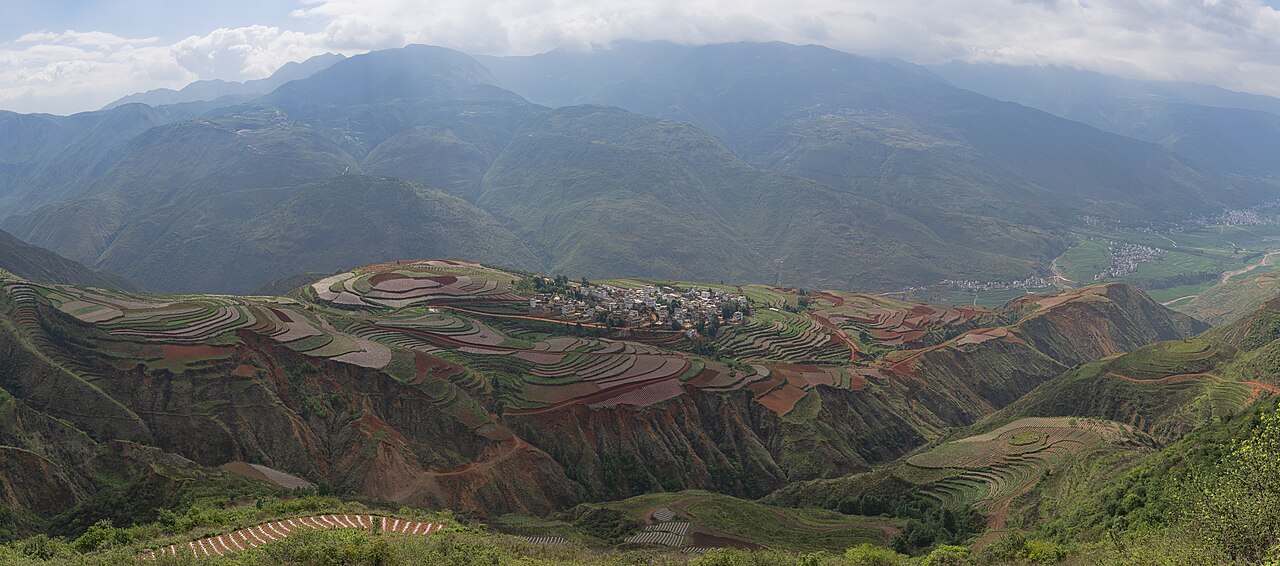
Dongchuan's fields repaint themselves twice a year: the summer ploughing turns the iron-rich earth to fresh red, the autumn harvest strips it again. Here is when each palette peaks, and how the weekend journey holds the dawn.
Explore the guide ↓Dongchuan · east of Kunming
The red land is agriculture, not a park: the iron oxide in the soil gives the red, but the composition — the patchwork of red, gold, green and white — is set by what each family has just ploughed, planted or harvested. May–June repaints the fields in fresh-turned red and young green; September–November strips them to golden stubble and new red. Those two windows are the year's palettes; midsummer is lush green, midwinter is bare and brown.
Weather adds the finishing: low sun after rain, mist in the gullies at dawn, and the occasional dramatic sky that makes the Luoxia compositions. This is why the classic photographs cluster at the edges of the two windows — fresh ploughing plus a storm-light morning.
What makes the weekend work.
The red-land lodges sit inside the landscape; Kunming departures at 4 am are the alternative and we do not sell them. Two lodge nights cover three dawn sessions.
The fallen gully of Luoxia, the seven-colour slope and the thousand-year dragon trees hold the canonical compositions; the rest of the plateau rotates around them as the crops move.
Village reports on what has been ploughed feed straight into the driving order — the palette moves week to week and the route moves with it.