The Erhai ring
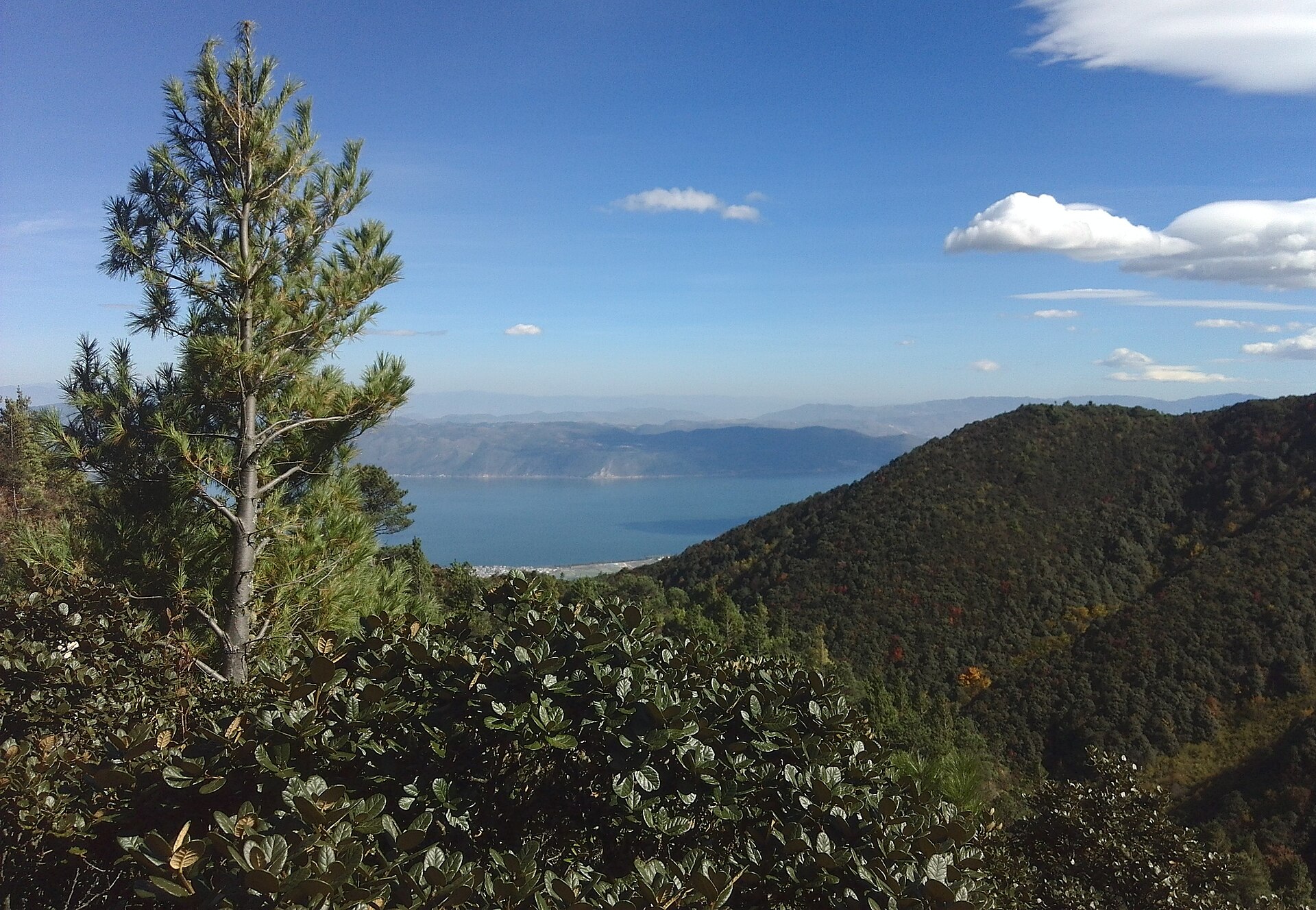
The lake as it should be travelled: the dedicated ring road on two wheels, west-shore Bai villages, the Cangshan cloud trail above, and Dali's old town evenings.
 Start your enquiry
Destinations / Yunnan / Dali & the far west
The relaxed staircase: a lake built for slow cycling, old towns that still trade, a river valley the maps call wild, and volcano country that soaks its guests in boiling springs.
Explore the guide ↓Dali · Nujiang Lisu Prefecture · Baoshan
The west is Yunnan's historical heart. Dali was the capital of the Nanzhao kingdom and then the Dali kingdom for five centuries — older than Lijiang's fame, and gentler with it. The Erhai lake anchors a landscape of Bai villages, marble workshops and the 4,000-metre Cangshan wall that drops straight to the water. Southwest of it, Shaxi's Sideng street is the best-preserved market square on the old tea-horse road — the Friday market still assembles.
Further west the country goes wild. The Nu river (the Salween) runs south through one of the deepest, least-developed valleys in China — the national park holds the river undammed — and the road to Bingzhongluo threads Lisu and Nu villages, cable crossings and the great First Bend before the border ranges. It is the closest thing to old-road travel left in Yunnan, and we treat it that way.
And then there is Tengchong: a volcanic field of 68 young cones, the geothermal valley of Rehai where the ground boils, the stone lanes of Heshun with its century-old library, and the border-market energy of a town that has always faced Burma. The west at its oddest and most likeable.
The region's essential landscapes, and the journeys that work them.
The lake as it should be travelled: the dedicated ring road on two wheels, west-shore Bai villages, the Cangshan cloud trail above, and Dali's old town evenings.
Marble peaks, the Jade Cloud path and the cloud belt for which the range is named — day walks with the whole Erhai below.
The last wild great river: the First Bend, the Fogli village path, cable villages and Lisu hospitality — a road journey through the country the dams never reached.
Volcanoes, boiling springs and the Gaoligong forest — the mountain wall that funnels a continent's birds south for the winter.
Sideng square — whitewashed gatehouses, stage tower and cobbled market — the finest surviving way-station of the caravan road, still trading on Fridays.
Dali's quieter ancestor: the Nanzhao-era old town at the head of the Red river source valley, with the drum tower and a street life entirely local.
The west is the mildest part of the province.
The Erhai at its bluest under stable spring pressure, the Cangshan in rhododendron, village fields in flower. The valley roads are dry and the cycling is perfect.
Clear skies return, the rice terraces of the valleys turn gold, and the Nu valley drives run under stable autumn light.
The west sits lower than the northwest — Dali winters are famously kind, with morning mist and bright middays. The hot springs of Tengchong earn their keep.
July–August brings the green season: dramatic clouds over the Cangshan, occasional road slips in the Nu valley. Journeys run with flex days.
Rail has changed the west — build around it.
HSR from Kunming to Dali (about 2 hours) and on to Lijiang; Baoshan and Tengchong fly from Kunming. The Nu valley drive starts from Liuku (Fugong county seat) — a road day from Dali or Baoshan.
Dali makes the ideal base: three nights covers the old town, the ring and the Cangshan walks. Shaxi is a 2-hour drive west; the Nu valley is a journey of its own — do not try to day-trip it.
Bai courtyard guesthouses in Dali and the villages, stone-lane inns in Shaxi, riverside hotels on the Nu, and Tengchong's hot-spring resorts at every grade.
Bai craft, Lisu song and the tea-horse memory.
Zhoucheng village keeps the indigo tie-dye workshops; Dali's marble tradition built the term for the stone itself. Buy from the workshops that make it.
The Nu valley's Lisu villages keep a multipart singing tradition recognised by UNESCO — an evening of it in a village house outranks any show.
Erhai fish cooked seven ways, Bai "three-course tea" ceremony, Weishan's braised-meat rice noodles and Tengchong's "big rescue" (er kuai in broth) — the west eats its history.
The details worth discussing when shaping your trip.
The Nu valley and Tengchong sit near the Myanmar border. Access is open to foreign visitors on the main routes; we confirm current conditions for each journey before booking, as a matter of routine.
The Nu drive is 300 km of valley — pace it over three nights minimum. Rushed versions miss the villages that are the point.
The west pairs naturally with the northwest (Dali → Lijiang → the gorge is the classic line) or the southeast (Dali → Kunming → the terraces). Both make single-line journeys.
Tell us whether the lake, the river or the volcanoes lead. The west rewards slow travel — we build it as a line with time in the villages, not a list of gates.
Start my journey brief ↗