
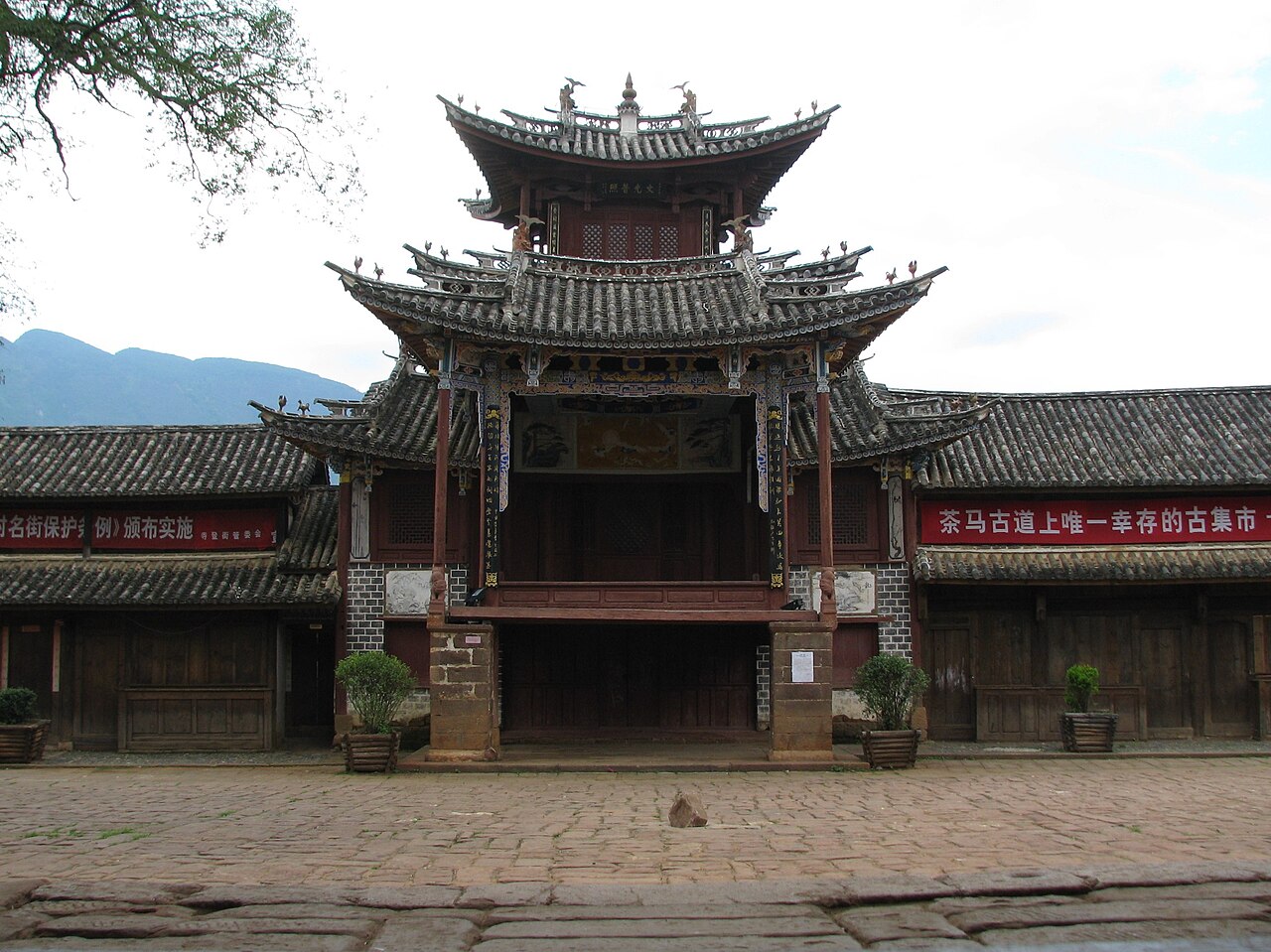
The square.
Sideng was built for one job: to be the place where the tea-horse road's traffic met the Jianchuan valley's trade. The square does the job with its body — gate towers at the corners, a stage facing the temple, an old tree, and cobbles polished by a thousand years of hooves. When the caravans stopped, the town simply kept its shape; the restoration kept it a village first, which is why it works.
What still sells.
Friday morning, the square fills the way it always filled. Livestock on the field edge — horses, mules, the occasional yak in season. Herbs and mushrooms in the lanes, cheese on the boards, tobacco, embroidery, tools, clothes with more character than any shop. Lunch stalls under the stage tower; the old men playing cards who have occupied the same bench since before the restoration and intend to continue.
The trade is local, not performed — nobody here is selling you the tea-horse road, they are selling each other this week's goods, exactly as the square was designed for. That is what makes it the finest surviving way-station on the whole trade road: not the architecture, which is lovely, but the fact that it never stopped being a market.
How to be there.
Friday only — build the stay around it, arrive Thursday night, and be on the square by eight. The day peaks mid-morning and thins after lunch; the afternoon is for the Xingjiao temple's Ming frescoes and the quiet square. Photograph with courtesy, buy your cheese and your embroidery, and let the Friday do what it has always done.
Keep reading
Tea-horse way stations
The tie-dye village
The terraces on foot