The Gaoligong wall
The range between the Nu and the Irrawaddy — great hornbills, wreathed hornbills, pheasants and the hide network that made Baihualing famous.
 Start your enquiry
Destinations / Yunnan /
Three flyways funnel through one province: hornbills in the Gaoligong forest, black-necked cranes on the winter wetlands, and a hide culture that ranks among the world's best — where the birds are and when.
Explore the guide ↓All of Yunnan · the flyways
Yunnan sits where the Palearctic meets the Oriental realm and three great flyways converge, and the species counts show it — the province holds China's richest bird list. The geography makes three birding countries: the Gaoligong mountain wall in the west (hornbills, broadbills and one of the world's best hide networks); the plateau wetlands of the northwest (black-necked cranes, bar-headed geese); and the tropical south (broadbills, pittas and the wintering forest flocks of Xishuangbanna).
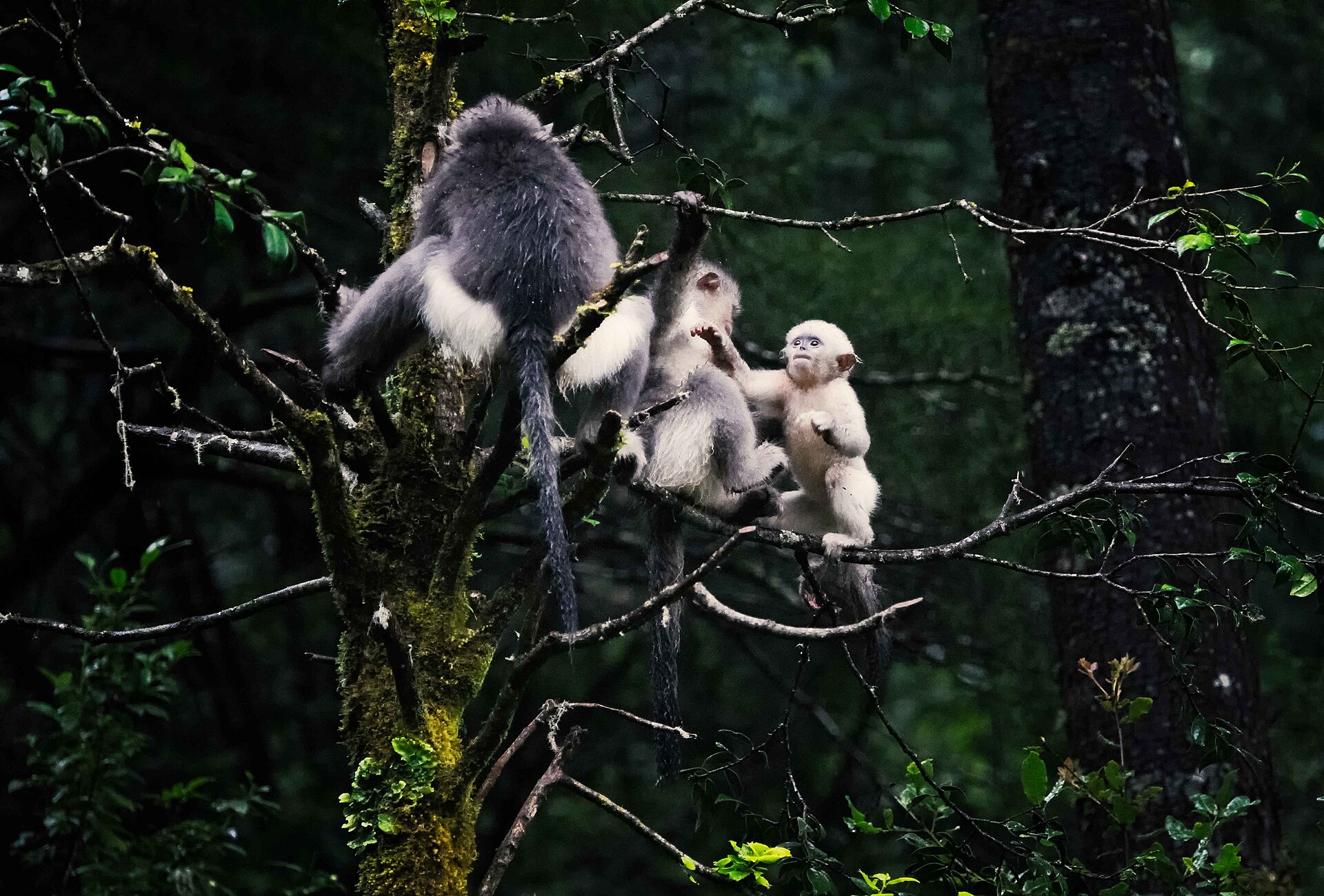
The journeys work all three: the Tengchong and Gaoligong week holds hide mornings in the hornbill season; the crane journeys winter on the wetlands; and the monkey forests add a mammal rare enough to make any list. Winter — November to March — is the high season, when the residents are joined by the wintering flocks in clear, dry weather.
Three countries, one province.
The range between the Nu and the Irrawaddy — great hornbills, wreathed hornbills, pheasants and the hide network that made Baihualing famous.
Napa Hai and the wintering grounds — black-necked cranes from November to March, with bar-headed geese and the duck flocks.
Xishuangbanna's lowland forest — broadbills, pittas, barbets and the mixed flocks that make tropical mornings loud.
The Baima reserve's fir forests — the Yunnan snub-nosed monkey, and the high-altitude birding that comes with it.
The lakes and marshes of the central plateau — wintering ducks, crakes and the gulls that reach even Kunming's parks.
The birding logistics.
Nov–Mar is the high season: wintering flocks, dry trails, clear light. The Gaoligong hornbill peak runs March–June; the hide mornings work year-round.
The Baihualing hide network books by the morning — positioned, maintained and productive. Our birding weeks hold consecutive hide days, not one-off visits.
The crane wetlands sit at 3,300 m — acclimatise as on any plateau journey, and pack for cold dawns.
Local bird guides with scopes make the province — we book them per reserve, and the ranger collaborations keep the wildlife first.
Tell us your target species and season — we will build the flyway journey around them.
Start my journey brief ↗