
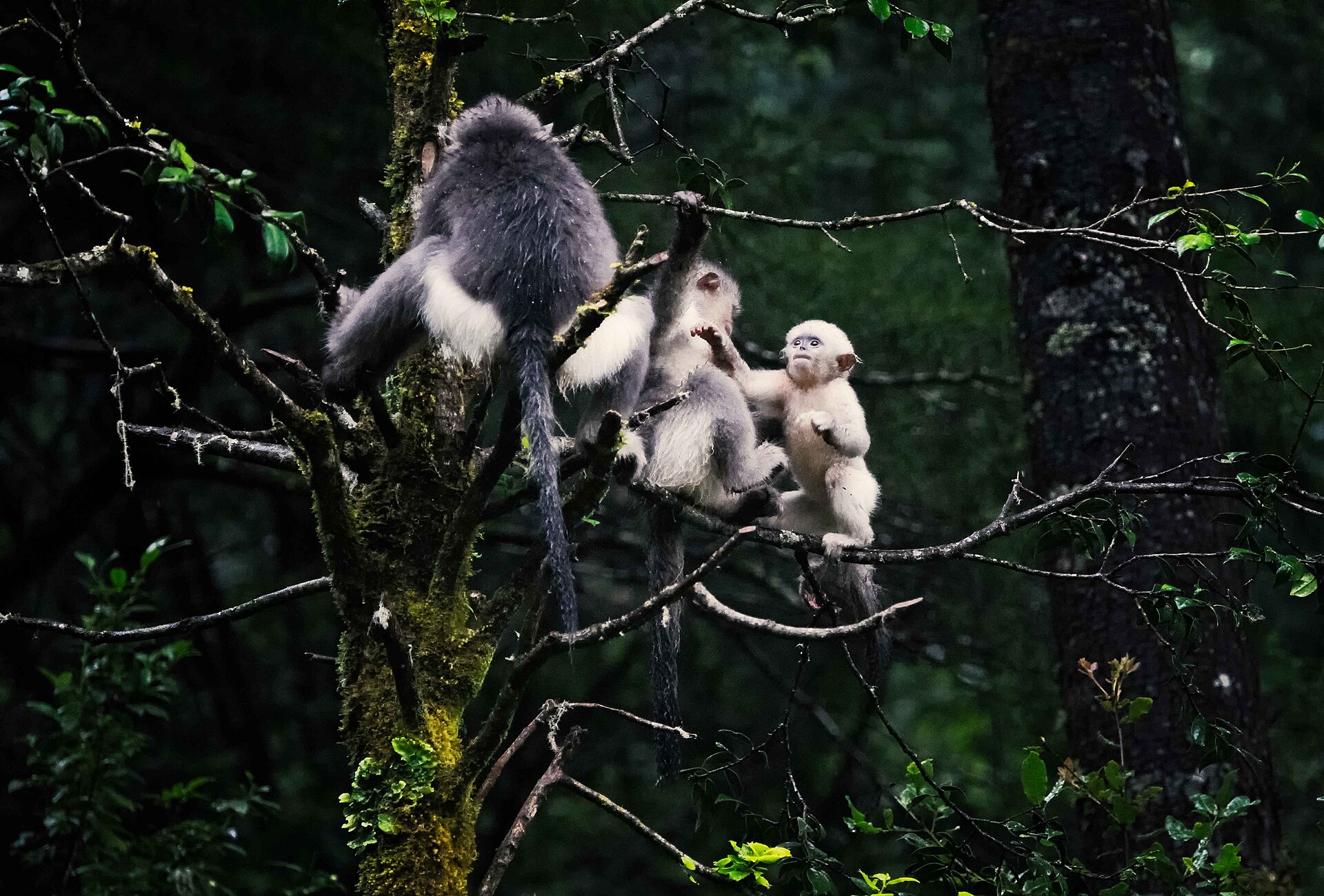
A group of black-and-white Yunnan snub-nosed monkeys in a mossy fir forest

Wildlife / Yunnan snub-nosed monkey tour

Private wildlife tour

The Yunnan snub-nosed monkey tour.

Four days to the only window on earth onto a wild, endangered primate: mornings in the Xiangguqing valley as the rangers walk the troop down through the firs, afternoons in a quiet Lisu farming village, and the monkeys' own food — hanging usnea lichen — overhead the whole time.

  • Duration4 days
  • Nights3
  • Best windowOct – Jun
  • Starts & endsLijiang
Ask about this itinerary

Yunnan snub-nosed monkeys · the Xiangguqing valley, Tacheng

The species~3,000 left

Yunnan snub-nosed monkeys alive in the wild — a single Chinese endemic, listed Endangered

This valley's share70%+

of the world population lives in the Baima Snow Mountain reserve, 2,300+ monkeys across 1,900 sq km of the Baima Snow Mountain reserve founded in 1983

The window9 – 11 am

the only hours the Xiangguqing viewing area opens, built around the rangers' morning at the troop

Altitude~3,000 m

the viewing meadow sits just below the monkeys' normal 3,200–4,600 m band — the highest-living non-human primate on earth

Why this route

The highest-living monkey on earth, and the one valley you can meet it in.

The Yunnan snub-nosed monkey — black and white, pink-lipped, bearded — lives higher than any other primate except people: 3,200 to 4,600 metres, in the fir forests between the Yangtze and Mekong. It was unknown to science until the 1890s and unseen in the field for most of the twentieth century; today around 3,000 survive, and more than seventy percent of them live inside the Baima Snow Mountain reserve in Diqing, north-west Yunnan.

Xiangguqing, a side valley at Tacheng on the reserve's southern edge, is the one place a wild troop is followed daily by ranger teams and can be watched from a meadow at 3,000 metres. It is not a zoo: the monkeys are free-ranging, the rangers walk up to meet them at first light, and the visit works around the troop's own morning. This trip builds two full mornings around that window — because one morning is never insurance enough — and keeps the afternoons for the valley itself: a Lisu farming village, walnut groves, and the forest edge where the monkeys' lichen grows.

Route Briefing

In and out of Lijiang, one valley worked properly, and the high road to Shangri-La used as the return's second act. Four stages, one vehicle.

  1. Day 01Lijiang → Tachengdrive north-west past the Yangtze bend into the Baima foothills
  2. Day 02Xiangguqing valleythe first ranger morning with the troop, 9–11
  3. Day 03Xiangguqing → Shangri-Laa second morning as insurance, then over the divide
  4. Day 04Shangri-La → outold town and Napa Hai, then fly or rail out

Species odds

What the valley actually offers.

The field estimates we plan the mornings around — not a survey and not a promise.

Xiangguqing · the display troop

Tacheng · the trip's core ground, worked on two mornings

High
Yunnan snub-nosed monkeys — 69 animals in 9–11 family units, followed daily by ranger teams; two mornings built in as insurance
Fair
understory bird parties — blood pheasants and babblers move with the troop through the firs
Backdrop
the usnea lichen the species feeds on, hanging throughout the viewing valley

Xiangguqing is the only place on earth a wild Yunnan snub-nosed monkey troop is reliably viewable; the window is 9–11 am and the rangers lead throughout.

Around Tacheng & Shangri-La

The valley and the plateau

Seasonal
black-necked cranes at Napa Hai, Nov – Mar — 573 counted in winter 2025–26
Always
Lisu village life around Tacheng: walnut harvests, hot-pot kitchens, the Reba dance tradition

Combine with the black-necked crane tour (Nov – Mar) and the region runs as one week.

undefined

Day by day

The four days.

The monkeys set the clock: the viewing window is 9 to 11, and everything else flexes around it.

  1. Day 01

    West of the Yangtze bend

    Lijiang → Tacheng

    Meet in Lijiang and drive north-west out of the basin, crossing the upper Yangtze and climbing into the fir country of the Baima Snow Mountain foothills. The drive is half a day through Naxi and Lisu farming country — walnut groves, corn drying on racks, the first view of the reserve's ridgelines.

    Base for the next two nights is Tacheng town itself, a quiet valley settlement within minutes of the park gate. Late afternoon, walk the valley edge and look up: hanging lichen in the firs is the monkeys' staple food, and seeing plenty of it is a good sign for tomorrow.

    • OvernightTacheng
    • Drive~3.5 hrs
    • Altitude1,900 → 2,000 m
  2. Day 02

    The ranger morning

    Xiangguqing valley

    Yunnan snub-nosed monkeys feeding in a fir tree at Xiangguqing
    The troop spends most of the year out of sight — the rangers know where

    Up early and into the park with the ranger team, who track the display troop's overnight position before visitors arrive. The walk-in is short and gentle, ending at an open meadow at about 3,000 metres. Between 9 and 11 the troop comes down through the firs — families, juveniles tumbling, the big males' slow advance — and the rangers' decades of habituation work is what makes an honest, close, non-fed-by-hand encounter possible.

    The afternoon belongs to the valley: the Lisu village lanes around Tacheng, a village kitchen lunch, and if the group wants it, a walk up the valley's quieter side trail. Early night — tomorrow is the insurance morning.

    • Walking~2 hrs, gentle
    • Window9 – 11 am
    • The ruleNo flash, no feeding, rangers lead
  3. Day 03

    Second morning, then over the divide

    Xiangguqing → Shangri-La

    A second ranger morning at the troop — this is what separates a hope from a plan. If day two was clear, today is the day for the photographs you missed; if fog closed the valley, today is why the trip still works. Either way you come out of the valley with two mornings' knowledge of how a habituated wild troop actually behaves.

    After lunch, drive up onto the Shangri-La plateau, crossing into the former Zhongdian county by late afternoon. The old town's butter-tea houses and the first sight of the Ganden Sumtseling monastery roofs close the day.

    • OvernightShangri-La
    • Drive~3 hrs
    • Altitude3,280 m
  4. Day 04

    The wetland, then down off the plateau

    Shangri-La → out

    A slow plateau morning: the old town's prayer-wheel lane, and if the season is right, the edge of Napa Hai — the crane wetland that is this region's other wildlife story, and the natural companion trip for winter visitors.

    Fly or rail out of Shangri-La by midday, or extend south through the gorge country toward Lijiang. The monkeys are behind you in the firs; the lichen is still up there.

    • Overnight—
    • Walkingtown and wetland edge
    • ExtendNapa Hai crane season, Nov – Mar

What's included

What is included, and what is not.

A short list for a high-valley trip. The left column is arranged before you leave; the right column is either yours or a question we are glad to answer.

Included

Arranged and paid before departure.

  • P

    r

  • T

    w

  • T

    h

  • B

    r

Not included

Yours to arrange, or we quote it.

  • F

    l

  • D

    i

  • T

    r

undefined

Enquiry

Ask us about this one.

Tell us your dates and how you travel at 3,000 metres. We will come back with the troop's current routine, the ranger schedule, and a written outline with a price.

Response time
One business day
Private tour
Your own dates
Best window
Oct – Jun

Trip details

Fields marked are required. This enquiry is filed against this itinerary, so you do not need to repeat the outline. There are no fixed departures to pick — this route runs to your dates, so put them in and we build around them.