Getting there
Tacheng sits 120 km from Shangri-La and about 160 km from Lijiang; private vehicle either way. The valley gate is minutes from the village.
 Start your enquiry
Wildlife / Field guide
The world's highest-living non-human primate, an endangered endemic of one narrow mountain corridor — and the single valley where the forest opens and a wild troop walks through.
Start this journey briefYunnan snub-nosed monkeys · Baima Snow Mountain reserve, Diqing
The Baima Snow Mountain reserve, Diqing prefecture — between the Yangtze and the Mekong, on the road from Lijiang to Deqin
a single endemic surviving in fragmented bands of fir forest; over 70% live inside this one reserve
the daily viewing hours at Xiangguqing, built around the rangers' morning with the display troop
the monkeys' year-round band — no other primate lives higher; the viewing meadow sits at ~3,000 m
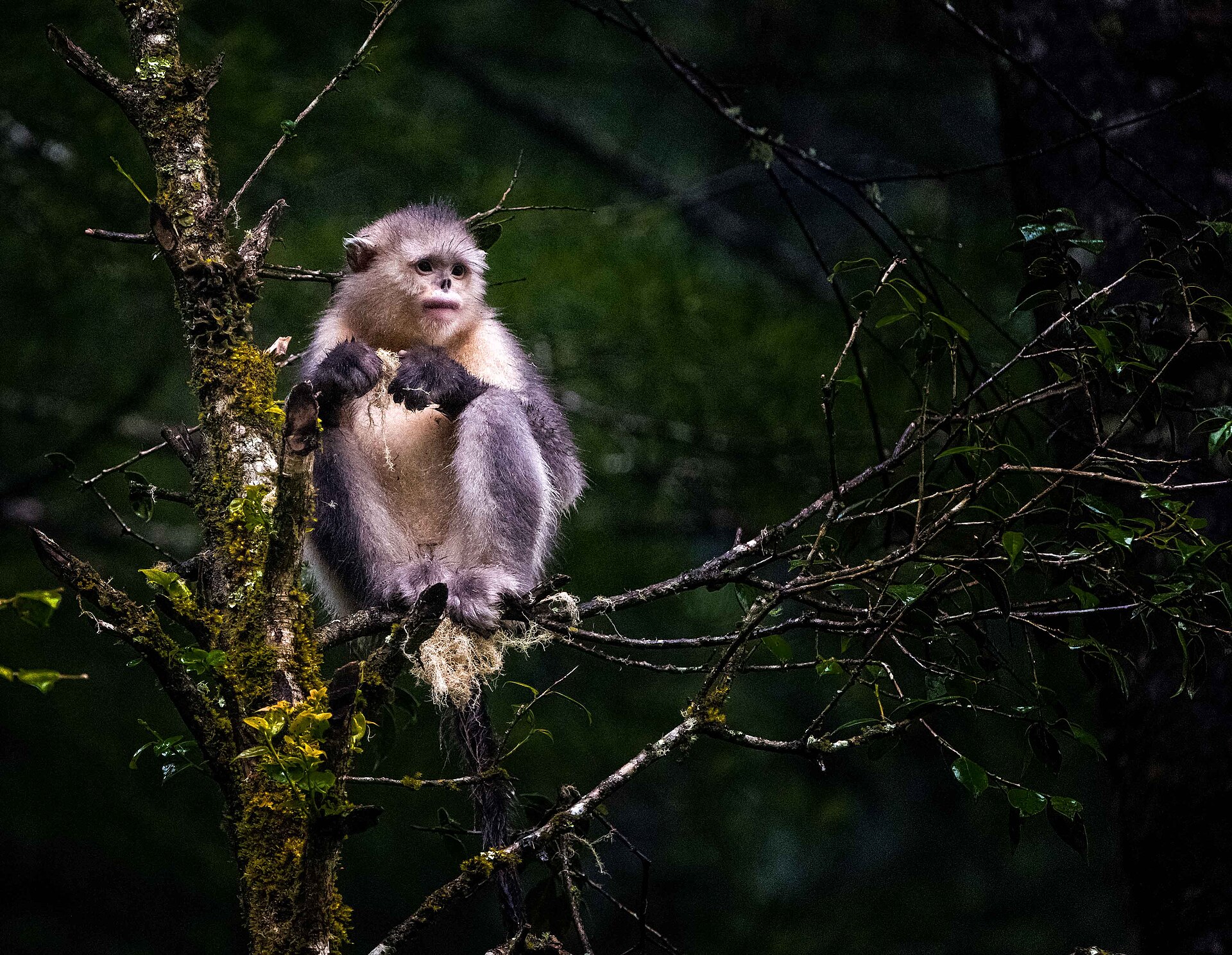
The Yunnan snub-nosed monkey was described from a specimen in the 1890s and then lost to science for most of a century: a black-and-white, pink-lipped, bearded monkey living above the clouds, rumour more than fact until field surveys reached the fir forests of far north-west Yunnan. Today it is one of China's twenty most endangered vertebrates — around 3,000 animals in a corridor less than 200 kilometres long — and the Baima Snow Mountain reserve, founded in 1983, holds the majority: more than 2,300 monkeys, a population that has climbed steadily since the reserve began.
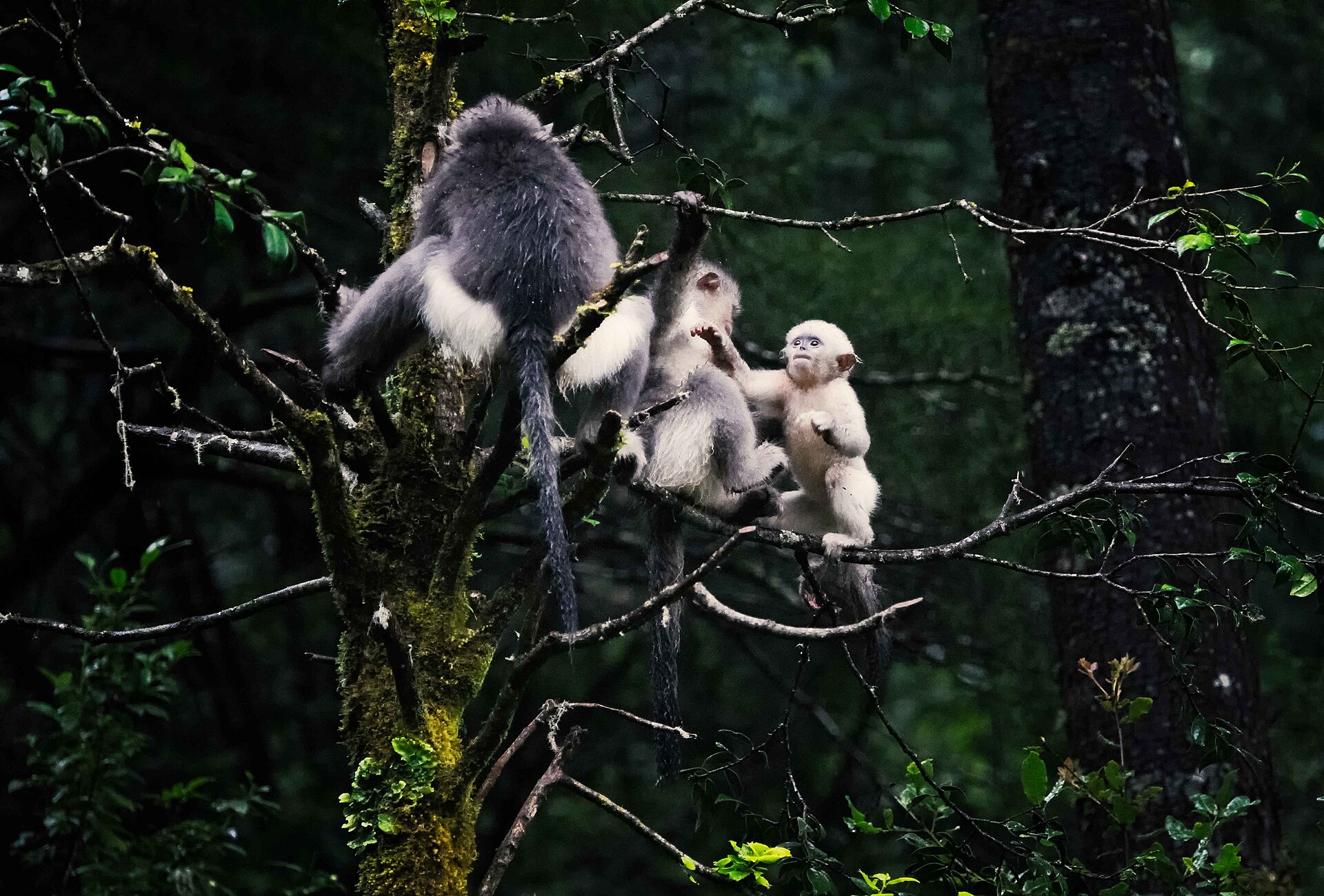
Xiangguqing, a side valley near Tacheng on the reserve's southern edge, is the one place on earth a visitor meets this species. Not in a cage and not a feeding station in the zoo sense: a wild troop of 69 animals, in nine to eleven family units, moves through the valley forest and is followed daily by ranger teams who have spent decades earning its tolerance. Between nine and eleven each morning, from an open meadow, the troop comes down through the firs. Everything else in this guide is about making that morning work.
The troop's overnight roost is located before you arrive; the walk-in to the meadow is short and the pace is the troop's, not yours.
9 to 11, no exceptions — the hours exist to protect the troop's natural day, and they are also when the light is best.
Family politics: juveniles tumbling, females feeding on lichen, the big males' slow controlled advance. Distance is metres, not metres of fence.
This is a habituated wild troop, not a staged show. Some mornings they are close and low; some mornings they are late. Two mornings is the real answer.
Tacheng sits 120 km from Shangri-La and about 160 km from Lijiang; private vehicle either way. The valley gate is minutes from the village.
October to June is the working window; deep winter mornings are cold but clear, and summer afternoons are the rain risk.
The meadow is ~3,000 m and the walk is gentle — but sleep in Lijiang or Shangri-La first and keep day one slow regardless.
Tacheng village guesthouses and small lodges; Shangri-La for the plateau night on the way out.
We build two ranger mornings into every Tacheng trip — one is a hope, two is a plan — and pair the valley with the crane wetland at Napa Hai when the season is right.
Start a journey briefThe Yunnan snub-nosed monkey tour · The black-necked crane tour · The Sichuan golden monkey guide