Seasons move the monkeys
Spring and autumn they feed in the low broadleaf belt; midsummer they climb into the conifer. Rangers know the week's range — go with the current one.
 Start your enquiry
Wildlife / Baihe reserve
One of China's first reserves keeps the largest golden snub-nosed monkey population on earth below the Jiuzhaigou road — and they show themselves, canopy after canopy.
Start this journey briefSichuan · Jiuzhaigou County, eastern Minshan
Baihe township, Jiuzhaigou County, Ngawa — under the Gonggangling ridge on the way to Jiuzhaigou valley
forest from the river country up to 4,453 m on the ridge line
the world's largest golden snub-nosed monkey population, in four to seven troops
troops move with the seasons — low broadleaf forest in spring and autumn, high conifer in summer
Baihe was approved in 1963 — one of Sichuan's first reserves — to protect panda and golden snub-nosed monkey forest east of Jiuzhaigou, and was upgraded to national status in 2017. Its claim is simple: this is the densest golden monkey habitat in the country, with roughly 1,900 animals — the largest single population of the species anywhere — living in troops that range around Xiapingdi, a few square kilometres of near-continuous forest.
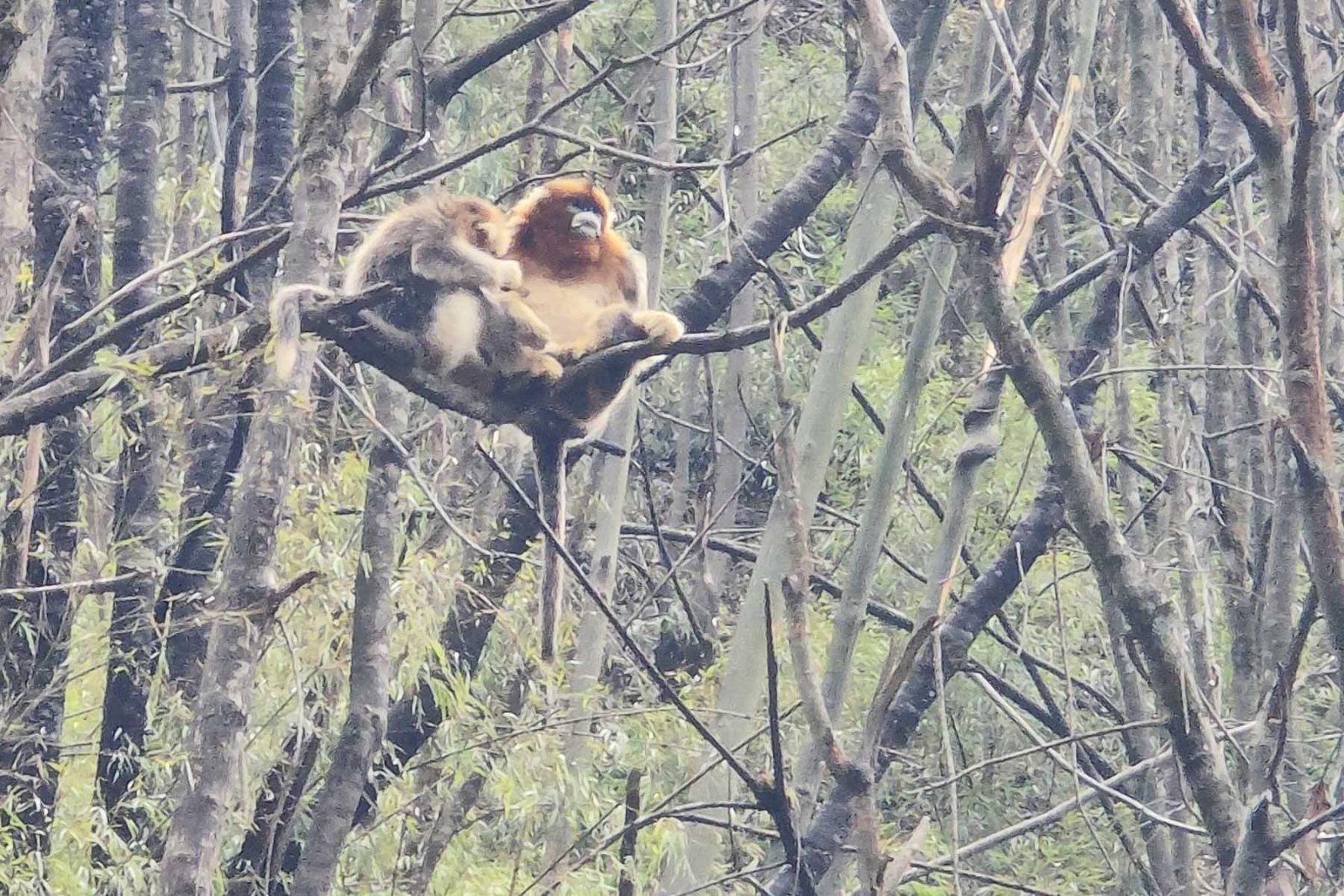
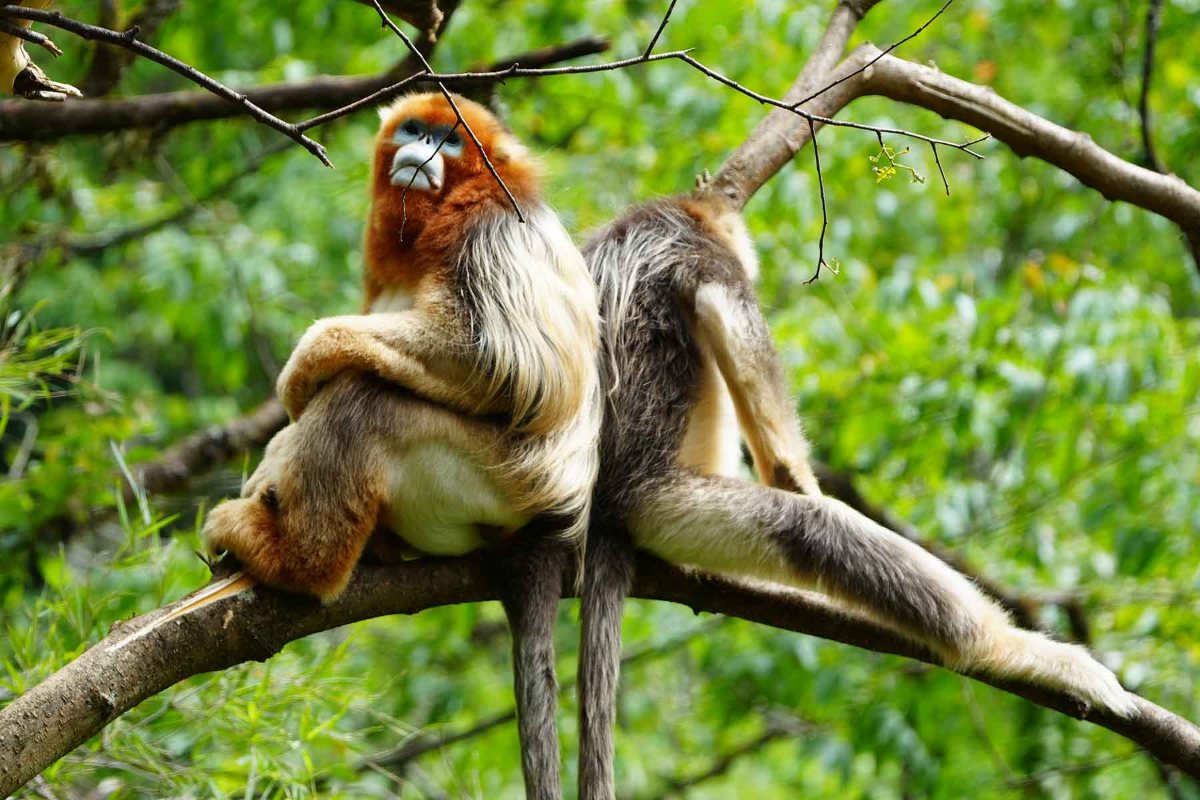
What that means for a visitor is unusual for Chinese wildlife travel: the monkeys here are habituated to being watched from the track, not fed by hand. A morning with a ranger puts you under a canopy full of blue-faced, golden-shouldered primates moving through the firs — the same species our golden monkey journey works for in Tangjiahe and Wanglang, at closer and steadier odds. Wild pandas share the forest too, but the honest frame is that Baihe is a monkey reserve first.
Baihe township sits east of the Jiuzhaigou valleys, a couple of hours from the county town on the corridor the new expressway opened. Most visits pair it with the Wanglang valley next door.
The monitored troops range above Taiping village. With a reserve ranger you walk the last stretch on foot and settle where the troop is working the canopy that morning.
A golden monkey troop feeds as it travels — leaps between firs, nurseries on the lower branches, the big males holding the margins. An unhurried hour beats a rushed look every time.
Baihe sits naturally between Jiuzhaigou's valleys and Wanglang's old-growth, on the same corridor our mammal route runs south toward Tangjiahe.
Spring and autumn they feed in the low broadleaf belt; midsummer they climb into the conifer. Rangers know the week's range — go with the current one.
These are wild troops kept wild. Distance, quiet voices, no food — the etiquette that keeps the watching possible.
Frost and snow make the golden coats glow. Winter mornings are a photographer's window, and the monkeys are just as active.
Baihe protects panda habitat as well, but sightings here are camera-trap stories. Come for the monkeys and let the panda remain a rumour.
Baihe has no fixed departure in our calendar yet — it folds naturally into the mammal tour corridor or a Jiuzhaigou-line custom journey.
Start a journey briefThe golden monkey tour · The golden monkey meeting: a field report