
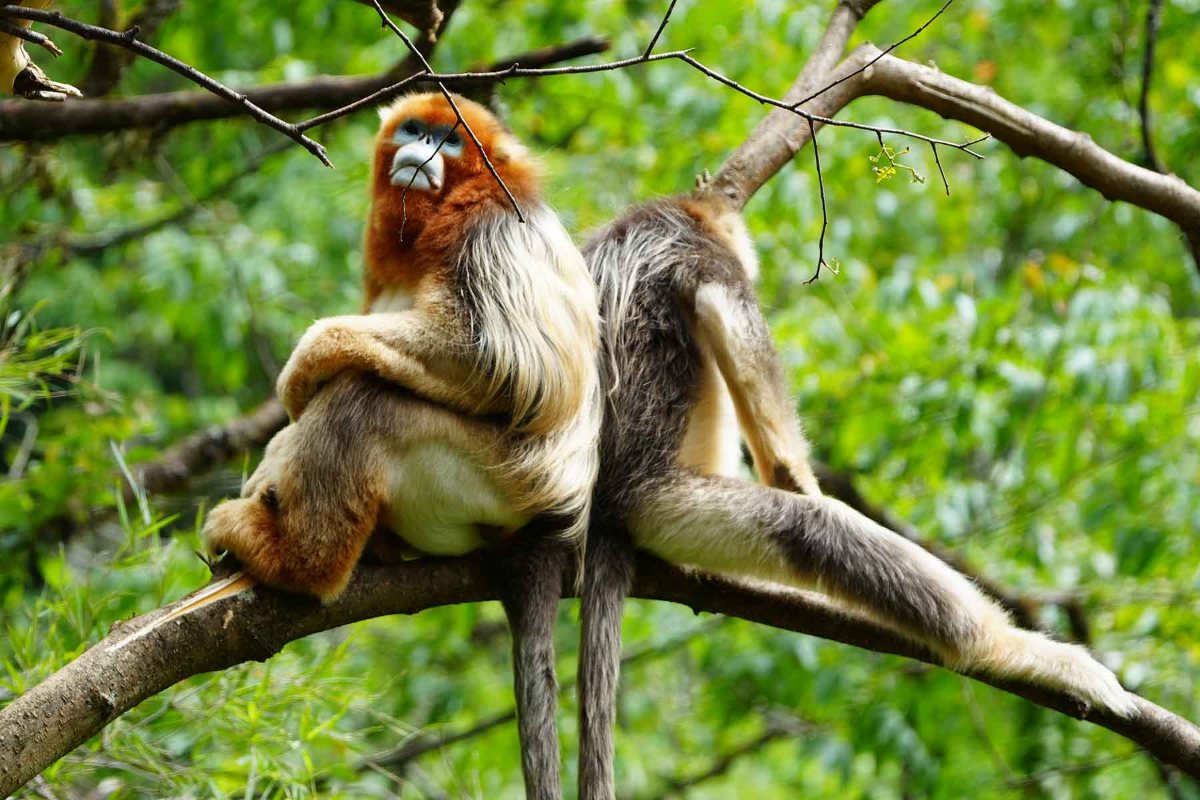
Most of our wildlife routes are built around a forest that keeps its secrets. The golden monkey tour exists because of the exception. Golden snub-nosed monkeys — blue-faced, flame-shouldered, living in troops high in the fir forests of central China — are elsewhere a rumour and a feeding-sign story. In the two valleys this trip works, the troops are resident, used to being found, and visible at close range in the open. That combination is rare for any animal, and for one this shy it is the reason a two-day trip can be sold on a High sighting band without an asterisk.
Why these troops tolerate people.
The honest answer is habituation with management: these are working monkey valleys, monitored and visited year after year, and the troops have learned that a quiet line of visitors is background. That is not the same as tame, and the difference is the fieldcraft: you walk to the troop’s last known area, wait where the guide puts you, and let the animals arrive on their own terms — the same watching-without-disturbing rules we apply everywhere, written up here.
The two valleys.
The route runs to Pingwu or to the Baihe valley by Jiuzhai — both working monkey valleys, and the choice between them is made by season and by what else the week needs. Baihe is the mammal tour’s Day 03, paired there with Tangjiahe’s takin two days south. Pingwu sits closer to Chengdu, which is why the two-day version can leave after breakfast on day one and still deliver the first afternoon with the troop.
A day and a half, and why that is enough.
The trip’s structure is deliberately lopsided: the first afternoon on the ground, then a full morning before the road home. The afternoon is the finding; the morning is the watching, in the better light and the calmer hours. One and a half days with a resident troop beats four days of searching for a moving one — which is the trade most of the genus offers elsewhere.
Late August to March.
The season the tour runs is late August to March — the months the troops are reachable where the trip works. Winter brings the monkeys lower, which shortens the walk and clears the foliage; the reference photographs from the cold months are the closest and bluest of the year. The season line on the route page is a season statement, not a guarantee — the same framing the odds pages use.
Making it longer.
Two natural extensions. South, two more days at Tangjiahe turn the trip into five and add the takin, the muntjac and the best big-mammal valley in the country. West, the eight-day mammal tour folds the monkey valley in as one stop among three reserves — the right answer when the week is for mammals in general and the monkeys are the headline act within it.
Valley choice, season window and trip shape checked 7 November 2026 against the route page.
Meet them?
The golden monkey tour, 2 days
The Sichuan mammal tour, 8 days