
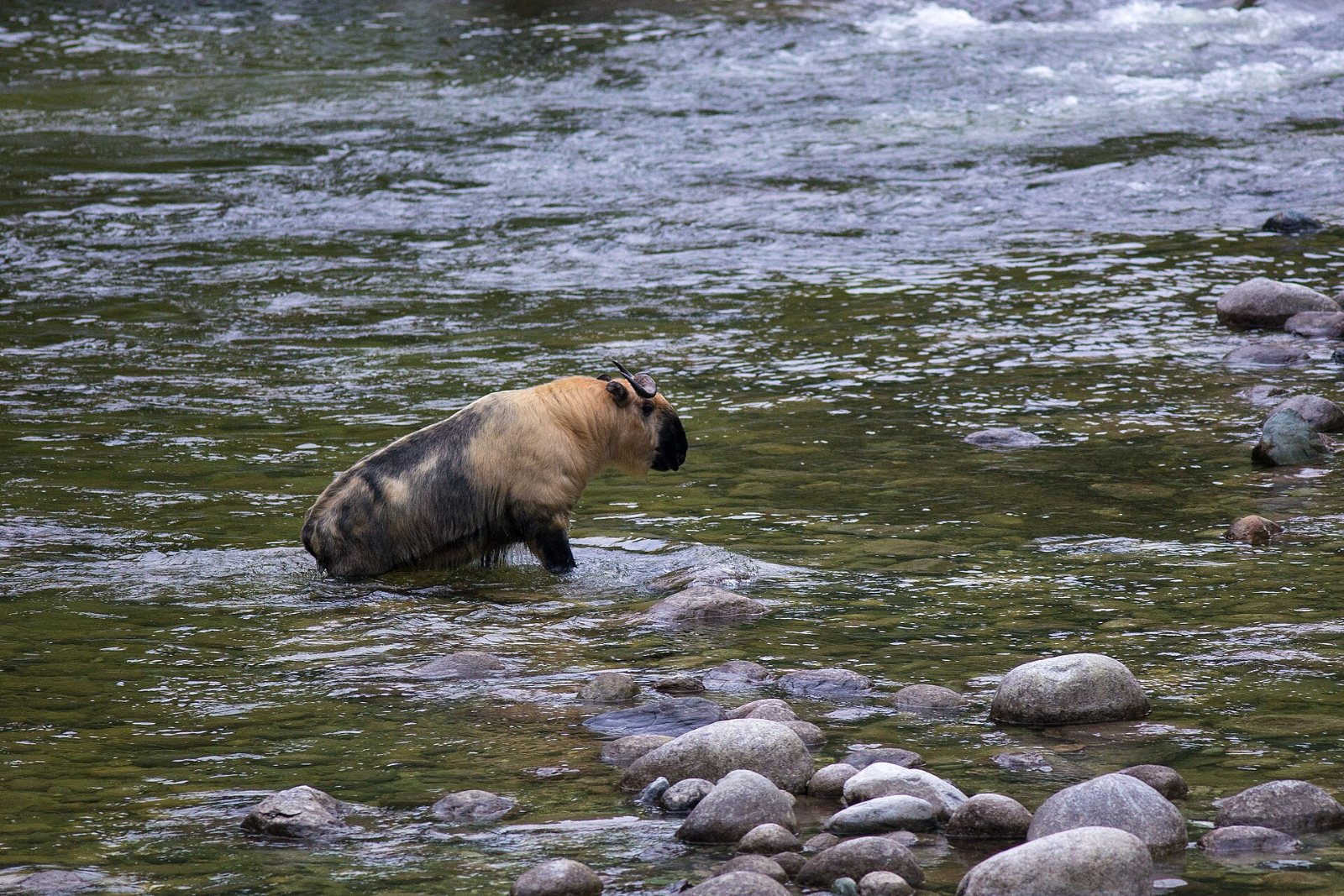
Every reserve page on this site leads with the rare animals and then tells the truth underneath: the takin, the macaques, the blue sheep are what the trip is actually made of. That is not a consolation prize. A forest whose common animals are visible is a working ecosystem, and China has few enough of those.
Tangjiahe: the big-mammal valley.
Tangjiahe, in the Minshan range, is the strongest big-mammal valley in the country on our field estimates — the mammal tour’s day card calls it that outright. Sichuan takin sit in the High line with Reeves’s muntjac and Tibetan macaques; Chinese goral, wild boar, leopard cat and masked palm civet are the realistic Medium company. The takin are the headliners for a reason: hundred-kilogram goat-antelopes, usually encountered in the open river corridor, often close enough that the fieldcraft is in the retreat, not the approach.
The moss forests: macaques and sambar.
At Labahe and Wawushan the High line shifts species: Tibetan macaque and sambar carry it, with the red panda above them in the same forest — the only animal on these pages with a sighting rate that competes with the common ones. The structure repeats across the reserves: one or two reliably visible species, a belt of plausible ones, and a Rare line honest enough to say giant panda and mean tracks.
Blue sheep country.
West of the forests the cast changes and the reliability goes up. On the Sanjiangyuan plateau, Himalayan blue sheep, white-lipped deer and blood pheasant are the High line of most weeks; kiang, Tibetan gazelle, Tibetan fox and black-necked crane are the Medium belt. On the Konka and Yala treks the blue sheep are described as near-routine on the base-camp crags — and they are not filler. The snow leopard’s presence on those slopes is a function of the blue sheep’s: the cats follow the herds, and every route page says so in the same words. The Riwuqi trek’s glacier-lake day is called the best wildlife watch of that walk for the same reason — crags, pasture and lake shore in one view.
Reading the odds honestly.
The species lists on the route pages are field estimates — published sighting patterns for these sites in season, not survey results and not promises for any single week. The bands mean what they say: High is what most weeks deliver, Medium is realistic company, Low means possible and Rare means the trip does not depend on it. The same honesty runs through our watching-without-disturbing rules: the estimate covers finding the animal, not its behaviour once found.
How to watch a herd.
Three habits carry most of the value. Keep to first light — the plateau clock applies to takin and blue sheep exactly as it does to cats. Let the animal close the distance: herds feed along predictable lines and a stationary watcher is part of the landscape while a moving one is an event. And count the juveniles — the share of young in a takin or blue sheep herd is the single best read on how healthy the valley is, which is the actual thing you came to see.
Species bands checked 7 November 2026 against the route pages. Field estimates, not survey results.
Meet the herds?
The Sichuan mammal tour, 8 days
The snow leopard tour, 7 days