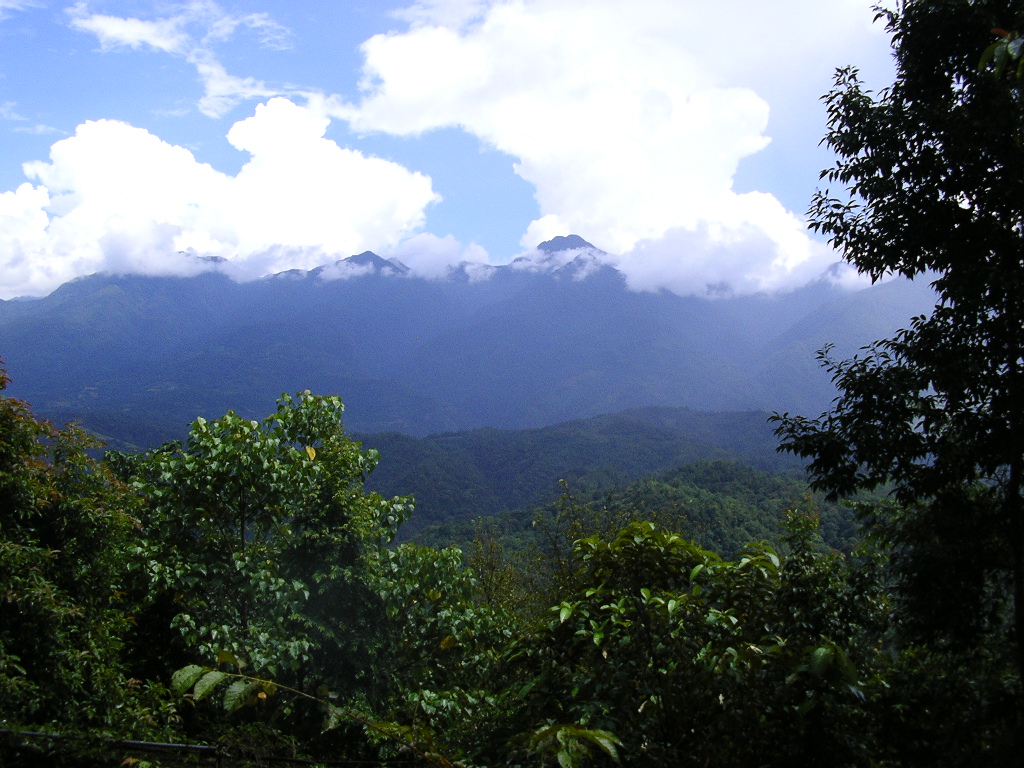
Six days on the mountain birders call the golden triangle: the hide trails and forest edges of Baihualing worked properly across three mornings, an honest listening morning for the world's rarest easily-described ape, and a guide whose village turned from hunters to hosts.
Gaoligongshan · the ridgeline between the Salween and the Irrawaddy
The bird list525 species at Baihualing
about 43% of every bird recorded in Yunnan, on one valley's slopes
The mountain796 species recorded
across Gaoligongshan as a whole, with 620+ new species described since 1980
The gibbonUnder 200 Skywalker gibbons
named in 2017, the first ape named by Chinese scientists, found nowhere else on earth
Best windowOct – May
the dry season; December to March is the classic birding stretch
Why this route
A valley where the birds outnumber the excuses.
Gaoligongshan is the great north–south ridge west of the Salween, and Baihualing is its most famous approach — a village on the eastern slopes whose bird list now stands at 525 species, roughly 43% of all birds recorded in Yunnan. The full mountain holds 796. The reason is elevation: a single slope runs from subtropical river valley to high crest, and every band of altitude carries a different cast — hornbills low, pheasants high, and the famous hide trails in between.
Baihualing's second story is the one we most want to tell. The village was once a hunting village; in 1995 its farmers founded China's first farmer-run biodiversity protection association, and the hunters became bird guides. Today there are 23 regulated bird-watching points, some 64 local bird guides, and guesthouses run by the same families. A visitor funds the valley's conservation economy simply by showing up with binoculars — the model worked, and it is still run by the village.
The sixth name on the mountain belongs to the Skywalker gibbon — Hoolock tianxing, named in 2017, the first ape species named by Chinese scientists. Fewer than 200 survive, all on this mountain, and seeing one is a ranger's game: the reserve's trackers follow the family groups and a morning with them is a listening-and-looking session, never a promise. We build it as exactly that, and the birding days carry the trip regardless.
Route Briefing
Into Baoshan, up to Baihualing for the birding days, along the mountain for the gibbon morning, out from Baoshan. Six stages, one vehicle.
Day 01Baoshan → Baihualingthe short drive to the village, first afternoon on the hide trails
Day 02Baihualinga full birding day — hide morning, forest-edge afternoon
Day 03Baihualingsecond full day, working higher along the slope
Day 04Baihualingthird day — the pheasant ground and the list's long tail
Day 05Baihualing → the gibbon grounda listening morning with the ranger trackers, then transfer along the ridge
Day 06The gibbon ground → Baoshana second chance with the trackers, then the road back to the city
Species odds
What the mountain actually offers.
The field estimates we plan the week around — not a survey and not a promise.
Baihualing · the hide trails and forest edges
The eastern slopes · three full birding days
High
the mid-altitude cast — laughingthrush flocks, minlas, barbets, woodpeckers, the hide regulars
Medium
the specialities people travel for — scarlet finch, broadbills, the season-dependent visitors
Rare
the pheasants of the high belts, hornbills in the low season
525 species have been recorded from the village's slopes. The hides are village-run and regulated; the guides are the same families who once hunted here.
The gibbon sector · the trackers' ground
Along the ridge · two listening mornings
Medium
hearing the Skywalker gibbon families sing at first light
Low
a visual sighting — fewer than 200 animals in dense canopy
The trackers have followed some families for over a decade. The morning is a genuine attempt, honestly framed; the song alone justifies the dawn.
The dry season is the promise: October to May, with December to March the classic stretch. Rain weeks thin the activity but the hides keep working.
Day by day
The six days.
Three full birding days in the village, then two gibbon mornings with the reserve's trackers. The birding carries the trip; the gibbon is the honour to be attempted.
01Day 01
To the birding village
Baoshan → Baihualing
Meet in Baoshan and drive west to Baihualing, the village on Gaoligongshan's eastern slopes that calls itself — accurately — a five-star birding site. Check into a family guesthouse and walk the first hide trails in the afternoon, when the mid-altitude forest is at its most active.
The village story introduces itself the same afternoon: the guesthouse family were hunters a generation ago, and the hides you sit at are their work now.
OvernightBaihualing family guesthouse
DriveAbout two hours
SessionAfternoon hide trails
02Day 02
The first full day on the slope
Baihualing
Every band of altitude carries a different cast
A full day built the way the village's 64 bird guides run it: the hide-and-water points at first light, when the forest floor birds come in to bathe, then the forest edges and mid-slope trails as the day warms.
The list rewards patience over mileage. Babblers, barbets, minlas and laughingthrushes in the mid belt; a woodpecker day can turn into a hornbill day without warning.
OvernightBaihualing family guesthouse
SessionFirst light hides, midday forest edges
The paceTrails and hides, not summit pushes
03Day 03
Working higher
Baihualing
The second full day works higher along the slope, into the cooler belts where the mountain's famous pheasants live — the odds say rare, but the ground says try: Szechenyi's monal-partridge country and the trails the guides consider the honest shot at the high-altitude species.
If the high ground is quiet, the descent itself pays: different birds at every switchback, and the afternoon hides still hold their regulars.
OvernightBaihualing family guesthouse
SessionHigh trails, afternoon hides
HonestyPheasants are the rare row — the day is built to enjoy trying
04Day 04
The third day, and the long tail
Baihualing
A third full day in the valley — by now the guides know what the week is missing, and the plan bends toward it. The specialities people travel for here are the ones the hides make possible: the scarlet finch, the broadbills, the laughingthrush flocks that pass through a hide circuit like a procession.
Evening is for the guesthouse veranda and the day list, which by tradition is read out loud.
OvernightBaihualing family guesthouse
SessionGuide's choice — the week's missing species decide
The list525 species recorded from the village
05Day 05
A listening morning with the trackers
Baihualing → the gibbon ground
Early transfer along the mountain to the sector where the reserve's rangers track the Skywalker gibbon families — some have followed the same family groups for over a decade. Gibbons sing at first light; the morning is built around the song and the rangers' read of where the family is feeding.
The honesty rule applies: fewer than 200 gibbons survive, in dense canopy, watched from legal distances only. A sighting is a gift, not a deliverable. What is guaranteed is the tracking itself — one of the most quietly impressive conservation operations in China.
OvernightNear the gibbon sector
SessionFirst light, with the ranger trackers
The ruleListening first, looking second, promising nothing
06Day 06
A second morning, and the road home
The gibbon ground → Baoshan
A second morning with the trackers — the trip's insurance policy and its best excuse for one more dawn on the mountain — then back to Baoshan for flights or trains out.
If the mountain has been generous, the last morning is the souvenir one. If it has been cautious, you leave with the bird list of a lifetime and the story of the village that guards it.
OvernightNone — trip ends in Baoshan
SessionSecond tracker morning, then the road
Pairs withTengchong or a broader Yunnan journey
What's included
What is included, and what is not.
The left column is arranged before you leave; the right column is either yours or a question we are glad to answer.
Included
Arranged and paid for before you arrive.
A birding guide, all six days
English-speaking, working with the village's own bird guides.
The village bird guides and hides
Baihualing's regulated hide circuit and local guides, booked through the village system.
Two gibbon mornings with the reserve trackers
Arranged through the reserve's official channels — never an independent approach.
Private transfers
Baoshan door to door, including the ridge transfer.
Five nights' lodging
Twin share — family guesthouses in the village, the best available near the gibbon sector.
Not included
Yours, or yours to ask us about.
Meals
Not in the quote; the guesthouse kitchens are part of the experience.
Optics
Binoculars first. A 400 mm+ lens is the hide photographers' standard.
Getting to and from Baoshan
Flights are yours to book; Baoshan connects through Kunming.
A gibbon sighting
We arrange the attempt, the trackers and the mornings — not the outcome.
Personal expenses
The valley is humid and cool at dawn; layers and dry bags.
Ask about any line above and we will answer it in writing before the trip.
Enquiry
Ask us about this one.
Tell us your dates and how serious a birding week you want — hides only, or hides plus the gibbon mornings. We will come back with a written outline and a price.
Response time
One business day
Private tour
Your own dates
Best window
Oct – May
Enquiry sent
Thank you — your enquiry is with us.
We reply within one business day. A copy of what you sent has gone to your inbox.