Altitude first
At 3,260 m take the first day easy. The crane watching is vehicle-and-viewpoint work, which makes it a perfect acclimatisation day.
 Start your enquiry
Wildlife / Napa Hai wetland
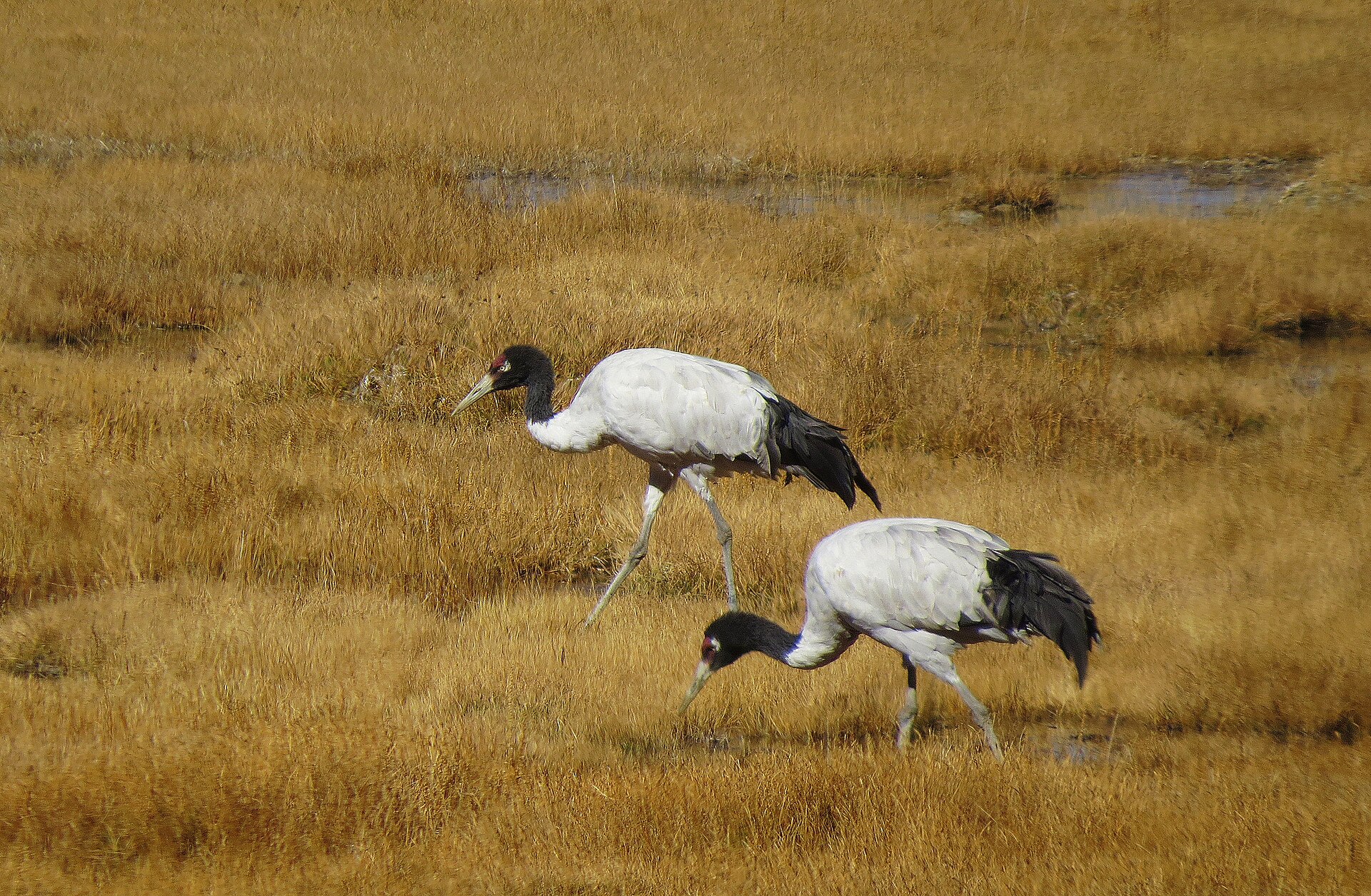
A 3,260-metre wetland on Shangri-La's doorstep where black-necked cranes winter by the hundreds — the easiest great wildlife spectacle on the Tibetan plateau.
Start this journey briefYunnan · Shangri-La City, Diqing
a few kilometres from the old town in Diqing — the wetland you can watch in a morning
a seasonal lake and marsh on the plateau's eastern edge, internationally listed since 2004
the latest winter count, up from 61 birds in 1984 — with black storks and 50,000 waterbirds besides
crane season; the birds arrive in late autumn and stay into spring
Napa Hai was made a provincial reserve in 1984 and internationally listed in 2004, protecting a shallow seasonal lake whose size swings with the monsoon — meadow in early summer, open water by autumn. Local tradition gives the cranes their timetable: they arrive after the ninth of the ninth month and leave before the third of the third, and they have held to it since records began.
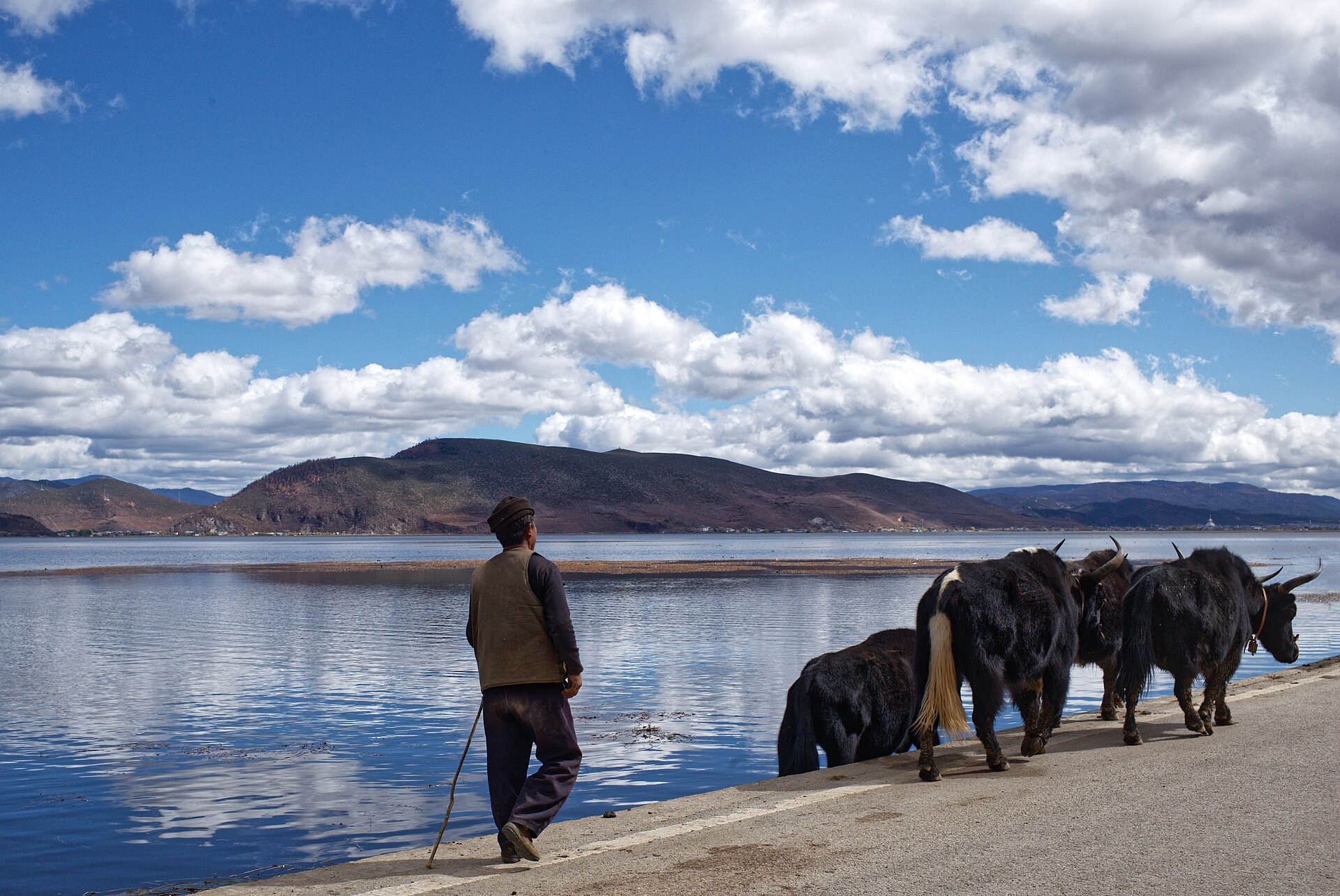
The numbers tell the recovery: 61 cranes wintered here in 1984; the recent season peaked at 573, including 88 juveniles. They share the marsh with black storks, common cranes, white-tailed eagles and up to 50,000 wintering waterbirds, against a backdrop of horses and yaks grazing the meadow. Because the lake sits just outside town, this is the rare plateau spectacle you can watch without an expedition — which is exactly how our black-necked crane journey uses it.
Warm hotels at 3,300 m and the wetland half an hour away — no camping required to watch China's highest-flying crane.
Reserve staff monitor the roosts daily; a guided morning puts you at the right meadow edge at the right hour, telescope included.
Cranes fly between feeding meadows through the morning — the fly-pasts over the open water are as good as the feeding grounds.
Yaks, horses, Tibetan farmhouses and the meadow's summer flowers frame the birds; the same water holds bar-headed geese and black storks.
At 3,260 m take the first day easy. The crane watching is vehicle-and-viewpoint work, which makes it a perfect acclimatisation day.
Morning frost well below zero warms fast in the plateau sun. Layer up; the light is at its best early.
Water levels swing with the seasons — in high summer the marsh can be meadow. The crane months guarantee the wetland.
Viewing runs from tracks and hides. Walking onto the marsh flushes birds off their feeding ground and spoils it for everyone after you.
Napa Hai is the southern half of our black-necked crane journey — the plateau answer to Poyang Lake's winter flock.
Start a journey briefThe black-necked crane tour · Two crane winters: Poyang and Napa Hai