The Wusun ancient trail
The full crossing: two passes near 3,900 m, the Kokesu canyon, and Paradise Lake — the old horse road from the Ili grasslands to the desert rim, walked as a private guided expedition.
 Start your enquiry
Destinations / Xinjiang / Ili & the far west
The green heart of the Tianshan: grasslands folded like corduroy, Sayram's impossible blue, glaciers at the head of forested valleys — and the two-thousand-year-old horse roads that cross the range on foot.
Explore the guide ↓Western Xinjiang · Ili Kazakh Autonomous Prefecture
The Ili valley is the wettest, greenest, most alpine corner of Xinjiang — a broad valley opening west to the moisture that the westerlies still deliver, ringed by snow ranges on the other three sides. It is horse country: the Wusun bred their heavenly horses here two thousand years ago, and Zhaosu's Ili horses still move the summer pastures along routes their bones remember.
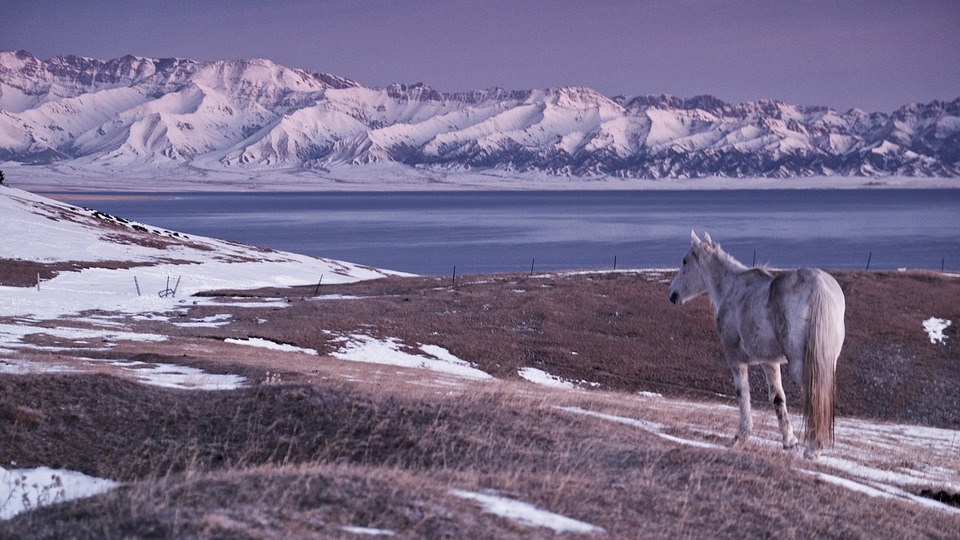
The region's landscapes stack like a textbook. Sayram lake, a cold blue sheet at 2,070 m under the Boro-koro mountains. The Kalajun — "cloud terrace" — grasslands folded into green waves with the snow line behind them. The valley heads: Xiata under the Muzart glacier, and the canyon country of the Kokesu where the Wusun trail drops south. And the great wall itself — Khan Tengri and the wall of 6,000-metre ice that separates the Ili from the Tarim.
Ili rewards two kinds of traveller, and both in June. The walker gets the finest moderate alpine trekking in China: grassland stages, hot springs, a glacier at eye level. The rider and the wanderer get a landscape of villages and pastures and lake roads that asks nothing harder than a good seat and an appetite. The two combine — our journeys hold the range from a week to the full crossing.
The landscapes and routes that make the far west worth the flight.
The full crossing: two passes near 3,900 m, the Kokesu canyon, and Paradise Lake — the old horse road from the Ili grasslands to the desert rim, walked as a private guided expedition.
Forest, hot springs and the Muzart glacier at eye level — Xuanzang's mountain of ice without the full crossing's commitment.
Folded green grassland under the snow line, herder camps, and the finest walking country in the valley — a trail guide to the terrain and its seasons.
The largest alpine lake in the range, ringed by summer pastures — crossed by every westward journey and worth its own morning in the light before the buses.
The breeding grounds of the Wusun's famous mounts, with summer races and transhumance still moving the flocks.
A short, brilliant season — and how to work it.
The passes clear, the grasslands flower, Sayram fills blue. Every trek in the region opens mid-June; July is warmest with afternoon storm risk. Book early — June beds on the grasslands are few.
Quieter, clearer, the grass browning gold; river crossings on the Wusun drop to their lowest. September is the connoisseur's month for the big crossing.
The valley floor winters white and quiet; the Sayram road becomes a snow corridor. We run Ili lightly in winter — ask, but the treks are done.
Mountain access policy here changes season to season — fire closures, border-zone rules, weather. Every route page carries the current situation at enquiry, and we never run against a closure.
Yining is the gateway; the valley is long.
Yining (Ghulja) has direct flights from Urumqi and is the standard meeting point. Tekes — the eight-trigram town — makes the natural eastern base for the grasslands; Zhaosu serves the western valleys.
The valley runs 300-plus kilometres west to east with slow mountain roads. Itineraries string their highlights on one line: Sayram in, grasslands or valleys, out via the pass roads.
County-town hotels are good and simple; grassland stays are yurt camps and homesteads. The treks camp — full mule support on both ancient trails.
Kazakh hospitality and a dairy-rich table.
Summer moves the herds up, autumn brings them down — the transhumance you walk through on the trails is working agriculture. Keep distance, greet, and let the herders set the terms.
Milk tea, kumis for the brave, and a schedule set by animals and weather — accept the cup and the pace.
Ili cooking leans dairy and lamb: naan, noodles, horse-meat sausage in winter, and the valley's berries and honey in June.
What to know before the grasslands.
The Wusun crossing is demanding — passes, rivers, six days out from roads. The Xiata valley and Kalajun walks are moderate. Match the route to the legs; we will ask about both.
Mountain afternoons build storms; every trek day here starts early for a reason. Waterproof everything, always.
Ili pairs with the south — over the range to Kuqa and Kashgar — for a full Tianshan arc, or with the north's autumn fortnight in the same trip.
Tell us whether you want the crossing, the glacier or the grasslands — or all three on one line — and we will shape the far west around your window.
Start my journey brief ↗