Flowers in altitude bands
The bloom moves up the terraces for six weeks. The five-flower meadow section is the postcard; the real show is everywhere the shuttle does not go.
 Start your enquiry
Trekking / Kalajun
On the south bank of the Ili river, the Tianshan softens into wave after wave of meadow: a UNESCO World Heritage landscape of wildflowers, yurts and Kazakh horsemen, and the trailhead of an ancient road.
Start this route briefXinjiang · Tekes County, the Ili valley
Tekes County, Xinjiang — the green south flank of the Tianshan, four hours by air from Urumqi plus a road day
core zone of the Xinjiang Tianshan World Heritage listing, nationally 5A since 2022
late May to early July, when globeflowers, primulas and irises colour the terraces in bands
flowers in early summer, golden grass and clear passes by September
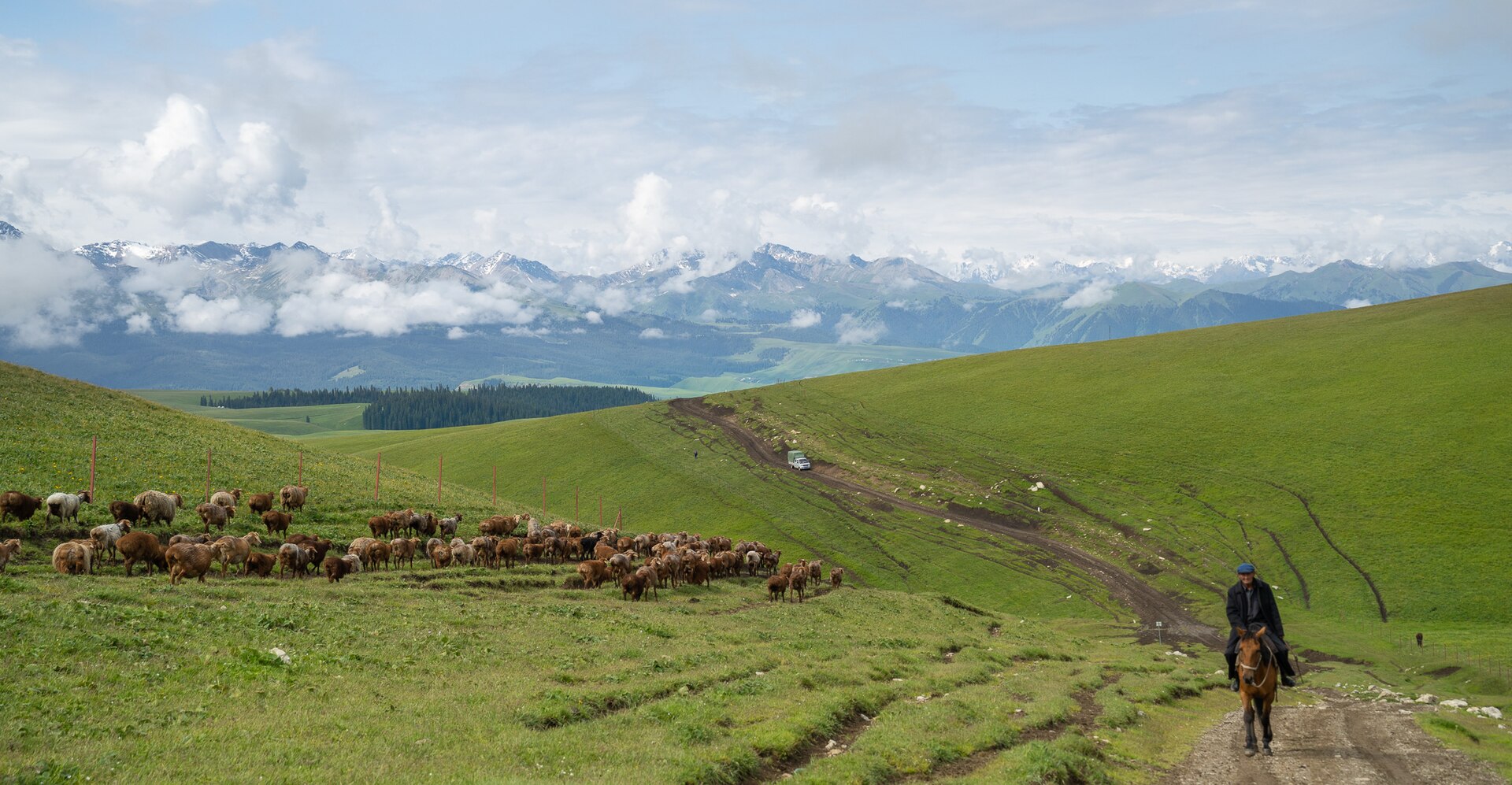
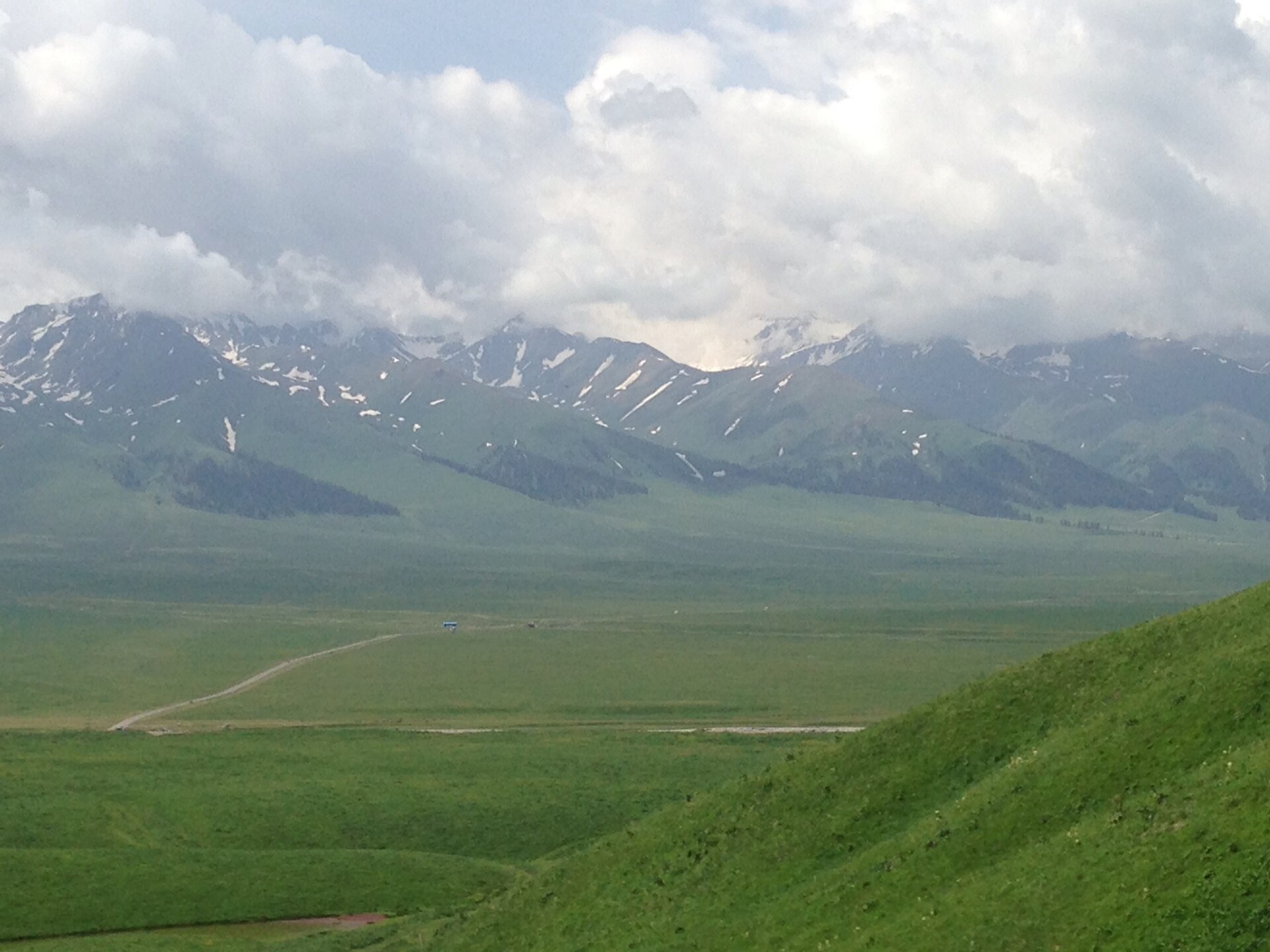
Most famous grasslands are famous for being flat. Kalajun is famous for being folded: terrace after terrace of meadow rising off the Ili river, so the land reads in bands of colour — the 'layered' or three-dimensional grassland — and in evening light the slopes roll like fabric, which is why one viewpoint is simply known as the human-body curves.
The UNESCO listing recognises the ecology behind the beauty: one of the most complete mountain-forest-steppe systems in the Tianshan, with spruce forest in the valley bends, snowcock and eagles on the ridges, and a Kazakh grazing culture that has kept the meadows in rotation for centuries.
Four layers of the same landscape.
The bloom moves up the terraces for six weeks. The five-flower meadow section is the postcard; the real show is everywhere the shuttle does not go.
Kalajun's hills are smooth and treeless, and at low sun the shadows turn them into anatomy. Photographers wait all day for the hour.
A log-house Kazakh village at the road's end and the start of walking routes into the high meadows — wooden bridges, bee farms, and guesthouse dinners.
The grassland's southern edge drops into a red-walled canyon the river has sawn into tight loops — the region's other, wilder face.
Tekes is the eight-armed layout town with the hotels; Qiongkushitai is the wooden village with the guesthouses and the trailheads.
From the village the routes climb through spruce onto the open meadow benches — a day of yurt camps, horsemen and long views back to the snow line.
The Kuoksu canyon path links viewpoints over the river loops; the afternoon light is the reason to time it late.
A night in a yurt — milk tea, dung-fire heat, and the grassland doing its quiet work around you — is the cultural half of the landscape.
For non-walking days the local horses cover the same terraces; the Kazakh saddle is a legitimate way to see the grassland.
The Ili valley sits deep in Xinjiang's northwest: fly to Urumqi, connect to Yining, then three hours of road into Tekes County. The distance is the filter — this is not a weekend getaway landscape, and the meadows keep their calm because of it.
Inside the scenic area a shuttle system covers the main terraces, which keeps the walking routes quiet. Village guesthouses and yurt camps book out during the flower weeks; reserve early.
Foreign travellers need no special permit for the Kalajun area itself, but Xinjiang checkpoint procedures are routine and add time — we build the schedule around them.
Late May to early July, moving uphill. Miss it and the grassland is still beautiful — just green instead of painted.
Terrace afternoons are warm and the same evening can drop ten degrees; the wind makes it feel colder. Layer properly.
High-UV steppe in summer; repellent for the river meadows in June.
Signal fades on the high terraces and yurt camps are cash for small things.
Qiongkushitai is the northern trailhead of the ancient Wusun crossing to the Tarim side — a serious multi-day expedition for another visit.
The Ili loop chains naturally to Sayram and the border valleys; most travellers give it a week.
Grassland walking: light on the feet, serious about weather.
The herding families move up with the bloom and down before the snow, and everything about Kalajun — the yurt camps, the horse trails, the cheese drying on a guesthouse roof — runs on that clock rather than the tourism one.
Visit inside the season and you are not looking at a landscape; you are briefly part of its working year. That is the difference the photographs never manage.
Flat grasslands you drive across. Folded ones you walk into.
No fixed departure runs the Ili valley yet — as a custom leg it chains with the Kazakh northwest or a Tianshan line.
Kanas: the Altai guide · The Karakoram highway north · Route notes: reading the country
Start a route brief