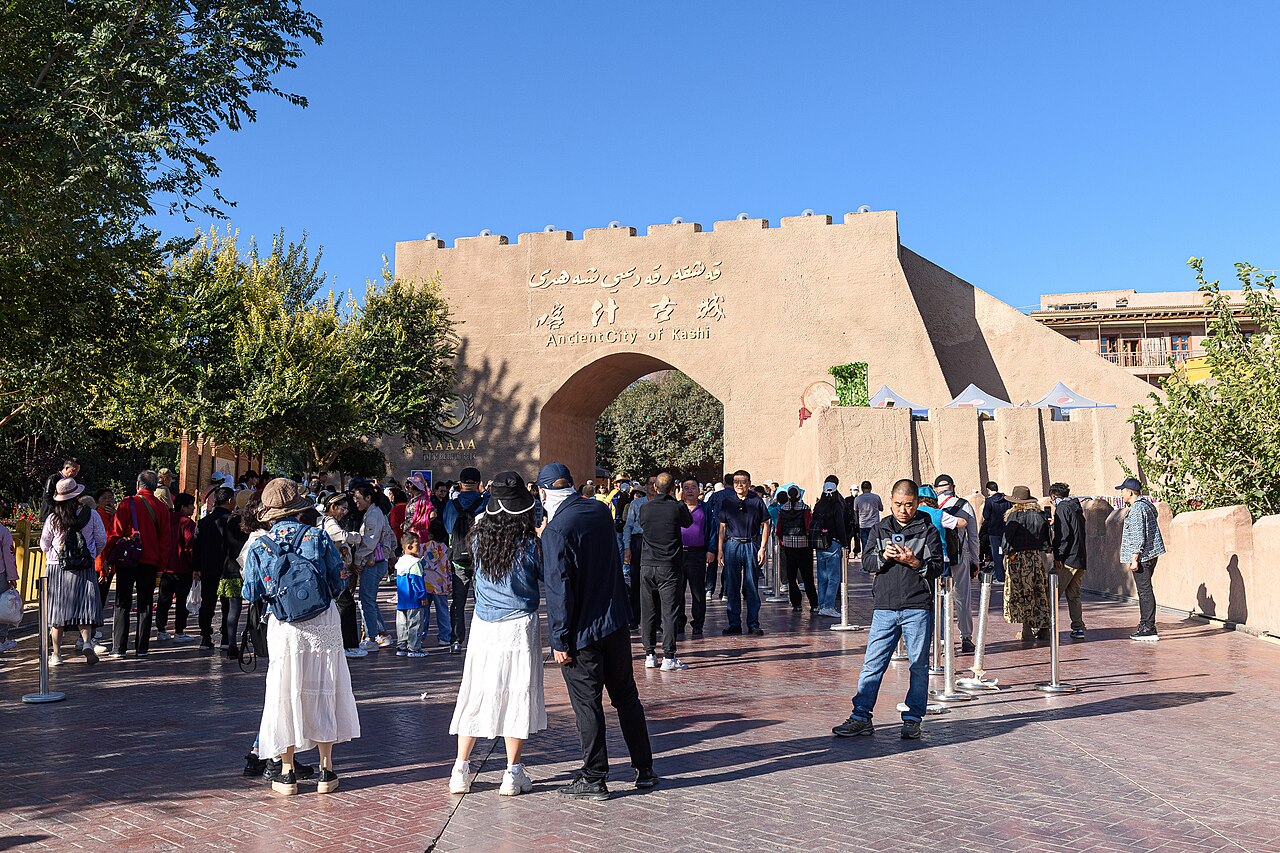
The old city east gate
The restored ancient city is inhabited — bakeries, coppersmiths, dollmakers and family courtyards — and best at opening time before the crowds, then again at dusk.
 Start your enquiry
Destinations / Xinjiang /
The city where the silk road ran out of land: a living old city of bread ovens and coppersmiths, the largest livestock market in Asia, and the road west climbing toward the Pamir.
Explore the guide ↓Southern Xinjiang · 1,300 m · the caravan capital
Kashgar is the silk road made physical. Geography put it here — the last green place before the ranges west and south — and everything that follows from geography followed here too: traders, pilgrims, soldiers, potters, and a density of craft and food that survives in the working lanes of the old city today.
Give the city three days. One for the old city's east-gate quarter at opening time and the evening rush of the food streets; one for the Apak Hoja shrine, the workshops and the grand bazaar; and one aligned to the livestock market, which is worth rearranging a whole itinerary around. Then the Karakoram highway waits at the western edge of town, climbing toward the Pamir — and the region guide to the south takes over.
Six stops, from dawn ruins to midnight bread.
The restored ancient city is inhabited — bakeries, coppersmiths, dollmakers and family courtyards — and best at opening time before the crowds, then again at dusk.
Sheep, goats, horses, camels and the trade that surrounds them — the largest market of its kind in Asia, photographed a million times and still genuinely local.
The 17th-century shrine of the Naqshbandi family — glazed tiles, dome and courtyard — and the region's most important pilgrimage site.
One of the region's largest markets: fabrics, carpets, knives, dried fruit and the tea shops where the deals happen.
The plaza where the old city pivots — prayer times shape the day, and the square's evening light is the city's postcard.
Baked naan, samsa from the tandoor, lamb skewers, chicken-over-noodles — the southern style is bolder and sweeter than the north's, and the streets around the old city run it late.
Market days, permits and pacing.
The livestock market is a weekly event (traditionally Sunday) and moves with the calendar — we build any Kashgar itinerary around its day, which sometimes means reordering two days of the week.
The Pamir highway beyond the city needs a border-area permit for Tashkurgan county — free of charge, issued in Kashgar or online, and handled by us on any Pamir journey.
Three full days for the city itself, four if a rest day helps. The Pamir road is a separate, additional leg — see the Kashgar & Pamir road journey.
Southern cooking runs bolder: baked samsa, pepper-and-lamb kebabs, the thick yoghurt drinks and the famous baked fish of the riverside markets. The old-city teahouse above the lanes is the sit-down ritual.
Ask before portraits of people — families will often say yes, and the answer is warmer for the asking. The market especially is a workplace first.
Tell us your dates — we will align the itinerary to the market day and the mountain weather beyond.
Start my journey brief ↗