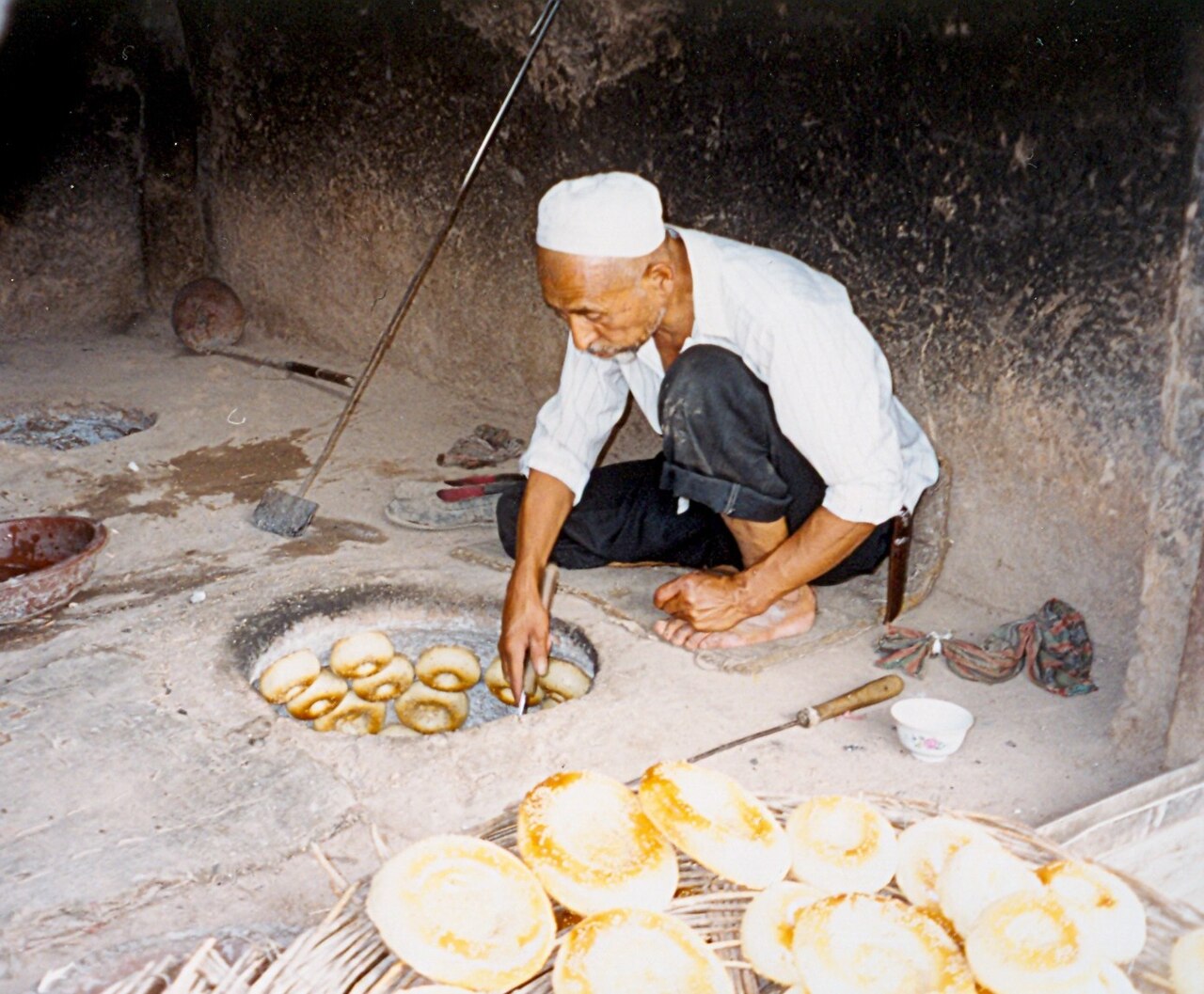
Naan & the tandoor
Crusty, sesame-studded, baked against the tandoor wall — buy it hot in the morning; each town stamps its own.
 Start your enquiry
Destinations / Xinjiang /
The silk road's pantry still cooks: bread from the tandoor, lamb over fire, hand-pulled noodles, saffron-yellow pilaf and the dairy-and-dried-fruit culture of the oases — the honest food guide, region by region.
Explore the guide ↓The whole plate · the table
Xinjiang's cooking is the silk road's in present tense: wheat from the oasis fields, lamb from the pastures, rice and spice up the caravan routes, and a bread culture that turns every town's tandoor into a landmark. It is generous, unpretentious and structured differently from the rest of China's cooking — more Central Asian than Chinese on the plate, which surprises first-time visitors and usually delights them.
Our journeys eat deliberately: market breakfasts, courtyard dinners, household meals on the grassland and in Tajik homes, and the food streets left loose so you can follow your nose. Below, the dishes worth ordering first and the regional signatures that make the south's table different from the north's.
The plate's essential eight.
Crusty, sesame-studded, baked against the tandoor wall — buy it hot in the morning; each town stamps its own.
Charcoal, cumin, chilli — the territory's street food and its evening ritual.
Hand-pulled noodles with stir-fried meat and vegetables — the everyday dish that judges every kitchen.
'Big plate chicken' — braised chicken and potato over wide belt noodles, the northern table's centrepiece.
Saffron-yellow rice with lamb and carrot, cooked in the big pot — the celebration dish, best at market lunch counters.
Lamb-and-onion parcels baked on the tandoor wall — the street snack that ruins your dinner plans.
Yoghurt, kurt cheese balls, and the dried-fruit markets of Hotan — the pantry side of the plate.
Black tea, milk tea or the spiced pot — the sit-down rhythm that frames every meal on the plate.
The local signatures.
The everything city: all the classics, plus the Erdaoqiao food streets late into the night. Start here to calibrate your favourites.
Grape country: the vine-leaf dishes, the raisin breads, and the Oasis's sweeter baking. The courtyard dinners in the vineyards are the region's best tables.
The mixed-heritage table: Russian-style breads and jams, Kazakh dairy, and the city ice-cream tradition of Yining. The valley eats milder and more varied than the south.
The big naan and the famous roast lamb; in season, Korla's fragrant pears sold under the trees for pocket change.
The boldest cooking: lamb with dried fruit, walnut breads, thick yoghurt drinks, and the Sunday market's food stalls — the south's best lunch.
The caravan menu: baked fish from the riverside stalls, the old-city teahouse above the lanes, and the food streets that run until the bread runs out.
Tell us your dietary notes — the journeys build every menu around them, and the food streets forgive everything else.
Start my journey brief ↗