The regional museum
The Tarim mummies — tall, tattooed, astonishingly preserved — plus silk, food and funerary galleries that make the whole territory's history legible before you go out into it.
 Start your enquiry
Destinations / Xinjiang /
The most landlocked major city on earth, and Xinjiang's front door: a modern capital with a two-thousand-year museum, a great trading bazaar and the whole territory's journeys starting at its station.
Explore the guide ↓Northern Xinjiang · 900 m · the gateway
Almost every journey on the Xinjiang plate starts or ends in Urumqi, and the city deserves more than the usual jet-lag night. Its museum holds the best-known of the Tarim mummies — Travellers who arrive expecting a generic Chinese provincial capital instead find a city whose food streets, markets and faces belong unmistakably to Central Asia, and whose skyline holds the Tianshan's snow line on clear mornings.
Plan two nights: one for the museum and the grand bazaar, one for a food street evening and a first look at the Tianshan from the Red Mountain park that gives the city its viewpoint. The international airport connects to every corner of the territory, and the high-speed rail station starts the journeys that deserve the ground route.
Six stops that explain the city and its region.
The Tarim mummies — tall, tattooed, astonishingly preserved — plus silk, food and funerary galleries that make the whole territory's history legible before you go out into it.
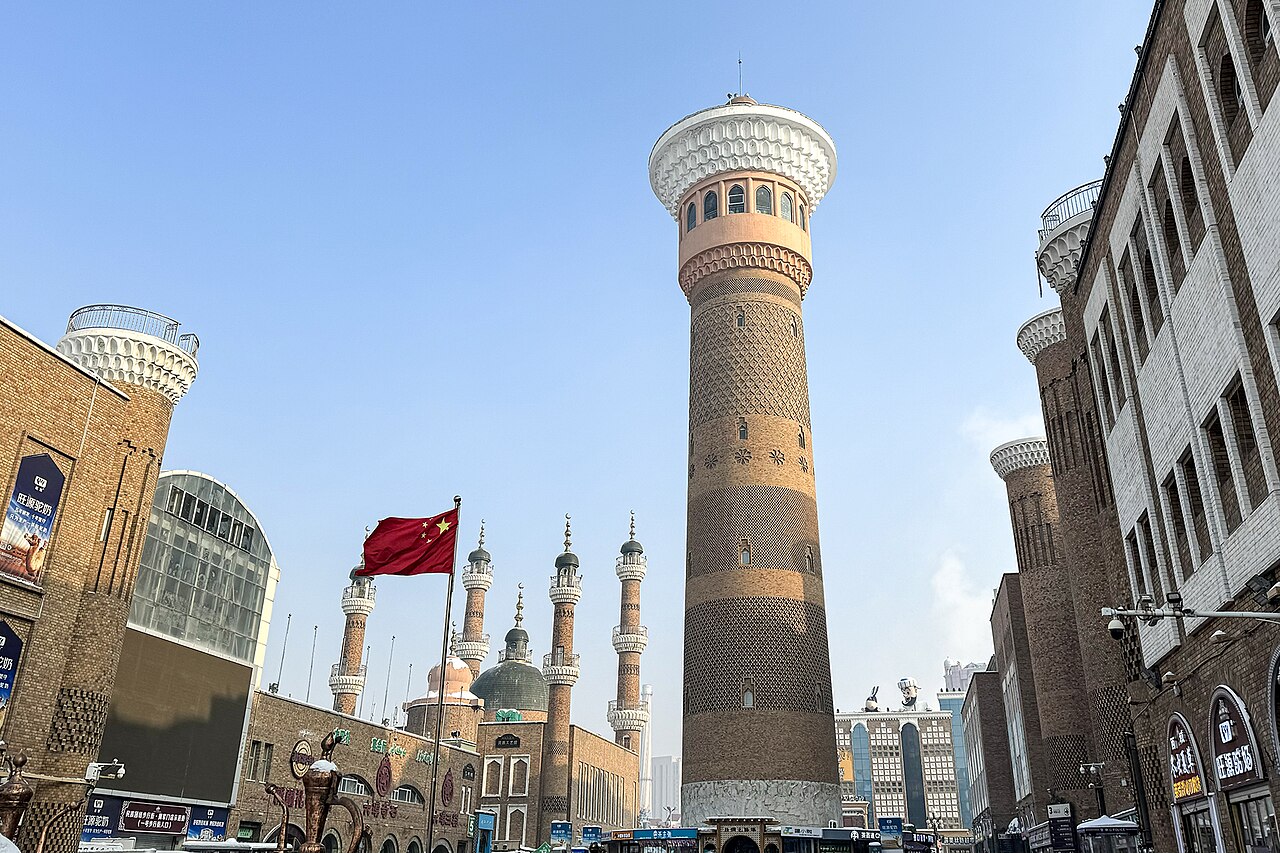
A working trade centre rebuilt in ornate Islamic style — the tower viewpoint, the dried-fruit halls and the food street's lamb skewers are the reliable trio.
A rocky park of pavilions on a ridge above the centre — the clearest place to watch the Tianshan's snow line hover over the skyline at dusk.
Morning taiji, dancing and chess under the poplars — the quietest hour in a fast city, and a good first morning when jet lag wakes you early.
Noodle pullers, naan ovens and kebab smoke — the city's evening entertainment is its dinner, and the streets south of the bazaar run it all night.
Music and dance performances most nights — touristy but genuinely well performed, and a friendly first contact with the region's musical tradition.
The details that make the gateway work.
Two nights covers the museum, bazaar and food streets unhurried; add a third only if you are taking a rest day between journeys. The city is a base, not a destination.
The airport runs direct flights to every anchor city on the plate — Kashgar, Yining, Hotan, Korla, Altay — and the high-speed rail station runs to Turpan in under an hour. We book both as part of any journey.
The Turpan short break runs out of the city by rail; the Tianchi alpine lake and the southern pasture valleys fill a spare day when you have one.
Start with the classics — dapanji chicken-over-noodles, hand-pulled laghman, baked naan and lamb skewers — then let the food streets correct you. Vegetarians eat well here too; ask us for the shortlist.
Dry and continental: winter sits far below zero, summer afternoons are hot, and every season is sunburnt-dry. Layers and lip balm outrank the umbrella.
Tell us how many days you have and what the trip is for — the gateway plans itself around the rest.
Start my journey brief ↗