The oasis walks
The depression at walking pace: a working karez, dawn in the Jiaohe ruins, the Tuyoq valley and the Kumtag dunes — our five-day walking journey.
 Start your enquiry
Destinations / Xinjiang / Turpan & the east
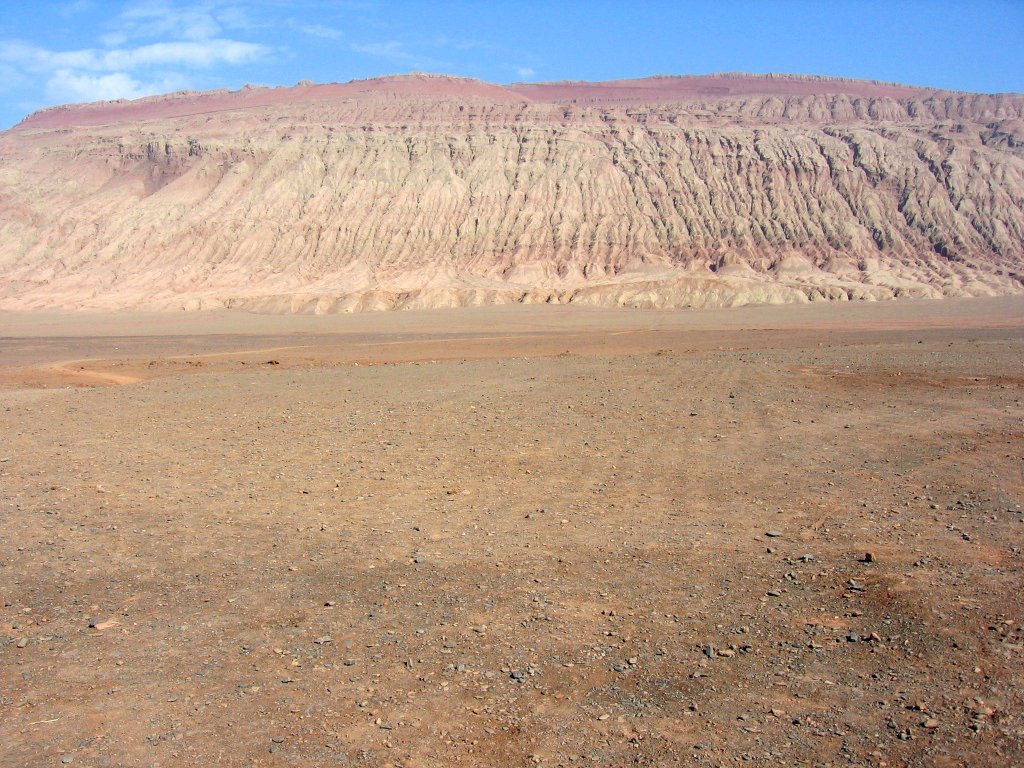
The dry heart: a depression 154 metres below the sea, kept alive by underground rivers of snowmelt, guarded by a wall of burning red rock — and walkable in every season but July.
Explore the guide ↓Eastern Xinjiang · Turpan depression
Turpan should be uninhabitable. The depression floor sits 154 metres below sea level, rainfall is measured in millimetres, and summer heat passes 45 °C. It is instead the greenest oasis in the region — because two thousand years ago its engineers stopped fighting the desert and went under it: the karez, gravity-fed underground channels that carry Tianshan snowmelt for tens of kilometres without losing a drop to the sun. A thousand wells still work; the vineyards they feed produce the sweetest grapes in China.
The east is where the silk road's archive lies open. Jiaohe, an entire city carved downward into a plateau, abandoned and left standing. Gaochang, the mud-walled caravan capital the monk Xuanzang reached in the 630s. Bezeklik's painted caves above the Flaming mountains, with the scars of the 1905-13 expeditions still visible where the murals were sawn out. And the living archive: Tuyoq village under the red wall, grape trellises over the lanes, bread ovens in the mornings.
It is also the easiest Xinjiang there is — no altitude, no camping, short distances, five comfortable nights, and a climate that turns walkable exactly when the mountains are snowbound. Most of our travellers meet the east first, or last, as the accessible bookend of a bigger journey.
Ruins, waterworks, villages and dunes — walked, not driven.
The depression at walking pace: a working karez, dawn in the Jiaohe ruins, the Tuyoq valley and the Kumtag dunes — our five-day walking journey.
Turpan, Kuqa and Kashgar along the Taklamakan rim — the east is its first act, and pairs with the far west on one ticket.
A UNESCO city cut downward into a plateau between two river beds — empty, cool and enormous in the first hour of light, before the tour vans.
A working channel visit with the well-keepers' explanation — thirty kilometres of gravity and clay, and the reason there is a vineyard at all.
A wall of free-standing dunes at the depression's eastern gate — walked at dawn before the sand heats, and a first desert night for many travellers.
Two good seasons, one honest warning.
Warm days, cool mornings, the vineyards leafing out; May brings the grape flowering. The best all-round walking window.
Grape season: trellises full, drying houses working, the depression easing back to walkable heat. Pairs with the north's gold fortnight in one trip.
Cold but bright and dry, sites empty, hotels cheap — and Turpan becomes the winter-walkable half of a winter pair with the snowy Altai.
The depression can pass 45 °C and we do not run walking itineraries in midsummer. If July is your only window, the high valleys are where your week should go.
Short distances, long history.
Turpan is under three hours from Urumqi by high-speed rail — the easiest arrival in the region — with a small airport for summer connections. Most journeys meet in Urumqi and drop straight in.
The sites open early and the heat decides the day: ruins at dawn, karez and museums in the shaded hours, bazaars in the late afternoon. Our routes are built to that clock.
Turpan city has the region's best-value hotels; the Tuyoq valley offers simple village guesthouses — modest beds, extraordinary stars.
Uyghur oasis life, at table pace.
The raisin drying houses with their brick lattice walls are working architecture — visit one with a family, not a shop, and the whole oasis economy explains itself.
Laghman pulled to order, polo rice rich with carrot and mutton fat, naan from wall ovens, and the melons — the depression's heat is the point of the flavour.
Tuyoq's mosque site and the village's Friday rhythms are part of a living community: dress modestly, ask before portraits, and let the day be the villagers' own.
Small things, dry climate.
The dry air hides dehydration — drink on schedule, not on thirst. A litre per walking half-day in the cool season, more in shoulder heat.
The depression's UV is serious at any temperature: hat, high-factor, and the long lunch hour are all part of the walking plan.
The east is the natural first act of the silk oases journey west, or the winter partner of the Altai ski week — the two-climate trip is a favourite.
Tell us your month and your appetite for ruins, dunes and dinners. The east is the easiest week we run in Xinjiang — and the one people underestimate most.
Start my journey brief ↗