
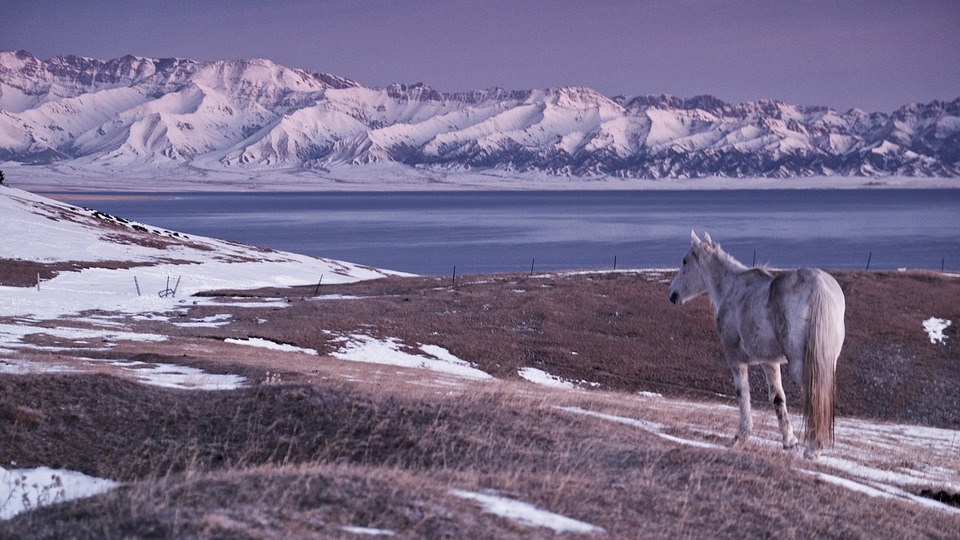
Desert / Silk Road: the Xinjiang oases
Private silk road journey
Xinjiang Silk Road Journey: 8 Days from Turpan to Kashgar
The Taklamakan desert is ringed by a necklace of oases, and for two thousand years those oases were the silk road's relay stations — water, grain, beds and new camels between China and the West. This journey runs the necklace: Turpan's ruined cities below sea level, Kuqa's earliest Buddhist caves, and Kashgar, the great caravan town where the routes converge.
Ask about this itineraryXinjiang, a third the size of the United States · and the oases are where its history pools
depth of the Turpan depression, second-lowest land on earth after the Dead Sea — and in summer among the hottest, which is why its melons taste the way they do
karez — underground channels that tap the Tianshan snowmelt below ground and run it, gravity-fed and unevaporated, to Turpan's vineyards; the system totals thousands of kilometres
caves at Kizil near Kuqa, painted from roughly the 3rd century onward — the earliest large Buddhist cave complex in China, a century or more before Dunhuang
founding year of Kashgar's Id Kah mosque, heart of the old city's 2 square kilometres of rammed-earth lanes
Why this route
The necklace around a dead heart.
The Taklamakan's name is popularly glossed as 'you go in, you don't come out' — folklore, but fair. What made the silk road possible was never the desert crossing; it was the ring of oases around it, each one a state with its own coins, scripts and patron Buddhas. Tocharian was spoken here. Sogdian merchants ran the trade. The murals at Kizil show donors in robes that look Persian, Indian and Chinese in the same chapel.
This journey follows the oases in their natural order: fly to Urumqi, drop into Turpan for the karez and the dead cities, follow the Tarim's northern rim to Kuqa and its caves, then fly the last leg to Kashgar and give the old city the two unhurried days it deserves. It is a journey about water as much as trade — every ruin here is a story about what happens when a channel silts.
Route Briefing
South and west from Urumqi: two days in the Turpan depression, a driving day along the Tarim's northern rim to Kuqa, then a short flight to Kashgar for the finish. Internal flight saves two days of desert driving.
- undefinedundefinedundefined
- undefinedundefinedundefined
- undefinedundefinedundefined
- undefinedundefinedundefined
- undefinedundefinedundefined
- undefinedundefinedundefined
- undefinedundefinedundefined
- undefinedundefinedundefined
The Journey
Eight days along the rim.
The pacing is set by heat and light: Turpan's sites early in the morning, caves at their appointed slots, and long drives split with oasis lunches. Distances are real — this is the part of China where maps lie least.
-
Day 01
The museum and the mummies
Arrive Urumqi
Meet in Urumqi, the most landlocked major city on earth, 2,500 kilometres from the nearest ocean. The afternoon is for the regional museum — whose highlight is the Tarim mummies, four-thousand-year-old Europeans with reddish hair and woven wool, buried in the desert's salt-dry sand and uncovered by archaeology in the 1970s onward. They reset everything you thought you knew about who lived here first.
Dinner in the grand bazaar quarter: lamb skewers over tamarisk coals, naan the size of a wheel, and your first taste of Xinjiang's rice pilaf, polo, rich with carrot and mutton fat.
-
Day 02
Below sea level, above water
Urumqi → Turpan
Drive into the Turpan depression and feel the land drop below the sea. Begin with the karez — visit a working channel and see the wells and underground galleries that carry snowmelt from the Bogda range without losing a drop to the sun. Turpan without karez is uninhabitable; with them, it has been a vineyard for two thousand years.
At the day's cool end, the Jiaohe ruins: an entire city carved downward into a plateau between two river beds, abandoned in the Yuan era and left standing like a vase-shaped shadow of itself. UNESCO-listed in 2014 as part of the silk roads serial property. Dinner in a vineyard trellis — the grapes hang overhead, and the raisins dry in air-vented brick drying houses you will see everywhere.
-
Day 03
Monks in the flames
Turpan
Out early to the Bezeklik thousand Buddha caves, cut into a cliff above the Mutou valley on the Flaming mountains' flank — where the monk Xuanzang is said to have passed and preached in the 630s on his way to India. The remaining murals were badly stripped by German expeditions in 1905-13; the cuts where the panels were sawn out are part of the story, and the rebuilt panels hang in Berlin.
The rest of the day belongs to the oasis: the Emin minaret (1777, the tallest earthen minaret in China), a family lunch of laghman noodles hand-pulled to drumbeat, and the Suleiman's hill viewpoint over the whole depression at dusk.
-
Day 04
Along the Tarim's rim
Turpan → Kuqa
The long driving day, broken deliberately: lake Bosten's reed shores for lunch, the iron gate pass at Korla, then south into Kuqa (ancient Kucha) by evening. Kuqa was one of the great Buddhist kingdoms of the silk road — the translator Kumarajiva, who carried the sutras into Chinese in the 4th-5th century, was born here to a Kuchean mother and an Indian father.
Evening in Kuqa's old quarter: the grand mosque, the night bazaar's baked buns and yogurt, and the sound of the rawap — the Uyghur lute this town is known for.
-
Day 05
The first Buddhist caves in China
Kuqa — Kizil
West along the Muzart river valley to the Kizil caves, cut from roughly the 3rd century — earlier than Mogao, and painted in a style scholars call Kuchean: strong blues from lapis lazuli, diamond-rhombus compositions dividing ceilings into hundreds of tale-tiles.
Like Bezeklik, the caves carry the scars of the 1905-13 expeditions; your guide reads what remains with honesty about what was taken. Return by the Kuqa grand canyon, a slot of red sandstone deep enough to hold snow in June, and a detour to the Subash ruins — the city temple complex where Kumarajiva studied.
-
Day 06
West to the caravan capital
Kuqa → Kashgar
Fly the leg the caravans took a month to walk, over the Taklamakan's western horn, and land in Kashgar by midday. The old city — two square kilometres of lanes, courtyards and overhanging workshops built of rammed earth and timber — is the finest surviving example of a silk road town anywhere on the routes.
Take it on foot in the late afternoon: the potter's lane, the coppersmiths at their anvils, the bread bakers whose naan ovens are sunk into the city wall itself. The Id Kah mosque faces the square; the old city curls around it like a shell.
-
Day 07
Tombs, tea, and the largest bazaar
Kashgar
Morning at the Apak Hoja tomb — the tiled dome the English called the tomb of the fragrant concubine, wrapping the family who ruled the oasis for the Qing in the 18th century. The tilework is the finest in Xinjiang.
The afternoon is Kashgar's Sunday bazaar spirit in whatever day it is: the livestock market outside town if it is a Sunday (goats, camels, and the horse-traders' handshake protocol), otherwise the international bazaar's corridors of silk, knives and dried fruit. End with a long tea in the hundred-year teahouse upstairs over the street, where the men play and the dumplings come with the view.
-
Day 08
Where the routes met
Depart Kashgar
Transfer for onward flights — over the Karakoram toward Pakistan if your journey continues that way, or back across China. If the Karakoram highway calls, the Khunjerab pass journey can be built as an extension; ask us.
What's included
What is included, and what is not.
Xinjiang rewards planning: cave appointments, long-drive management, and local guides in each oasis who belong to the communities you are walking through.
Included
Arranged and paid in your price.
-
E
n
-
A
l
-
I
n
-
K
i
-
A
l
-
K
a
Not included
Either yours to arrange, or a question we will gladly answer.
-
F
l
-
S
o
-
C
a
-
K
a
-
T
r
undefined
Enquiry
Ask us about this one.
Tell us your dates. We will come back with a route plan matched to the season — Turpan in July is an oven, in May it is a garden — and a written outline with a price.
- Difficulty
- Easy, with real distances
- Group size
- 2 – 10, private departures
- Best window
- May – Jun, Sep – Oct
- Cost guide
- From ¥14,800 per person, twin share
Enquiry sent
Thank you — your enquiry is with us.
We reply within one business day. A copy of what you sent has gone to your inbox.
Need to add something? Write to inquiry@chinadventure.com.
Back to the itineraryRead next