Shennongding & the summit boardwalk
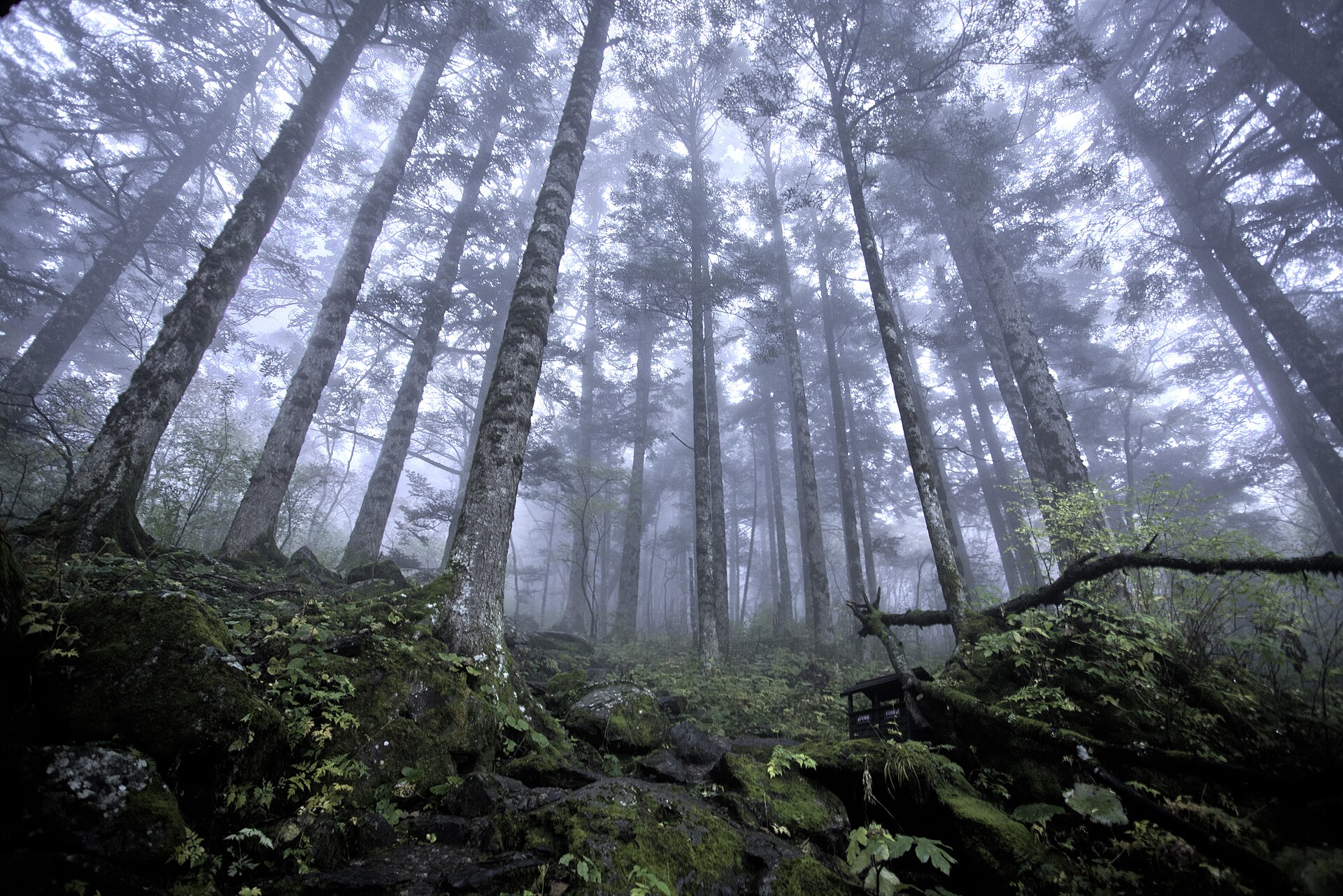
The highest road in the province ends below the peak, and a boardwalk and stairway finish it. Cloud forest, dwarf bamboo, and on a clear morning a horizon that runs to the Qinling.
 Start your enquiry
Destinations / Hubei / Shennongjia
The highest ground in central China, covered in forest that was never cleared. A reserve the size of a small county, with a peat basin in the middle of it and monkeys that live nowhere else.
Explore the guide ↓Western Hubei · 3,106 m
Shennongjia is a forestry district, not a county: 3,253 square kilometres of mountain administered for its trees, which is the accident of history that saved them. The ground rises from 420 metres in the river valleys to 3,106.2 metres on Shennong Peak, and the whole climb is forested — evergreen broadleaf at the bottom, mixed deciduous above it, then conifer, then subalpine meadow. Six vegetation belts, intact, in one place.
That range is why UNESCO listed it in 2016 on natural criteria (ix) and (x). The property covers 79,624 hectares in two blocks — Shennongding and Badong in the west, Laojunshan in the east — with a buffer of 45,390 hectares around them. Inside it are 3,767 species of vascular plants, more than 600 vertebrates, and the entire wild population of the Shennongjia golden snub-nosed monkey: 1,550 animals, the most endangered of the three Chinese subspecies and found nowhere outside this reserve.
The other thing to understand is the scale of the place. Shennongjia is not a mountain you climb and leave. It is a road system through a reserve, with a small town at the gate, a plateau basin in the north-west and a summit area in the middle, and the distances between them are measured in hours rather than kilometres. Most visitors see three or four of its parts and think they have seen it.
Four parts of one reserve, and the folklore underneath.
The highest road in the province ends below the peak, and a boardwalk and stairway finish it. Cloud forest, dwarf bamboo, and on a clear morning a horizon that runs to the Qinling.
Nine small lakes in a flat basin 9,320 hectares across, surrounded by peaks of 2,200 to 2,800 metres. The peat is 1.8 metres deep on average and 3.6 at its thickest, and the basin has been accumulating it for more than 275,000 years.
The reserve’s captive-bred and provisioned group, in a steep valley with a viewing route. Not a zoo and not quite wild: it is where the population research happens, and the only reliable place to see the monkeys at all.
A natural rock bridge over a gorge, and a small limestone gorge with a boardwalk. The two easiest half-days in the reserve, and the ones that work when the summit road is closed by snow.
Snow on the summit, fog in the forest, and a short green summer.
Winter: snow from about 1,500 metres up, the summit road often closed, and the reserve at its emptiest. This is the season for the lower forest and Dajiuhu under frost, not for the peak.
Spring arrives late and fast. Rhododendron on the upper ridges in May, waterfalls running, and the forest at its most legible before the canopy closes.
The wet season. Warm days at altitude, afternoon cloud, and the reason Shennongjia markets itself as a summer escape from the plain — which also means it is full in July and August.
The best window. Dry air, clear summits, and the deciduous belt turning through late September into October. Cold nights above 2,000 metres.
One gate town, one plateau, one summit road.
Muyu, the small town at the southern gate, is where the hotels, restaurants and park shuttle buses are. Most of the reserve’s accommodation is here rather than inside it.
There is no railway. The usual approach is Yichang by high-speed train and then three to four hours by road, or a flight into Shennongjia Hongping airport, a small plateau field about 45 kilometres north of Muyu that opened in 2014.
Private cars are not allowed on the core roads. You move on the park shuttle system, which runs between the gate, Dajiuhu, the summit and the monkey valley on fixed routes — so the itinerary is partly the bus timetable.
A mountain with a pharmacopoeia and a monster.
Shennong, the Divine Farmer, is credited in Chinese tradition with teaching agriculture and testing the herbs — and with tasting hundreds of them here. The name of the reserve is his, and the herb trade that followed is why the salt and medicine roads cross it.
Shennongjia is the best-known home of the Chinese wildman: decades of reported sightings, official expeditions in the 1970s and 1980s, and no specimen. Treat it as folklore with a paper trail, which is more interesting than either the belief or the debunking.
The Sichuan–Hubei salt road runs through the district, and the villages on the plateau were built on it. Some of the stone paving survives between the modern switchbacks.
Altitude, buses and the weather window.
The summit is 3,106 metres. That is enough to make the air thin and the nights cold, and not enough to need acclimatisation. If you have come from the coast that morning, take the first day slowly.
The gate to Dajiuhu is roughly two hours by shuttle, and Dajiuhu to the summit another hour. Two nights in the district is the minimum for seeing both; three is comfortable.
Snow and ice close the upper road for stretches of the winter, usually from December into March, sometimes longer. Plan the summit for the middle of a trip rather than the first day.
Tell us whether you want the summit, the plateau or the forest’s quiet lower roads — and whether you are willing to move base twice. The reserve rewards the second and third night.
Start my journey brief ↗