The danxia at dawn
Be at the gate for opening and take the first shuttle to the highest platform. The tour coaches arrive around ten; by then the light has gone anyway.
 Start your enquiry
Destinations / Gansu / Seasonal notes / The light
The painted hills and the singing dunes are the same photograph taken at different hours. At noon both look like geology; at seven they look like the reason you came.
Explore the guide ↓Zhangye & Dunhuang
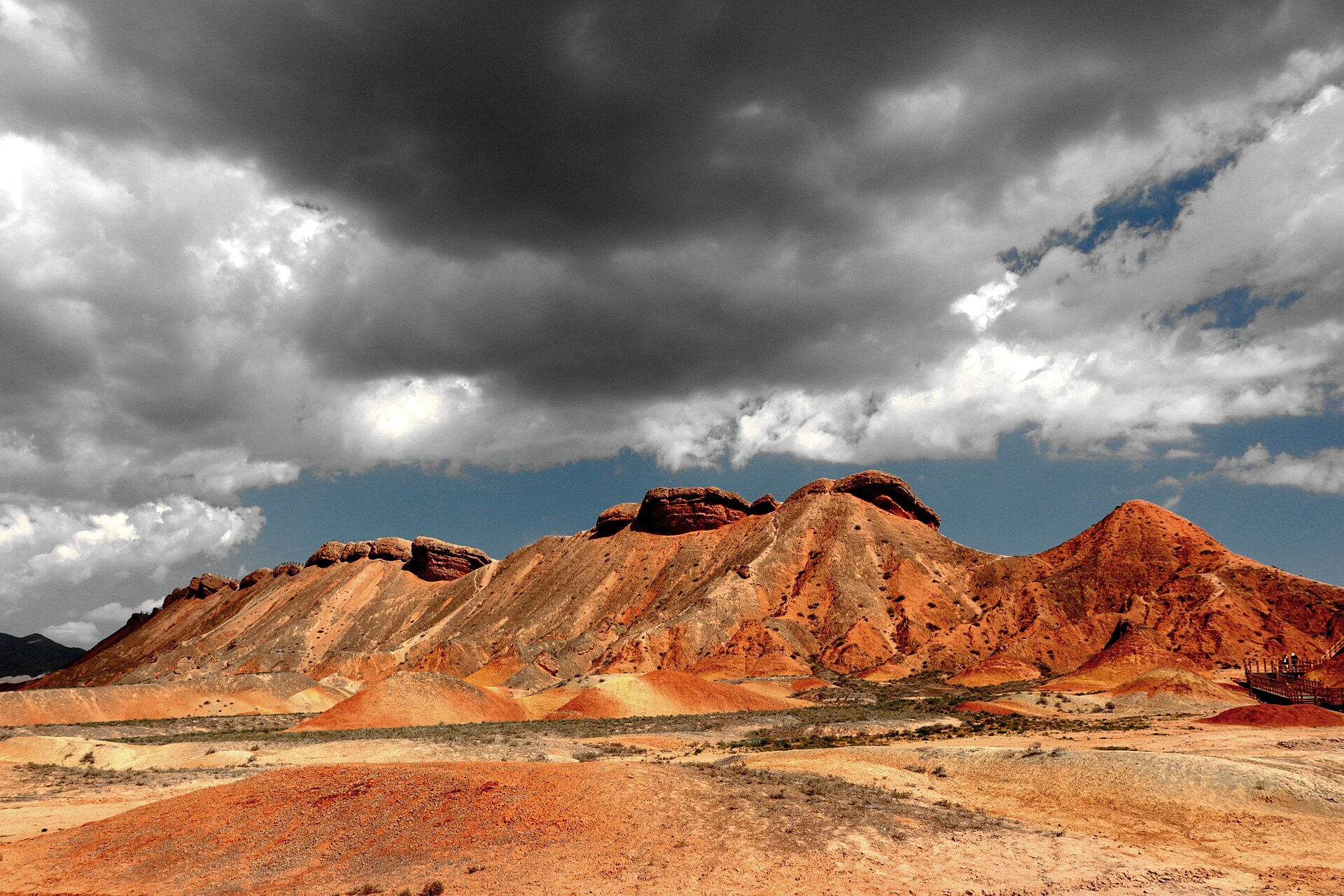
The Zhangye danxia is a tilted sequence of sandstone and mudstone beds, each a slightly different colour, eroded into ridges that run across the bedding. When the sun is high, the light hits the surfaces flat and the colours wash out into a grey-red mass. When the sun is low, it rakes across the ridges, throws each band into relief, and the whole landform separates into stripes.
The dunes behave the same way for a different reason. Mingsha is a field of fine, well-sorted sand with a sharp crest line; in raking light the crest casts a shadow that runs the length of the ridge, and the surface texture — the ripples, the footprints, the wind lines — becomes the subject. At noon the dune field is a white glare with no shape at all.
So both are appointments rather than visits. The danxia geopark opens early and stays open late in season; Mingsha is walkable until the gates close in the evening, and the last hour is when everybody with a camera is on the same ridge.
Two windows, one day each.
Be at the gate for opening and take the first shuttle to the highest platform. The tour coaches arrive around ten; by then the light has gone anyway.
The alternative, and the busier one. Arrive ninety minutes before sunset, walk the upper boardwalk first, and let the crowd leave without you.
Climb the ridge away from the camel loop, walk twenty minutes past the last crowd, and stay until the sand goes blue. Bring a torch for the walk back.
Tell us whether you are a sunrise person. Both landscapes are built around it, and the itinerary looks very different if you are not.
Start my journey brief ↗