The Mogao caves
Timed-entry visits in small groups led by resident guides; the cave rotation changes daily. Book the special-access tickets early — we handle that in season.
 Start your enquiry
Destinations / Gansu & Dunhuang
The Hexi Corridor was the throat of the Silk Road. Gansu still moves travellers the way it moved caravans: fortress by fortress, oasis by oasis, westward.
Explore the guide ↓Northwest China
Gansu is a long province — about 1,600 km from Lanzhou to Dunhuang — squeezed between the Qilian mountains and the deserts of the north. The Han dynasty pushed its wall out here two thousand years ago, and every subsequent dynasty left another layer.
Dunhuang is the reason most travellers come. The Mogao caves hold 735 caves, of them 492 decorated, with some 45,000 square metres of murals painted from the fourth to the fourteenth centuries — the largest body of Buddhist art anywhere.
Eastward the corridor strings together Jiayuguan, the western end of the Ming wall, the rainbow mineral hills of Zhangye and the monastery town of Xiahe on the edge of the Tibetan plateau. It makes a natural one-way journey with Lanzhou as the eastern gate.
Stops along the corridor, west to east.
Timed-entry visits in small groups led by resident guides; the cave rotation changes daily. Book the special-access tickets early — we handle that in season.
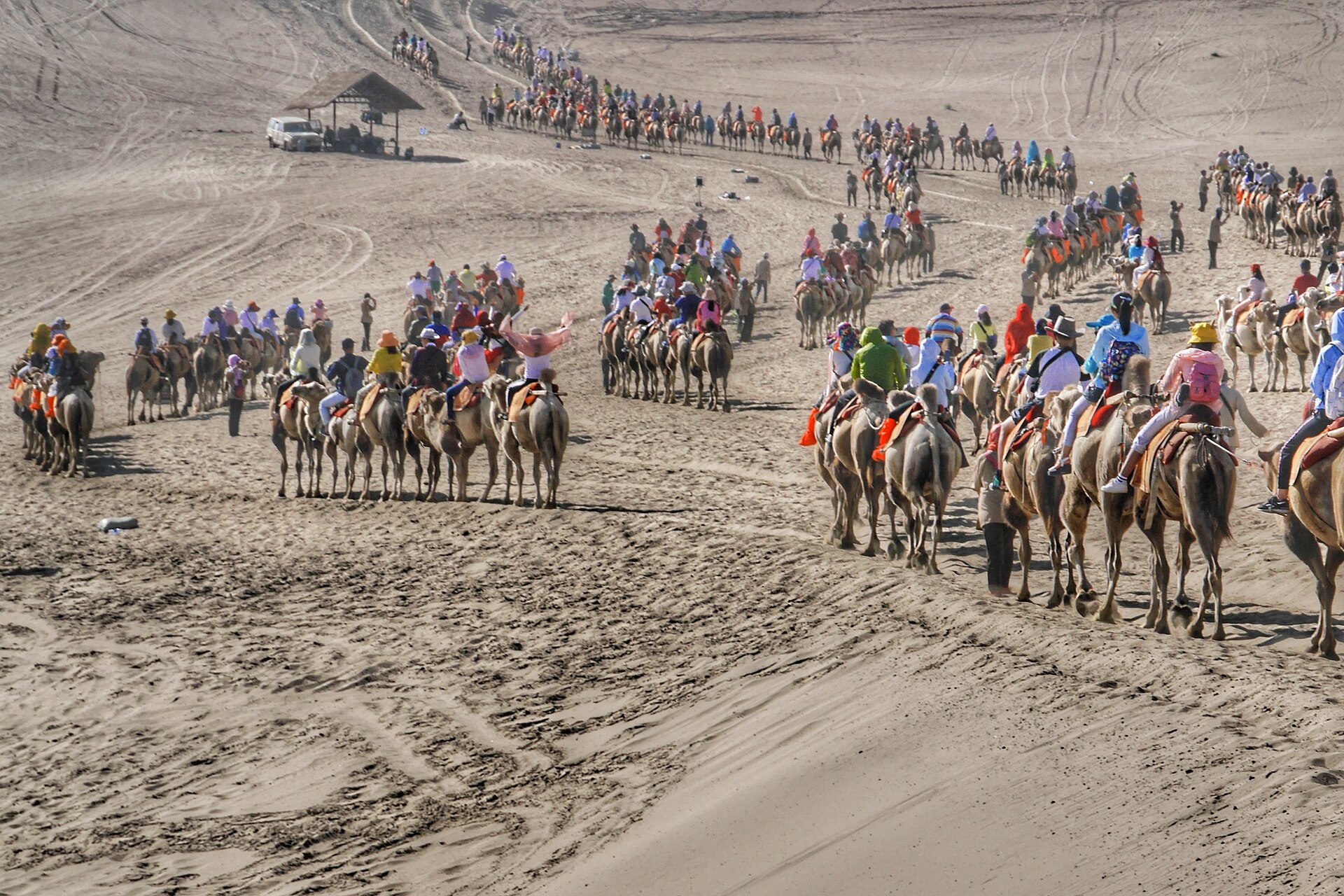
A Singing Sand dune field on the city’s edge and a crescent-shaped spring that the sand has never closed. Go at dawn or late afternoon, not midday.
The western terminus of the Ming wall, completed in 1540, standing alone against the gravel plain. The adjacent Overhanging Wall section climbs a ridge for views.
Striped mineral ridges formed in oxidised sandstone, best in low light. The geopark boardwalk route takes two to three hours.
One of the six great monasteries of the Gelug school, with a working monastic college and the world’s longest prayer-wheel corridor, in a Tibetan valley on the plateau’s edge.
The corridor is a May–October destination with sharp seasonal edges.
The best balance: warm days, cool nights, open passes and manageable light at the dunes.
Peak domestic season. Dunhuang runs hot — often above 35 °C — and Mogao tickets sell out. Workable with early bookings.
The caves stay open and the dunes empty out, but temperatures drop well below zero and some eastern sections are less practical. Ask us before committing.
Connections, bases and the practical details that hold a good route together.
Fly into Lanzhou, ride the corridor west, fly out of Dunhuang — or the reverse. Doubling back wastes a full day each time.
High-speed rail covers Lanzhou–Jiayuguan–Liuyuan; the last stretch to Dunhuang is a branch line. Overnight sleeper options exist for the long legs.
Stays in the dunes range from basic camel-trek camps to comfortable desert lodges. We set expectations honestly before you book.
Make room for local life, food and cultural encounters.
Lanzhou beef noodles pulled to order, Jiayuguan roast lamb, Dunhuang apricot water and night-market skewers. The corridor eats well.
A good guide changes everything at Mogao. Pair the visit with the exhibition centre, and consider the digital cinema screening first.
Grape trellises, cotton fields and poplar windbreaks around every town. The oasis agriculture is as much the story as the monuments.
Useful details to discuss when shaping your trip.
The corridor is high desert — carry water, lip balm and layers. The dunes climb is short but the sand is soft and midday heat is real.
Mogao, Jiayuguan and Zhangye all use timed tickets with daily caps. We book these as part of the route, in season weeks ahead.
Tell us which end of the corridor you start from and how deep into the desert you want to go. We will build the one-way route that fits.
Start my journey brief ↗