
East China
Destinations / East China
Zhejiang.
A province that has been landscaped for a thousand years: a lake with a causeway, canal towns, tea hills, bamboo slopes and rhyolite spires above the sea. The easiest place in China to travel slowly.
1,929 m Huangmaojian in Longquan, the province’s high point — though almost nobody comes to Zhejiang for the height
01 / Read the province
Dense, wet and connected.
Zhejiang is small — 100,000 square kilometres — and almost entirely spoken for. Hills in the west, a plain in the north, a coast of islands in the east, and a high-speed line joining every town you have heard of.
- 01
Hangzhou
The lake & the tea hills
- 02
Shaoxing
Canals, wine & ink
- 03
Moganshan
Bamboo · 719 m
- 04
Yandang
Rhyolite · 1,108 m
- 05
Zhoushan
Islands & Putuo
Trains do the work: Hangzhou to Shaoxing is twenty minutes, to Ningbo an hour, and the coastal line reaches Wenzhou in three. Moganshan and Yandang need a car at the end; Zhoushan needs a ferry or a very long bridge.
What to see where ↓02 / Choose a landscape
Three Zhejiangs, not one.
The lake and the tea hills, the canal plain, and the coast. Pick two and give each of them three nights.
The lake & the tea hills
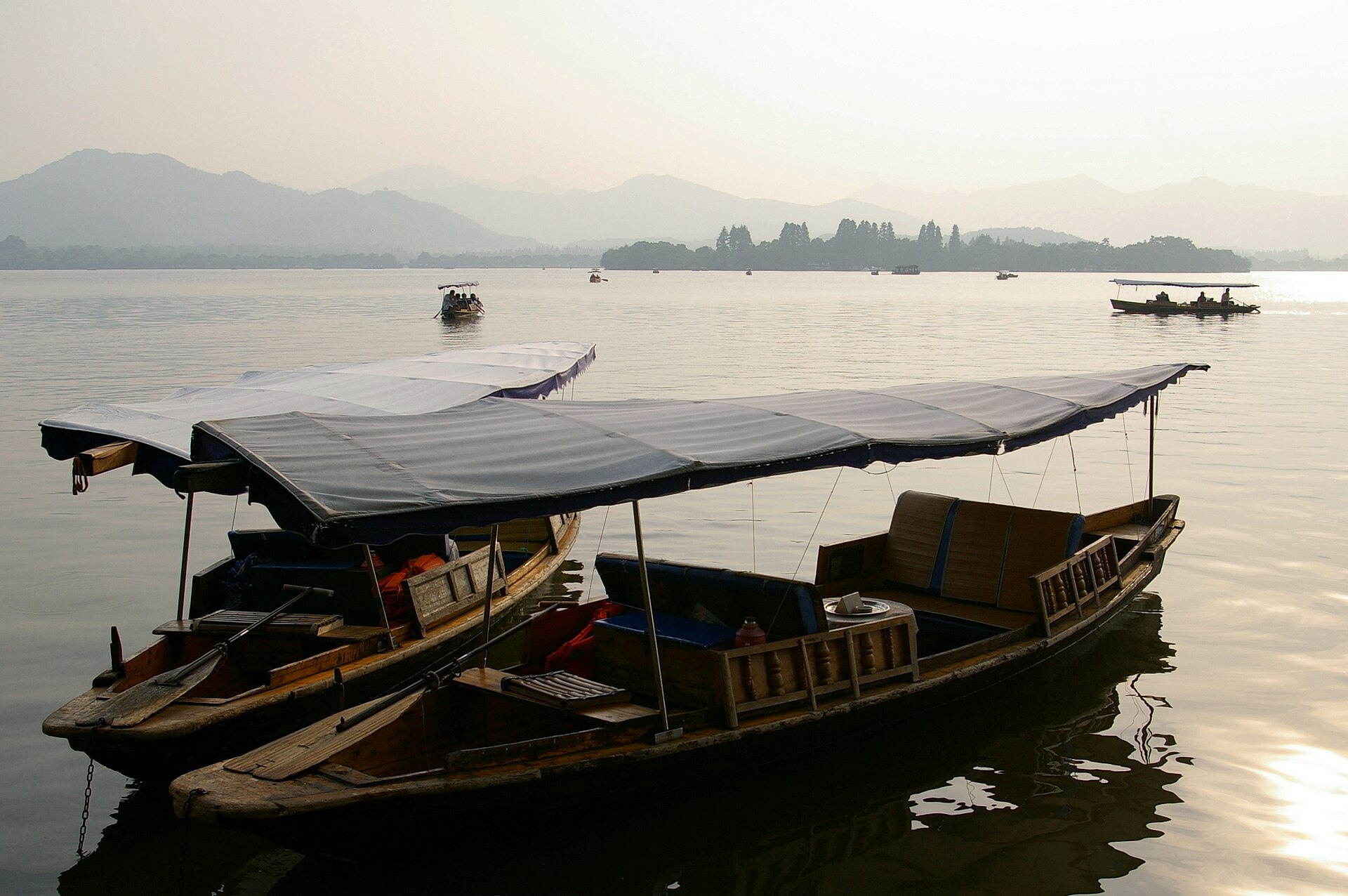
West Lake, inscribed by UNESCO in 2011, is the most visited landscape in China and still works if you walk it at seven in the morning. Behind it, Longjing’s terraces and Lingyin’s halls sit in the same wooded hills.
Read Hangzhou ↗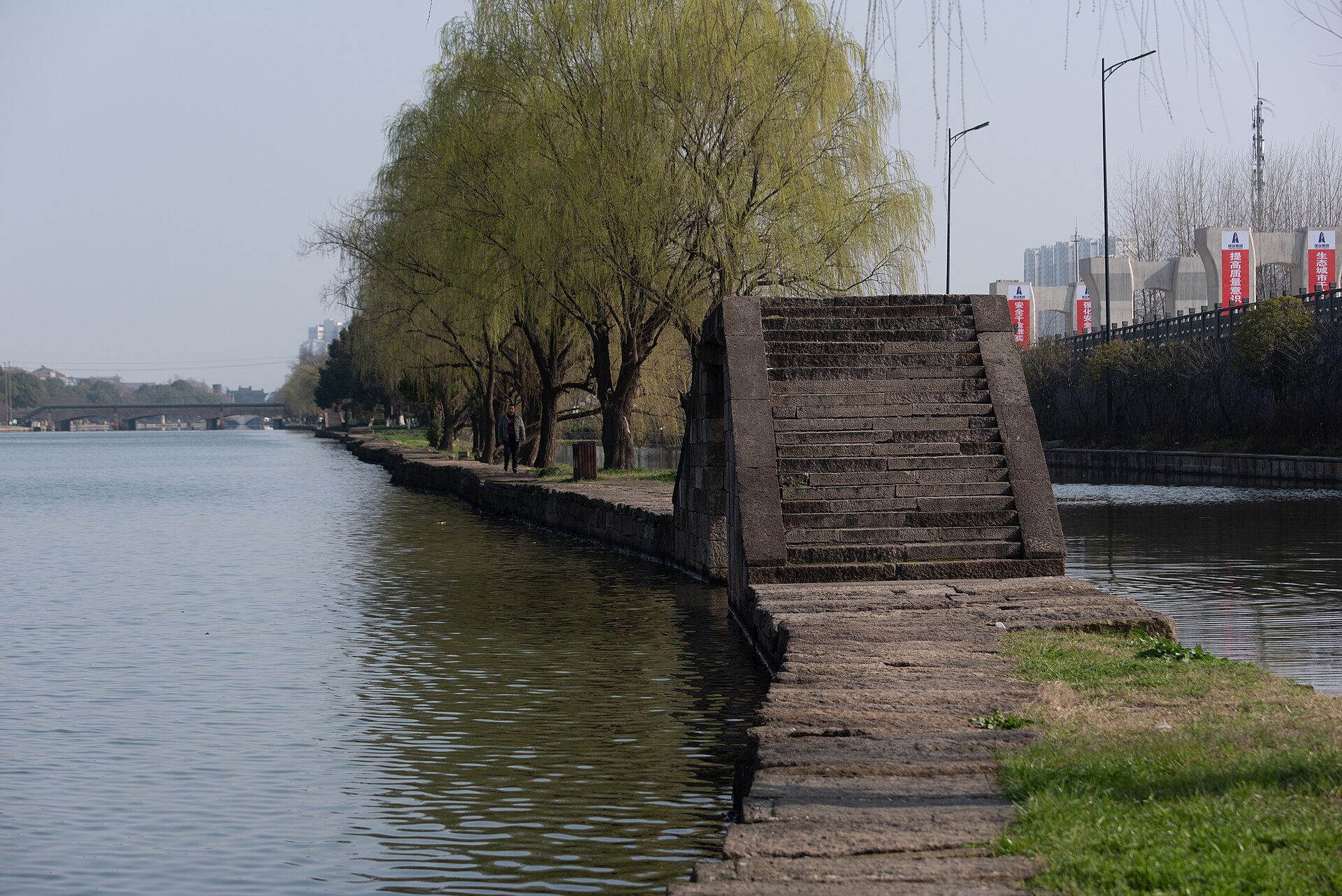
The canal plain
Shaoxing and its water towns: wine jars, black awnings, stone bridges and the places where Wang Xizhi and Lu You wrote. The Grand Canal runs through it and still carries barges.
Into the water towns ↗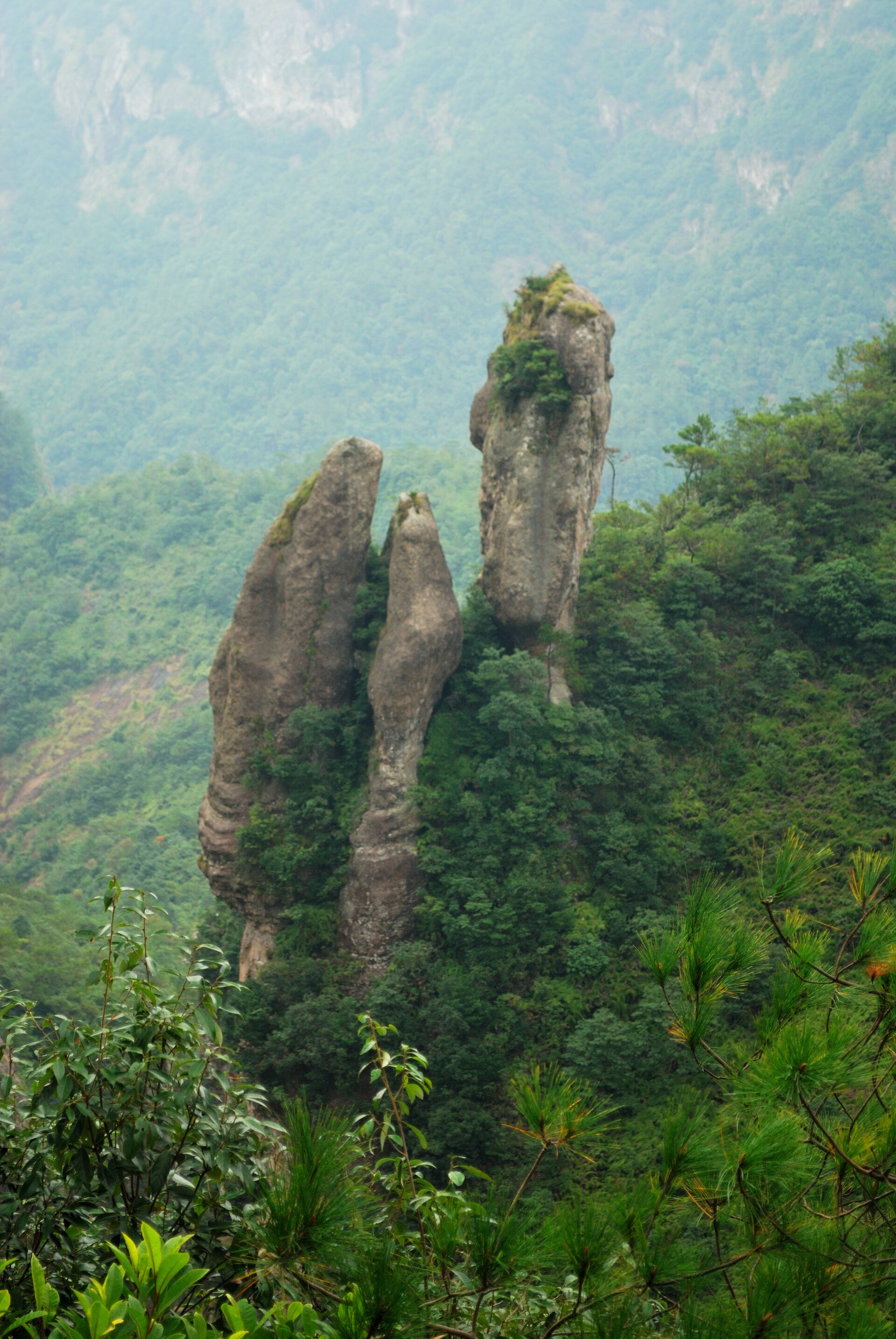
The mountains & the coast
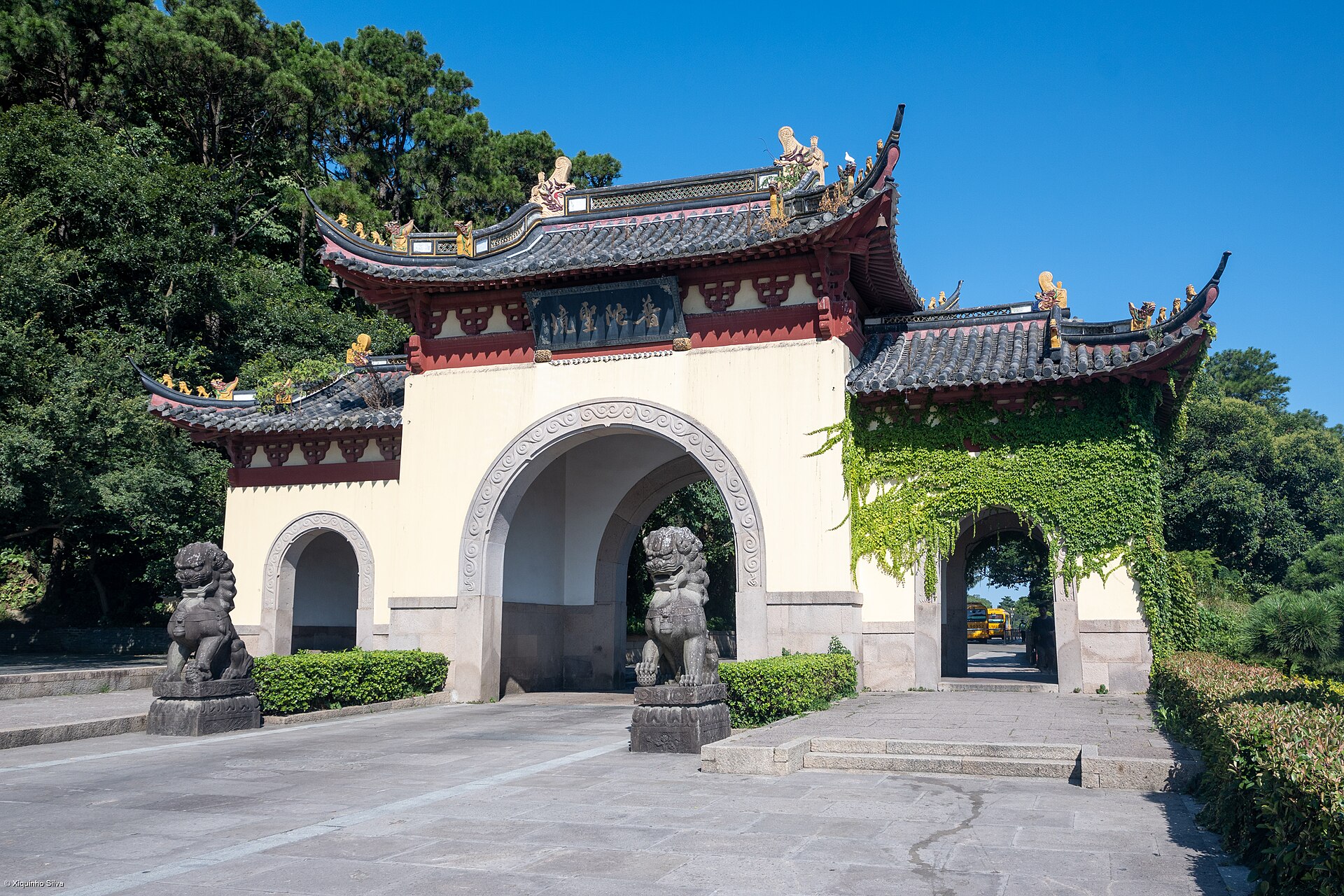
Yandang’s rhyolite spires in the south, Moganshan’s bamboo and villas two hours from Hangzhou, and the island monastery of Putuoshan out in the East China Sea.
Into the hills and out to sea ↗03 / Pick your month
A long spring and a short, sharp autumn.
Zhejiang’s year is defined by the plum rains in June, the typhoon window in August and September, and the two dry, mild months either side.
Open month Cold, closed or limited Best window
March – May · Tea and blossom
The best window: Longjing is picked from late March, the hills are green, the light is soft and the lake is at its least crowded outside the Qingming and May Day holidays.
June – August · Plum rain and heat
The plum rains soak June, then July and August turn hot and humid, with typhoons possible from late July. The mountains — Moganshan, Yandang — are what everyone does instead of the coast.
September – November · Clear
The typhoon window closes, the humidity drops and October is the best month of the year. Osmanthus flowers in Hangzhou in late September, which is reason enough on its own.
04 / Stay curious
Tea, silk and ink.
Zhejiang’s landscapes are cultural objects. The lake was dredged, the causeway built, the tea named by an emperor and the canals dug for grain.
- 01
Tea
Longjing is picked before Qingming in late March and early April; the first flush is the expensive one. The terraces above Hangzhou are working farms, and a morning with a picker explains more than any tasting room.
- 02
Silk and ink
Hangzhou was the southern terminus of the Grand Canal and the centre of the imperial silk trade. Shaoxing was where the ink and the scholars were: Wang Xizhi wrote the Lanting preface there in 353, and the city has been quoting it ever since.
- 03
Water as infrastructure
Every canal town here is a piece of engineering: dikes, sluices and towpaths built to move grain north. The Grand Canal was inscribed by UNESCO in 2014, and barges still use it.
05 / Go deeper
Route shapes, not fixed departures.
We do not run scheduled Zhejiang departures. The province is a rail network with a lake at one end and islands at the other, and every route we build is private.
The three shapes below cover most of what people want; each can be shortened to a long weekend or extended into Anhui and Jiangsu.
06 / Before you go
The useful details.
Zhejiang is the easiest province in China to travel independently and the easiest to get wrong by moving too often.
Two nights minimum
The distances are short, which tempts people into a new hotel every day. Hangzhou deserves three, Shaoxing two, and Moganshan or Yandang two more — the province is about mornings, not transfers.
Crowds are concentrated
West Lake on a weekend, the Qingming and May Day holidays, and any sunny Saturday in October are genuinely crowded. Weekdays in the same weeks are a different place.
Wet cold in winter
January and February are 4–8 °C with high humidity and no central heating in most old buildings. It feels colder than Beijing at −5. Pack accordingly, or come in spring.
Keep exploring
Go one layer deeper.
07 / Common questions
The questions that come up first.
What travellers ask before a Zhejiang route takes shape.
01How many days does Zhejiang need?
Five for Hangzhou and Shaoxing; eight to ten to add Moganshan, Yandang and the islands.
02Is West Lake worth it?
Yes, at seven in the morning, in the rain, or on the quieter western shore. Not at eleven on a Saturday in October.
03Hangzhou or Suzhou?
Both, and they are an hour apart by rail. Hangzhou is a lake in hills; Suzhou is a city of gardens and canals.
04When is the tea picked?
Longjing’s first flush is late March to early April, before Qingming. The later pickings continue into May and are cheaper and stronger.
05Are the islands worth the crossing?
Putuoshan is worth it for the monastery and the sea air, and it is a 20-minute ferry from Zhuajiajian. The other islands need more time than most itineraries allow.
06Do I need a car?
No for Hangzhou, Shaoxing and Ningbo. Yes — or a driver — for Moganshan’s last hour and for Yandang, where the valleys are spread out.
07Is it good with children?
Very. Boats, trains, tea terraces, bamboo forests and manageable distances. The stairs at Yandang are the main caveat.
08What about typhoons?
The season runs from July to September, and a landfall can close the coast and cancel ferries for two or three days. We build coastal days late in a route, not at the start.
Something not covered here? See how a private route is put together ↗ or send us your question ↗
Your Zhejiang.
Tell us whether you want the lake, the canals or the coast — and how many mornings you are willing to get up early for. That is what the province rewards.
Start my journey brief