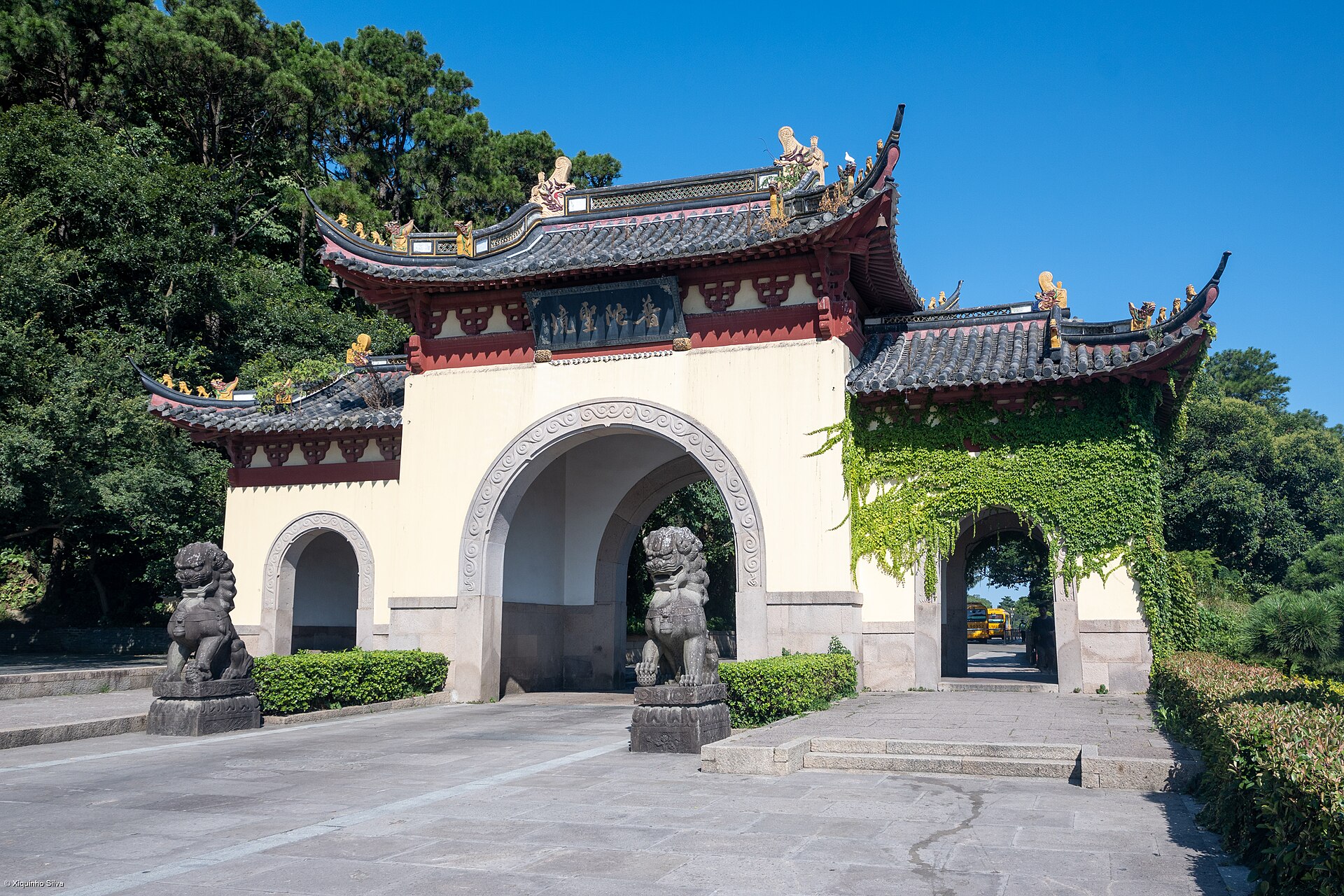
Puji temple
The island’s principal temple, with a pond in front, a hall of 500 arhats and the oldest fabric in the complex. Busiest at dawn, when the pilgrims arrive.
 Start your enquiry
Destinations / Zhejiang / Zhoushan
An archipelago of more than a thousand islands off the Zhejiang coast, with one of China’s four great Buddhist mountains sitting on an island in the middle of it.
Explore the guide ↓The East China Sea · the islands
Zhoushan is a prefecture of islands off the coast of Ningbo, connected to the mainland by a chain of bridges and to each other by ferries. The main island, Zhoushan itself, is a working port and fishing base; the archipelago around it runs to more than a thousand islands, most of them uninhabited, with granite cliffs, small beaches and villages that emptied as the fishing changed.
Putuoshan is the reason most travellers come. It is a small island — about 12.5 square kilometres — and one of the four great Buddhist mountains of China, the one dedicated to Guanyin, the bodhisattva of compassion. The tradition begins with a ninth-century Japanese monk who tried to take a Guanyin image home, was blown back by storms, and left it here; by the Southern Song the island was the official seat of the cult.
The island is car-free apart from buses, walkable in a day, and busy with pilgrims from dawn. Three great temples — Puji, Fayu and Huiji — sit at the foot, the middle and the top of the island, and a 33-metre bronze Guanyin stands on the southern headland facing the sea. It is a religious site first and a scenic one second, which is the way to approach it.
Three temples, one statue and a fishing port.
The island’s principal temple, with a pond in front, a hall of 500 arhats and the oldest fabric in the complex. Busiest at dawn, when the pilgrims arrive.
The second of the three, with a hall of nine dragons whose ceiling and pillars were moved from a Ming palace. The best architecture on the island.
The temple at the high point, reached by 1,000 steps or a cable car, with cloud and sea in every direction on a clear day.
A bronze standing figure on the southern shore, facing the open sea, with a causeway and a viewing platform. The image everyone photographs.
On the main island: a harbour packed with boats, a night market of dried fish, and the best seafood in the province.
Further out: fishing villages, empty coves and the odd abandoned village. Reached by ferry, and a different trip entirely.
A coast with a typhoon window.
The best months: mild, green, and before the summer crowds. Sea fog is common and part of the atmosphere.
Hot, crowded and inside the typhoon window. A landfall closes the ferries for two or three days, sometimes longer.
Clear, cool and quiet, with the best light and the fewest pilgrims. The pick for photography.
Cold, windy and grey, with many guesthouses closed. The temples are at their most devotional and least convenient.
A bridge, a ferry and no cars on the sacred island.
High-speed rail to Ningbo, then a bus over the bridge chain to Zhoushan (about 1.5 hours), or a direct bus from Shanghai (4 hours).
From Zhuajiajian wharf, 20 minutes by fast boat. Tickets are timed and sell out in holiday weeks; the island closes to day visitors after a daily cap in peak season.
No private cars. Shuttle buses link the temples and the beaches; walking between Puji and Fayu takes 40 minutes along the coast.
A working pilgrimage site, not a scenic attraction with monks.
The bodhisattva of compassion, and the most popular deity in Chinese Buddhism. Putuoshan is her seat, and the island’s iconography is entirely hers.
Her birthday, enlightenment and renunciation fall on the 19th of the second, sixth and ninth lunar months. The island fills with pilgrims, and the ferries with them.
Walk clockwise around halls, do not photograph worshippers, and leave the incense to those who came to pray. The monasteries are working institutions.
Sea air, stairs and a strict daily cap.
Putuoshan limits daily visitors in peak season and the boats fill early. We book the crossing with the hotel, not separately.
Small temples and buses still prefer cash; the cable car queue at the summit runs to an hour on holidays.
Ferries stop in high wind and heavy fog, which can strand you an extra night. Build a buffer before a flight.
Tell us whether you want the pilgrimage or the coast. Putuoshan is both, but the island rewards the people who stay the night.
Start my journey brief ↗