
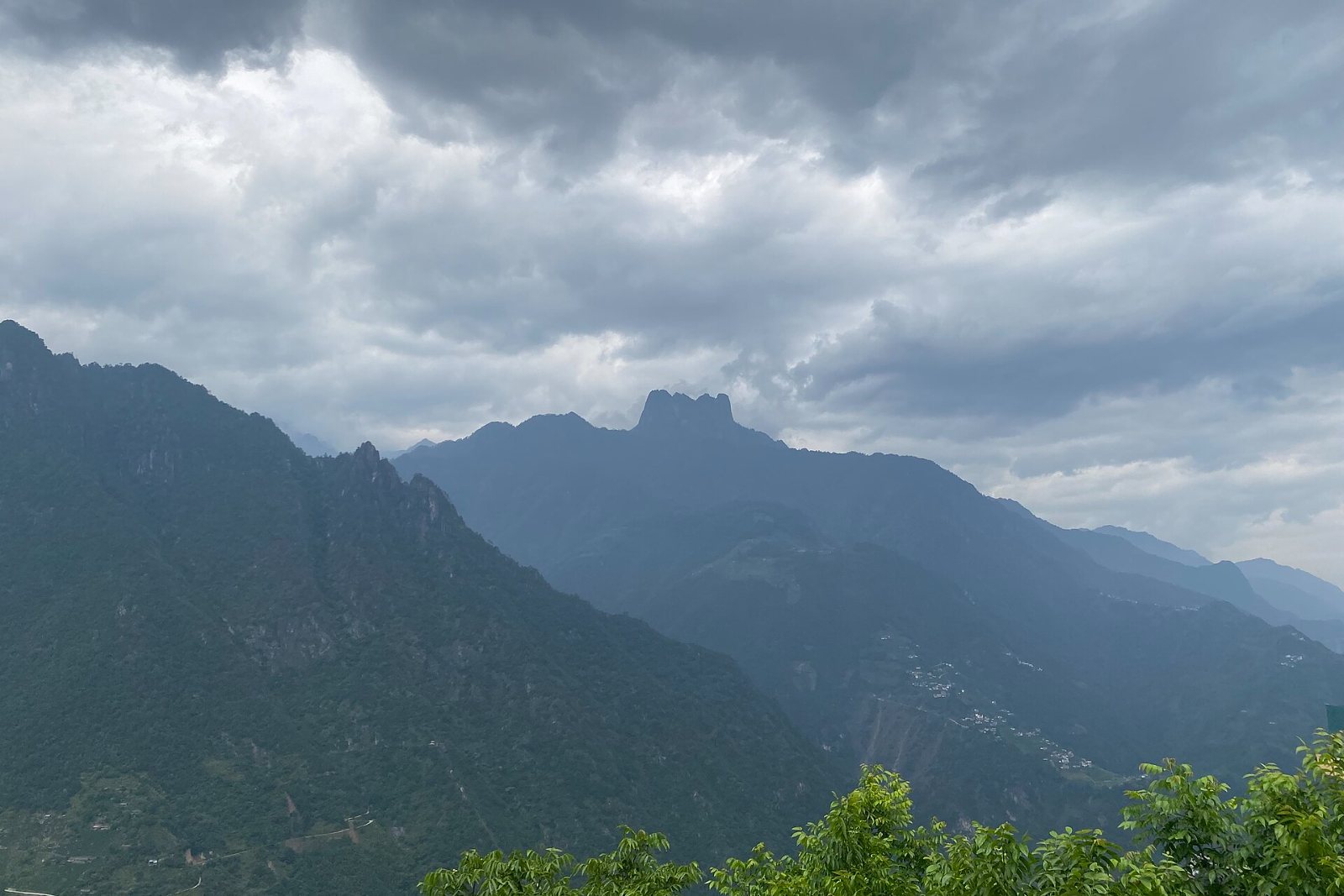
The first thing to understand about the Skywalker gibbon is that you will probably never see one properly. The second is that this is not the same as failing. The species was described by science less than a decade ago, fewer than two hundred survive in China, and the people who study it most closely do so with microphones rather than binoculars.
A call with no name.
In March 1997 a ranger called Li Jiahong heard a call on the Gaoligong ridge in western Yunnan and was told it belonged to a black monkey that never came down from the trees. It took him eight years to photograph one. When the picture finally came, in May 2005, it showed an animal that science had not yet named: in 2017 a team led by Fan Pengfei at Sun Yat-sen University described it as Hoolock tianxing, the Skywalker gibbon — the first ape species named by Chinese scientists, and the first new gibbon described anywhere in a century.
That sequence is worth holding on to. Not a discovery expedition, but a ranger, a call he could not identify, and eight years of patience — which is also a fair description of how anyone sees this animal today.
What the numbers say.
These are small apes, six to eight kilos, that travel through the canopy without touching the ground; the name describes the movement, not the fame. Fewer than 200 remain in China, and surveys between 2020 and 2025 found about 150 across Yingjiang, Tengchong and the Gaoligong reserve. The long-term picture is worse than the headline: occurrence records fell from 113 to 61 over forty years, and roughly three-quarters of the suitable forest was lost in the 2000s.
What remains is four patches of habitat, one of them holding about 60% of the animals, separated by ridges and roads that a gibbon will not cross. A population split into four rooms with no doors between them is not one population for long. That is the argument behind the acoustic monitoring: if you cannot follow the animals, you can at least follow their voices.
Counting by ear.
After four years of recordings, researchers can identify individual animals by the shape of their calls — a vocal fingerprint. The method sounds improvised and is not: a six-minute recording of a female’s call, played back into the ridge, drew answers from two family groups and a solitary male. Three parties, mapped from one microphone, without an animal being approached.
Mated pairs duet at first light, and the female’s great call carries a kilometre or more through still, cold air. That is why the dry season works best — December to March, when dawns are still and the sound travels — and why every survey here starts before sunrise rather than at a sensible hour.
The visitor’s version.
The base is Baihualing, a village on the ridge’s eastern slope at 1,400 metres, with guesthouses, a hundred-odd bird guides and hides in the forest above. The listening point is uphill and takes about an hour, which means leaving in the dark. That is not enthusiasm; it is the only way to be in place when the calling starts, and the window is roughly twenty minutes long.
If the duet comes, that is the sighting — and often it is all of it, because the animals are somewhere in the canopy a few hundred metres away and the forest stays exactly where it is. A few visitors see animals. Most hear a duet and go home with that. We say so before booking rather than after.
The rest of the day is not a consolation prize: Baihualing has 525 recorded bird species on one valley’s slopes, and the hides above the village are what most people came for in the first place.
What a duet means.
A duet is a mated pair announcing a territory, which makes it a piece of social information rather than a sound effect — and the reason we do not use playback to pull gibbons in. A recording played at the wrong moment invites a pair to defend a boundary against an animal that is not there; the reserve’s acoustic monitoring is a research method run by researchers, not a trick to add to a tour.
Silence, equally, is not absence. On a windy morning, or in a week when a family has moved over the ridge, the forest simply does not answer. The honest reading of a quiet dawn is that you did not hear them, not that they were not there.
Where this fits.
The gibbon is the reason this ridge deserves six days rather than two: the listening happens at dawn and takes an hour of the day, and the birds fill the rest. We plan it as a birding journey with a gibbon morning built into it, not the other way round.
The guide to the animal, the village and the morning is on the Skywalker gibbon page; the ridge’s birds are gathered in the golden triangle of Yunnan birding.
Build a Gaoligong morning?
The Gaoligong birding tour
The Skywalker gibbon: the guide
The golden triangle of Yunnan birding
Watching wildlife without disturbing it
The Yunnan snub-nosed monkey