Hearing is the realistic outcome
A few visitors see animals; most hear a duet and go home with it. We say this before you book rather than after.
 Start your enquiry
Wildlife / Field guide
Named in 2017, fewer than 200 left, and almost never seen: the Skywalker gibbon is found by ear, in the first twenty minutes of light, on one ridge in western Yunnan.
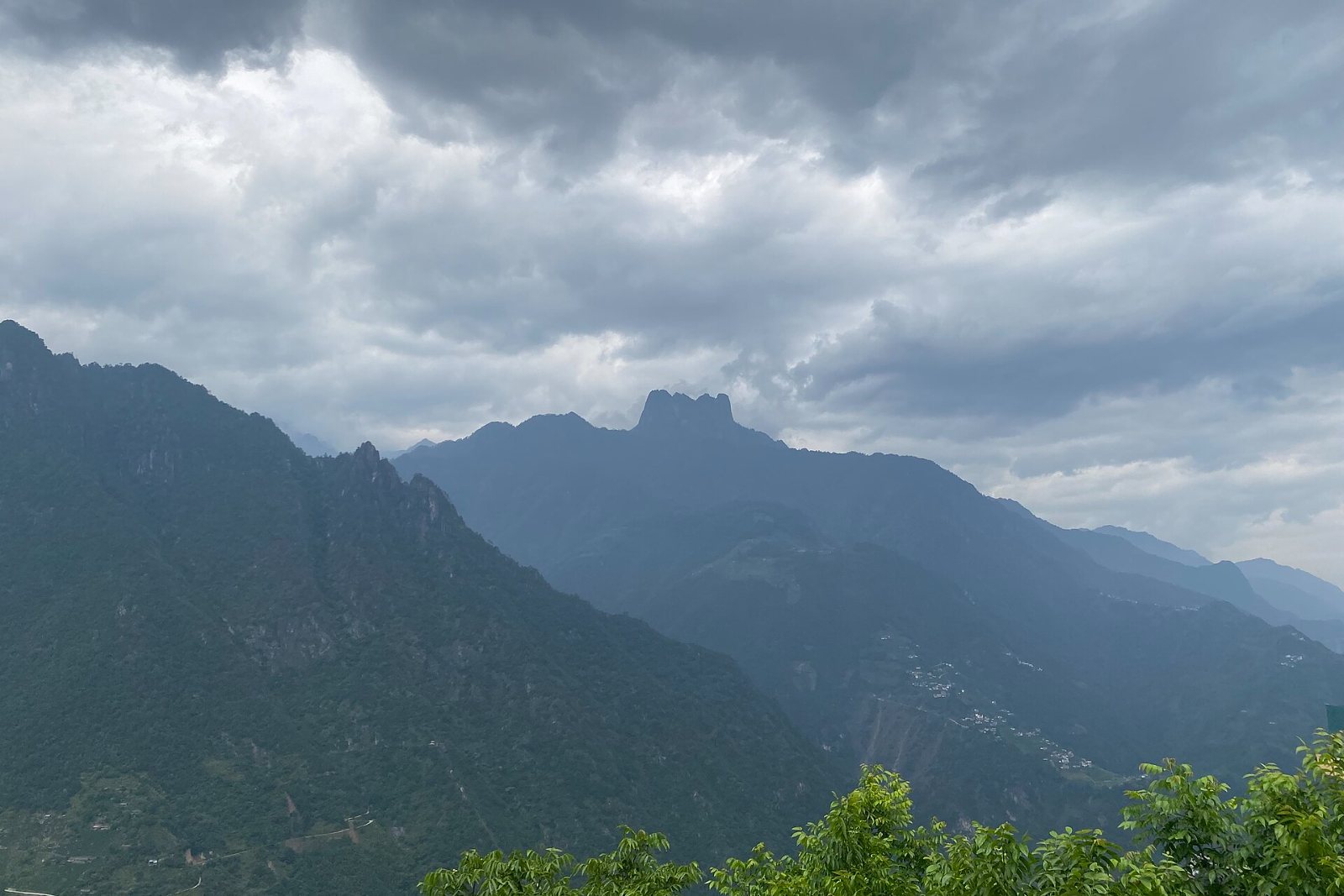
Start this journey briefThe Gaoligong ridge above the Nujiang · Fugong County, Yunnan
the north–south ridge between the Salween and the Irrawaddy; Baihualing, the birding village, sits on its eastern slope at 1,400 m
Skywalker gibbons in China — 2020–25 surveys found about 150, split into small family groups
Hoolock tianxing, the first ape species named by Chinese scientists, from a ranger’s photograph taken in 2005
the dry season; duets carry furthest on still, cold dawns, December to March
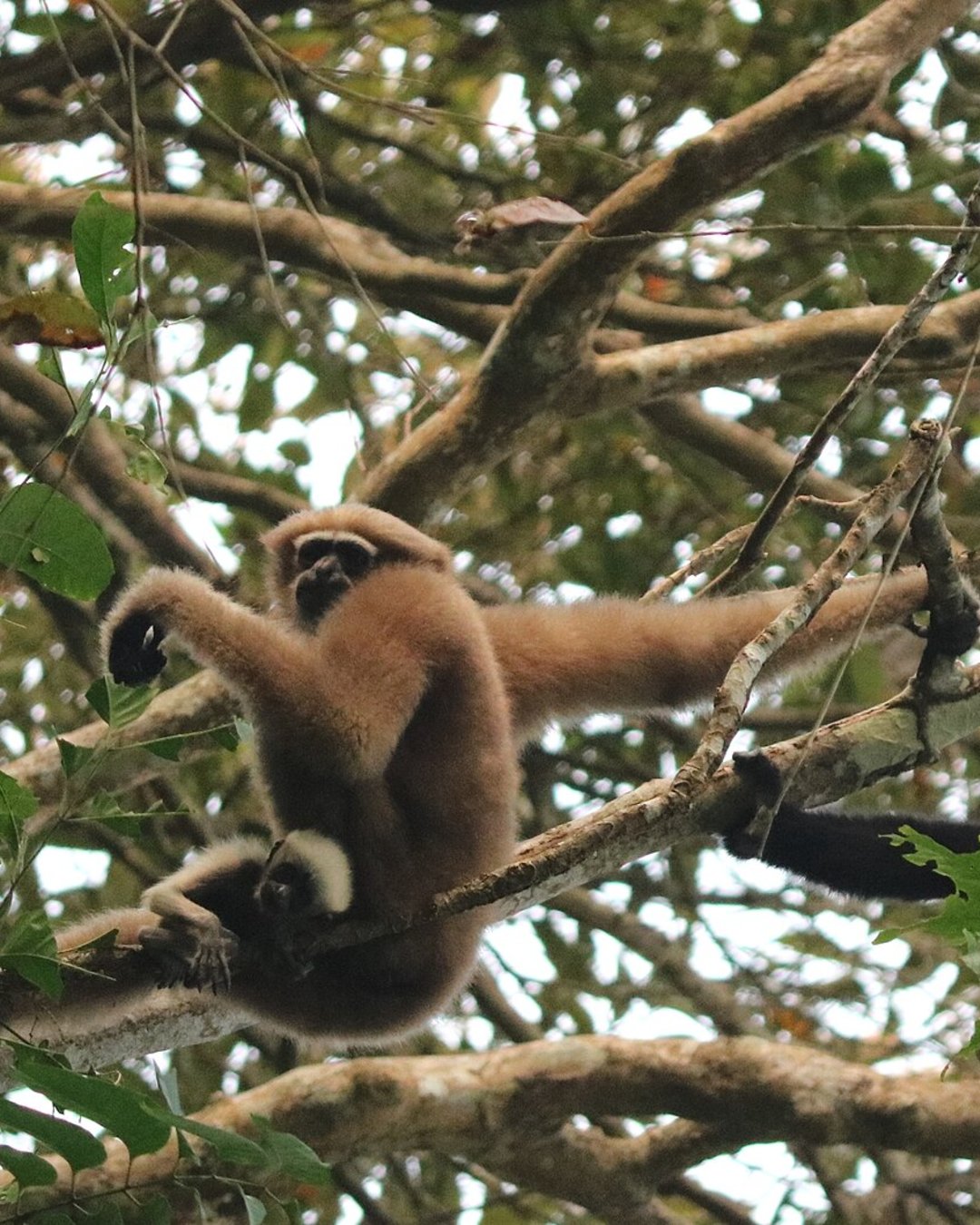
In March 1997 a ranger named Li Jiahong heard a call on the Gaoligong ridge and was told it belonged to a black monkey that never came down from the trees. It took him eight years to photograph one. When the picture finally came, in May 2005, it turned out to show an animal science had not yet named: in 2017 a team led by Fan Pengfei at Sun Yat-sen University described it as Hoolock tianxing, the Skywalker gibbon — the first ape species named by Chinese scientists, and the first new gibbon described anywhere in a century.
The name describes the movement, not the animal's fame. These are small apes, six to eight kilos, that travel through the canopy without touching the ground, and the population is tiny: fewer than 200 in China, with surveys between 2020 and 2025 finding about 150 across Yingjiang, Tengchong and the Gaoligong reserve. The long-term picture is worse than the headline. Occurrence records fell from 113 to 61 over forty years, and roughly three-quarters of the suitable forest was lost in the 2000s. What remains is four patches, one of them holding about 60% of the animals, separated by ridges and roads a gibbon will not cross.
Which is why the monitoring has moved to sound. After four years of recordings, researchers can identify individual animals by the shape of their calls — a vocal fingerprint — and a six-minute recording of a female drew answers from two family groups and a solitary male. For a visitor the practical consequence is simple: you will probably hear this ape before you see it, and often you will only hear it.
A village on the eastern slope at 1,400 m with guesthouses, a hundred-odd bird guides and hides in the forest above. Everything starts here.
The listening point is uphill and takes an hour. Leaving before first light is not enthusiasm; it is the only way to be in place when the calling starts.
Mated pairs duet at first light, the female’s great call carrying a kilometre or more. If it comes, that is the sighting — and the forest stays exactly where it is.
Baihualing has 525 recorded species on one valley’s slopes. The rest of the day belongs to the hides, which is what most people come for in the first place.
A few visitors see animals; most hear a duet and go home with it. We say this before you book rather than after.
We do not use recordings to pull gibbons in. The reserve’s acoustic monitoring is a research method run by researchers, not a trick to add to a tour.
Baoshan airport is the usual arrival, two hours from Baihualing on a slow mountain road. Tengchong adds another two hours and a different set of sites.
Bird guiding, hides and homestays replaced hunting here over thirty years — the reason a gibbon still calls above a village of 2,400 people.
The gibbon is the reason this ridge is worth six days rather than two: the listening happens at dawn, and the birds fill the rest. We plan it as a birding journey with a gibbon morning inside it, not the other way round.
Start a journey briefThe Gaoligong birding tour · Four notes, then silence: finding the gibbon by ear · The golden triangle of Yunnan birding · Watching without disturbing