Kazanqi quarter
The painted lanes and courtyards — walk it in the late afternoon when the light does the paint job for you.
 Start your enquiry
Destinations / Xinjiang /
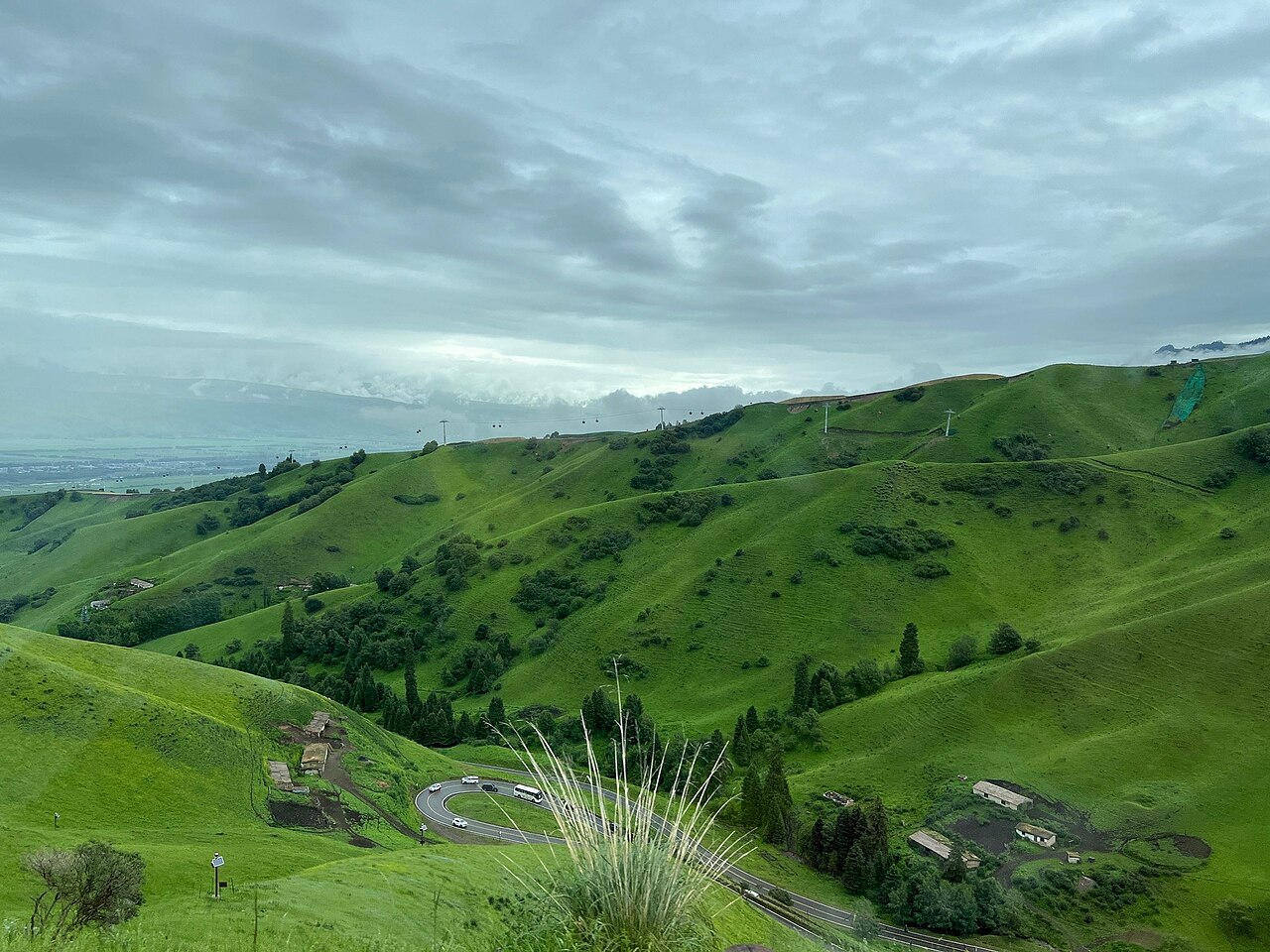
Xinjiang's green half: the Ili river's well-watered corridor of painted lanes, orchards, lavender and horses, pressed between the Tianshan's ranges — and the friendliest cities on the plate.
Explore the guide ↓Western Xinjiang · 600–1,900 m · the Ili corridor
The Ili valley is where Xinjiang goes soft: well-watered, orchard- and horse-rich, with a border-city heritage that shows up in courtyards, ice cream and bread. Yining itself is a modest city with one unmissable quarter — Kazanqi, a living neighbourhood of painted houses and tree-lined lanes — and it is the base for the whole valley's geography.
The valley rewards two kinds of travel: the road trip through lavender, orchards and the octagonal city of Tekes to the grasslands; and the trail journeys that start where the roads end — the Kalajun, the Wusun and the Xiata all leave from here. The city connects by air to Urumqi and by rail westward; the valley guide below takes it from there.
Six stops across the corridor.
The painted lanes and courtyards — walk it in the late afternoon when the light does the paint job for you.
China's lavender belt blooms for two-odd weeks around late June; the harvest roads smell like the postcard claims.
An octagonal city laid out radiating from a ring park — surreal, walkable, and a genuinely good night-market dinner.
Grassland stud farms of the Ili horse breed — a working tradition, not a show, and the valley's proudest one.
Rolling UNESCO-listed Tianshan pasture — the trail journeys walk it; the road traveller sees its edge in a day.
Parks and bridges along the Ili — the evening promenade ritual of a river city.
Seasons, connections and the border note.
Mid-June to September is the valley's window: lavender late June, green through August, harvest light in September. The grassland trails clear mid-June.
Flights to Urumqi are frequent; rail runs east and west. The valley anchors both the trek journeys and the cycling week.
Parts of the far-west valley (toward Khorgos and the border zones) can involve border-area checks — usually a formality, occasionally a permit; we handle it when the route needs it.
The valley eats Russian-Kazakh-Uyghur at once: breads, berry jams, dairy, ice cream, and the region's best horse-meat sausage for the adventurous.
Sayram lake sits an hour north; the Duku highway's northern end is reachable across the range. The valley pairs with everything.
Tell us whether you ride, walk or drive — the valley has a correct week for each.
Start my journey brief ↗