No feeding, no exceptions
The county banned roadside feeding of wildlife for photographs in 2025 and told guesthouses to stop advertising it. We do not feed animals, and we do not pay drivers to.
 Start your enquiry
Wildlife / Field guide
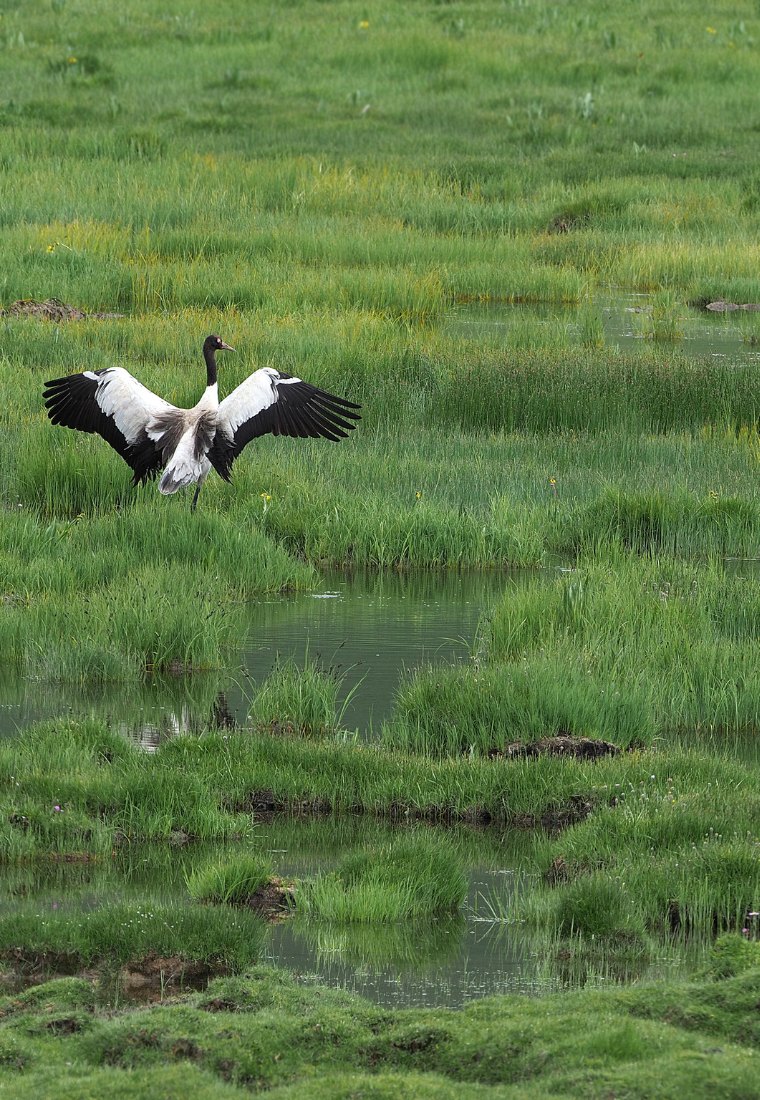
The only crane that breeds and winters on the plateau spends its summer in a peat marsh 3,400 metres up — and Ruoergai holds most of the eastern population's nests.
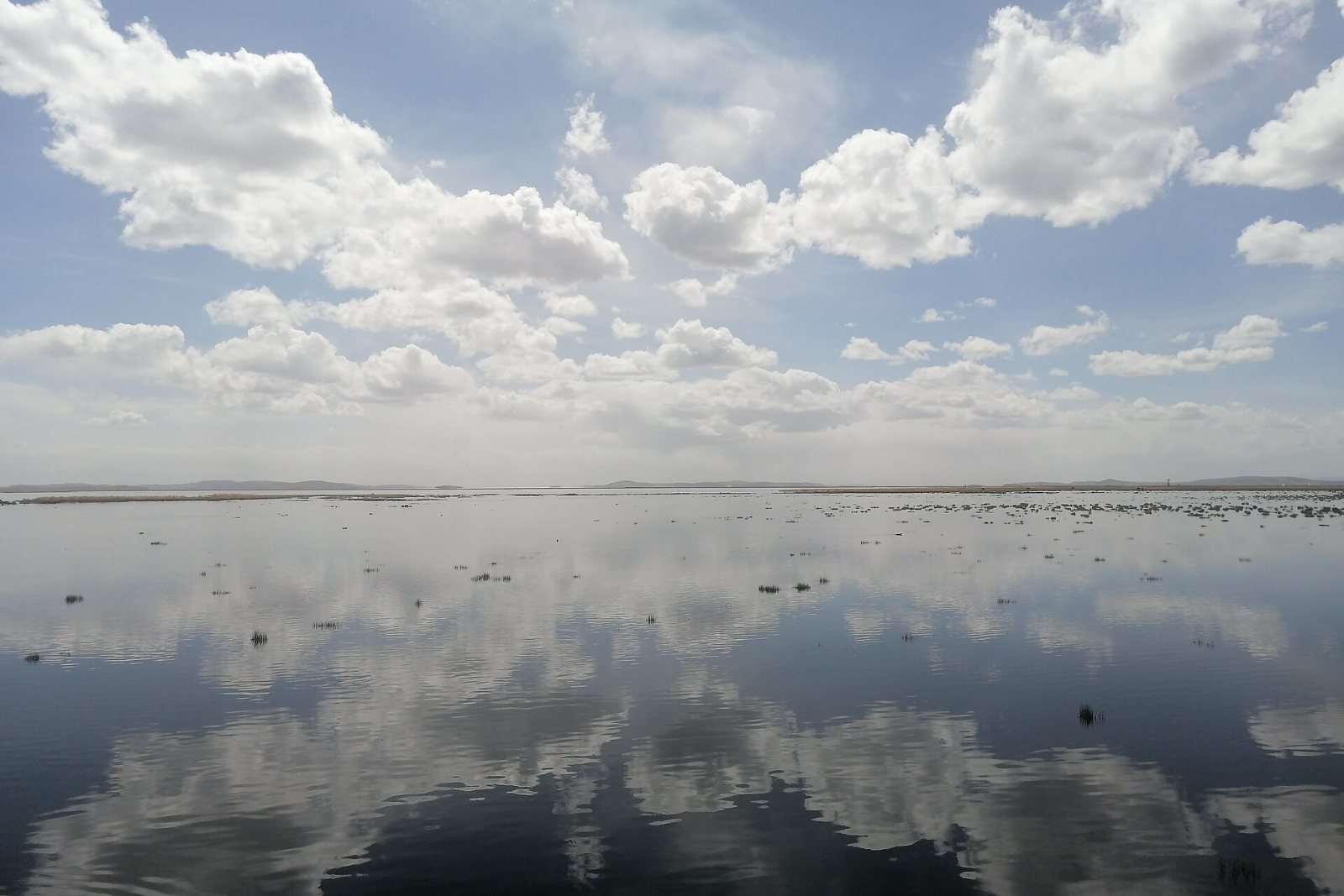
Start this journey briefHua Hu, Zoigê County · the shallow lake at the centre of the marsh
Ngawa prefecture on the Yellow River's first bend, 3,400 m — eight hours' drive from Chengdu, or fly to Hongyuan and drive two hours
black-necked cranes counted inside the reserve in the 2025 breeding season, out of roughly 2,500 in the county
China's largest high-altitude peat swamp — 41 lakes and 148 km of the Yellow River's main stem
chicks hatch from early June; the cranes leave for Yunnan and Guizhou in November
Most crane watching in China happens in winter, when birds crowd into whatever water is left. Ruoergai is the opposite argument. Here the cranes are spread out, paired and nesting — the same species in its working season rather than its waiting one — across a peat marsh that has been building for thousands of years on the eastern edge of the plateau.
The marsh is what makes the county worth the drive. It is the largest high-altitude peat swamp in the country, a water-holding sponge at the head of the Yellow River, and it is where the eastern population of black-necked cranes comes to breed: the county's own figures put 85% of the species' breeding ground inside its boundaries, and record the breeding count rising from 407 to about 2,500 over three decades of protection and wetland repair.
The cranes arrive from late March, some from as far as Dashanbao in Yunnan and Caohai in Guizhou, more than 900 kilometres south. Egg-laying runs from late April into June, two eggs to a clutch, both birds incubating in turn; by June the first chicks are walking, and the family parties work the sedge together until the marsh freezes and the whole population turns south again in November.
Arrive, sleep, and do nothing at 3,400 m. The marsh will still be there in the morning, and the morning is when it works.
Nests sit deep in the sedge and are off-limits. The watching is done from the road verges, the boardwalks and the reserve boundary — long lenses, no approach.
The 6.74 sq km lake at the heart of the marsh carries greylag and bar-headed geese, gulls, terns and 15 fish species under the surface. Boardwalk, no boat, no rush.
Ruoergai also holds the world's largest wild population of Sichuan sika deer — about 1,800 — plus marmots, raptors and the plateau's usual cast along the grassland roads.
The county banned roadside feeding of wildlife for photographs in 2025 and told guesthouses to stop advertising it. We do not feed animals, and we do not pay drivers to.
The county sits at 3,400 m and Hua Hu at 3,468 m. The first day is flat walking only; headaches are common, and the plan bends around them.
Expect 5–18°C, strong sun at midday and a storm most afternoons. July is the wettest month and the boardwalks flood first.
Eight hours by road from Chengdu through Songpan, or fly to Hongyuan and drive ninety minutes. There is no rail.
Our crane journey runs in winter, when the birds pack into open water and a sighting is close to certain. Ruoergai is the other half of that year: fewer birds per field, more behaviour, and a breeding season that asks for patience rather than a schedule.
Start a journey briefThe black-necked crane tour: Napa Hai in winter · The other crane season: nesting on the marsh · Napa Hai field guide · Watching without disturbing