Rize valley
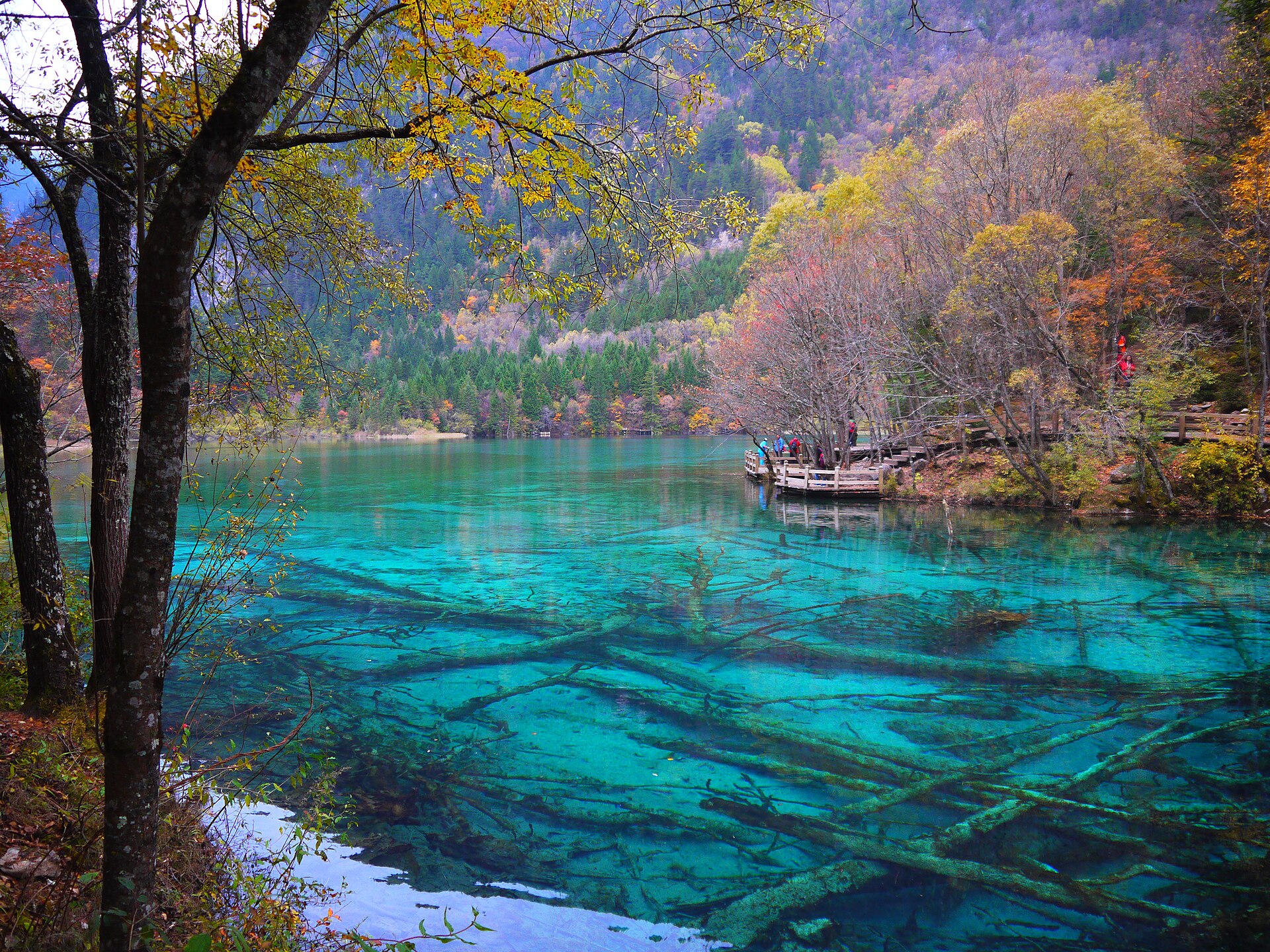
The upper branch, with the densest concentration of lakes and the Five Flower Lake. Shuttle to the top, then walk down through the terraces.
 Start your enquiry
Destinations / Sichuan / Jiuzhaigou
Two valleys of travertine terraces in northern Sichuan, both World Heritage since 1992, both between 2,000 and 3,500 metres, and both best seen before the coaches arrive.
Explore the guide ↓Aba prefecture · 2,000 – 3,500 m
Jiuzhaigou is a Y-shaped valley system in the Min mountains of northern Sichuan, named for the nine Tibetan villages inside it. The valley floor runs between 2,000 and 3,100 metres, and the water is the attraction: a chain of lakes dammed by travertine, the calcium carbonate that precipitates out of the streams and builds terraces, bars and dams over centuries. The colours come from the depth, the mineral content and the lake beds.
Huanglong, an hour and a half away over a 4,000-metre pass, is the same chemistry at a smaller scale and a higher altitude: a single valley of terraced pools running down from about 3,500 metres, with a temple at the top. Both were inscribed by UNESCO in 1992, and both are among the most visited natural sites in China.
The consequence is management. Jiuzhaigou runs on a shuttle system with boardwalks and timed entry, and in October the main valley is a procession. It is still extraordinary, and the trick is not to fight it: go in the first week of November, take the shuttle to the far end and walk down, and accept that the famous viewpoints will have a queue.
Three valleys in one park, and a second park above them.
The upper branch, with the densest concentration of lakes and the Five Flower Lake. Shuttle to the top, then walk down through the terraces.
The other upper branch, ending at the Long Lake at 3,100 m, the largest and highest in the park. The quieter of the two arms.
The main valley from the gate, with the widest terraces and the Nuorilang waterfall. Best walked in the late afternoon, downhill.
A valley of terraced pools an hour and a half north, with a cable car and a boardwalk to the temple at the top. Half a day, and hard work at the altitude.
Autumn is famous, winter is empty.
Spring: snowmelt fills the lakes, the forest greens late, and the park is quiet. Some high sections can still be closed.
Green and wet, with the monsoon at its height. The water is high and the colours are good, but the park is busy with domestic summer travel.
The peak: autumn colour, full lakes and the largest crowds of the year, especially the first week of October. Late October is better than early.
Winter: ice, snow on the terraces, some closures, and almost nobody. The first week of November is the sweet spot between colour and emptiness.
A flight, or a long day from Chengdu.
Fly to Jiuzhai Huanglong airport at 3,448 m, 90 minutes from the park, or drive eight to nine hours from Chengdu. The flight is short and often delayed by weather.
Inside Jiuzhaigou everything is shuttle and boardwalk; there is no private vehicle access. Huanglong has a cable car to the upper station and a boardwalk down.
Pengfeng village at the gate for Jiuzhaigou, and Songpan or Chuanzhusi for Huanglong. Two nights covers both parks comfortably.
The chemistry behind the colour.
The lakes are held back by natural travertine dams, built up where calcium-rich water degasses as it crosses a rapid. They grow a few millimetres a year and can fail in an earthquake, which is why the valley looks different after every major one.
Blue and green come from dissolved carbonate and from the lake beds, not from dye or glacier flour. Depth changes the hue, which is why the same lake looks different at noon and at four.
Nine Tibetan villages are inside the park, and a few are still inhabited. They are working communities with a difficult relationship to the visitor numbers, and the etiquette is the usual one: ask before photographing people, and buy from the ones who are selling.
Altitude, queues and the first week of October.
Jiuzhaigou sells timed tickets and they do sell out in autumn. The park also caps daily numbers, so this is not a place to arrive and hope.
The park runs to 3,100 m and Huanglong to 3,500, with an airport at 3,448. Walking slowly on the first day is not politeness; the boardwalks are steep in places.
The first week of October is the busiest of the year, with the shuttle queue measured in hours. The last week of October and the first of November are far better for the same colour.
Tell us whether you are coming for the colour in late October or for an empty valley in January. Those are two different parks.
Start my journey brief ↗