The window
Late May through June is the calving concentration; the return walk runs from late July. Outside those weeks you are looking at empty basins.
 Start your enquiry
Destinations / Qinghai / Seasonal notes / The chiru migration
Each May the female Tibetan antelope walk north to calve in the lake basins of Hoh Xil. In a good year, thirty-five thousand of them gather around one lake.
Explore the guide ↓Hoh Xil · above 4,600 m
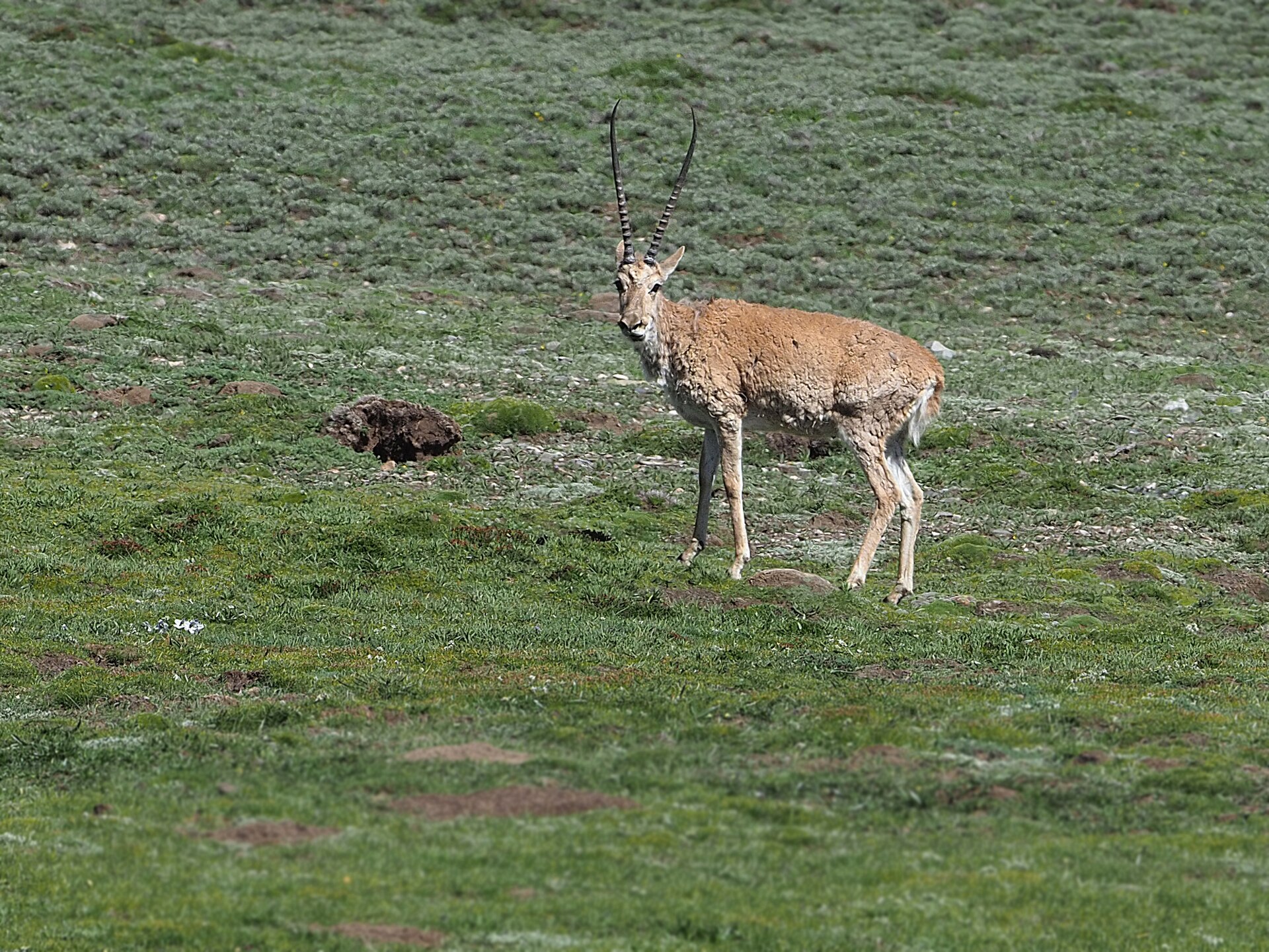
Female chiru — Tibetan antelope — leave three separate ranges each spring: the Sanjiangyuan headwaters in Qinghai, the Changtang plains in Tibet, and the Altun Shan in Xinjiang. They walk to the same place: the lake basins in the heart of Hoh Xil, above 4,600 metres, where the grass and the predator lines suit a newborn calf. In a good year up to 35,000 cows gather around Zonag Lake alone. From late July they walk home again, calves in tow.
It is counted among the most spectacular ungulate migrations in the world, and most of it happens on roadless ground nobody can visit. What can be seen is the edges: the corridors the herds use, and the single leg that crosses the Qinghai–Tibet highway — the crossing that made the animal famous, and the reason the road now has underpasses.
The reserve is not a zoo and the migration is not a schedule. The window is real, the peak is roughly two weeks inside it, and the animals move when the weather moves.
Patience, distance, and no promises.
Late May through June is the calving concentration; the return walk runs from late July. Outside those weeks you are looking at empty basins.
Hoh Xil is a national reserve with strict zoning. Viewing happens from the road corridor and permitted points, with arrangements made in advance — not by driving off the highway.
A wildlife journey is built around seasons and time, not sightings. We say what is likely and never what is guaranteed.
Tell us whether the antelope or the cats set the dates — they run on different calendars, and the two are rarely the same trip.
Start my journey brief ↗