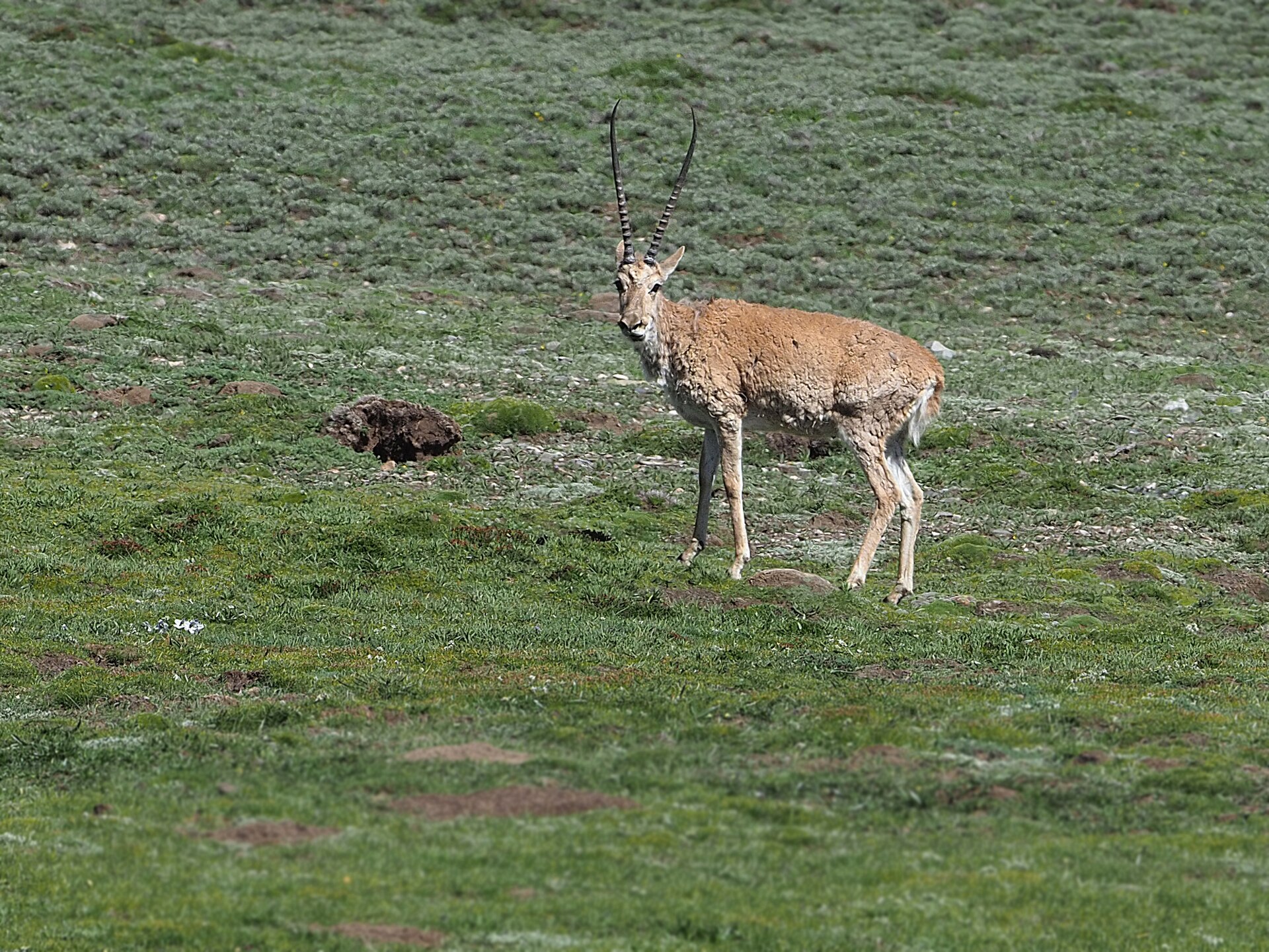
Wildlife / Tibetan antelope
The calving migration.
Every June the females of three ranges converge on the lakes of Hoh Xil to give birth — one of the great ungulate migrations on earth, watched honestly from the side of a highway.
Start this journey brief →Qinghai · Hoh Xil (Kekexili), Tibetan plateau
Best windowLate May – Julyfemales move in, calve, and return with the young from late July
The gatheringUp to 35,000 femalescalve each year around Zonag Lake in the reserve interior
The crossingAbout 4,500 a yearfemales cross the Qinghai–Tibet highway near Wudaoliang, rangers holding traffic
AltitudeAbove 4,600 mthe average across Hoh Xil; winter lows below −40°C
A migration with one road through it.
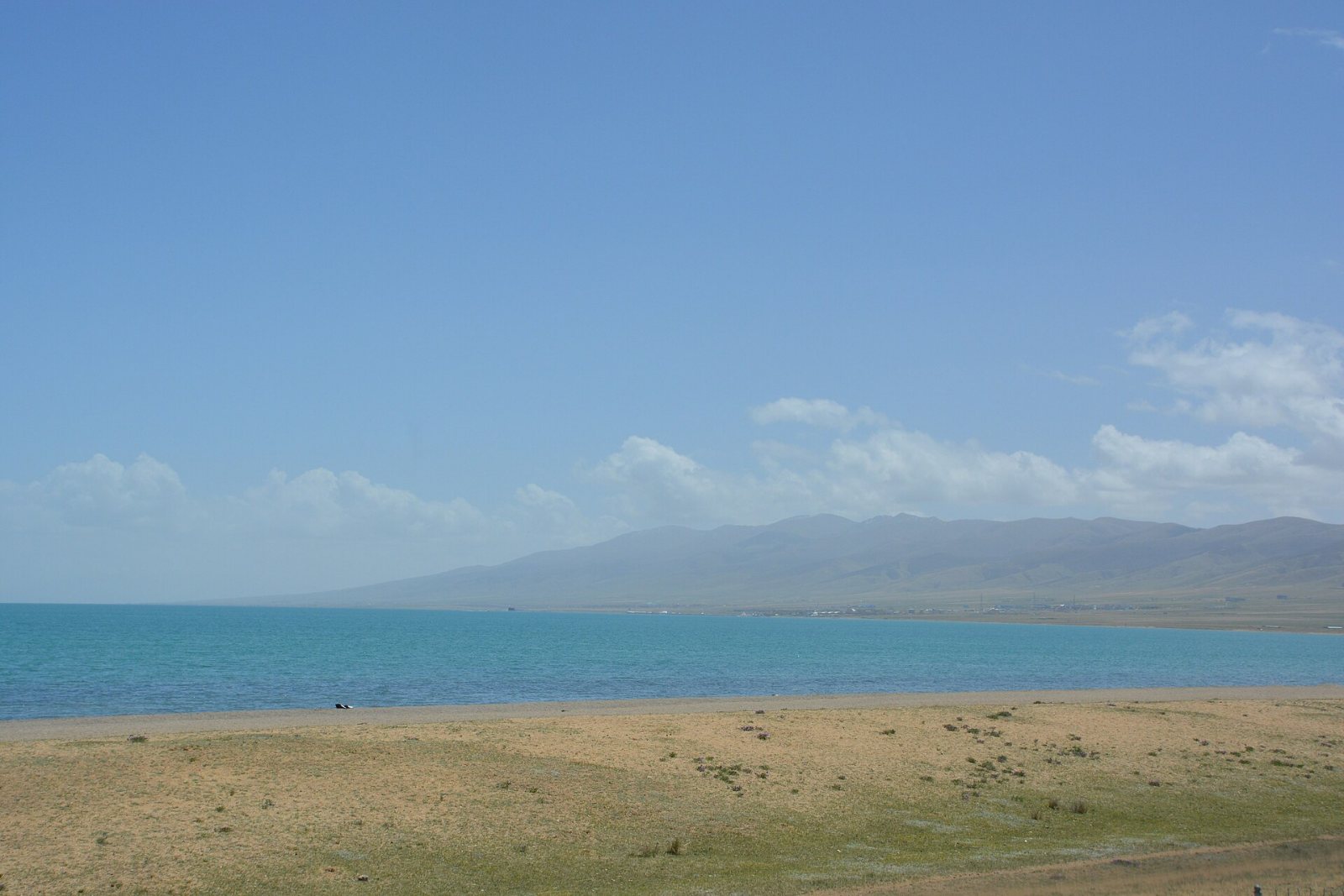
Each year from May to July, female Tibetan antelope — chiru — leave three separate ranges: the Sanjiangyuan headwaters of Qinghai, the Changtang plains of Tibet, and the Altun Shan in Xinjiang. They all walk to the same place: the lake basins in the heart of Hoh Xil, above 4,600 metres, where the grass and the predator lines suit a newborn calf. Up to 35,000 cows gather around Zonag Lake alone in a good year.
From late July they walk home again, calves in tow. The journey is counted one of the most spectacular ungulate migrations in the world, and most of it happens in roadless ground nobody can visit. But one leg of it crosses the Qinghai–Tibet highway — and there, for a few weeks, the migration is visible from the verge.
How you actually watch it.
- Watch from the road, by design
Independent entry into the reserve is not allowed, and we do not ask for exceptions. The honest viewing position is the Qinghai–Tibet highway itself: near the Wudaoliang protection station, herds assemble on the verge, rangers stop the traffic, and the crossing happens in front of you.
- Time the leg to the movement
The crossings peak between late May and early July; the return leg with calves runs from late July. Rangers count the movement daily during the season, so timing is not guesswork — it is a phone call away.
- Make it a plateau day, not a detour
The highway leg sits naturally between Golmud and the Sanjiangyuan grasslands. We build it as a full plateau day: the crossing window in daylight, kiang and Tibetan gazelle on the flats, and a night in Golmud either side.
- Treat the pace as the plan
Everything here sits above 4,600 m. The day is built around slow mornings, short walks and long sits — the same plateau clock our Sanjiangyuan week runs on. If you have not been high before, read our altitude notes first.
What the plateau actually asks.
Access, honestly stated
Hoh Xil is a national nature reserve and a World Heritage site; visitors may not enter the reserve interior at any time of year. What the highway offers is legal, free and genuinely spectacular during the migration — and it depends on rangers, traffic rules and your patience. We do not chase herds or leave the road for an angle.
The season has two halves
Going in: late May to early July, cows heading to the lakes, the crossings busiest. Coming back: late July into August, females with calves retracing the route. Outside those windows the animals are deep in the reserve and the honest answer is that there is nothing to see from the road.
Where you sleep
Golmud is the working base — a rail and highway town with real hotels. The crossing country is a long day return. There is no visitor accommodation anywhere near the reserve boundary, by design.
Altitude and cold
Average elevation above 4,600 m; even in July, nights approach freezing and weather turns in minutes. This leg is only ever built for travellers already acclimatised — we sequence it after days on the plateau, never as a first stop off the plane.
Ready to take it further?
