
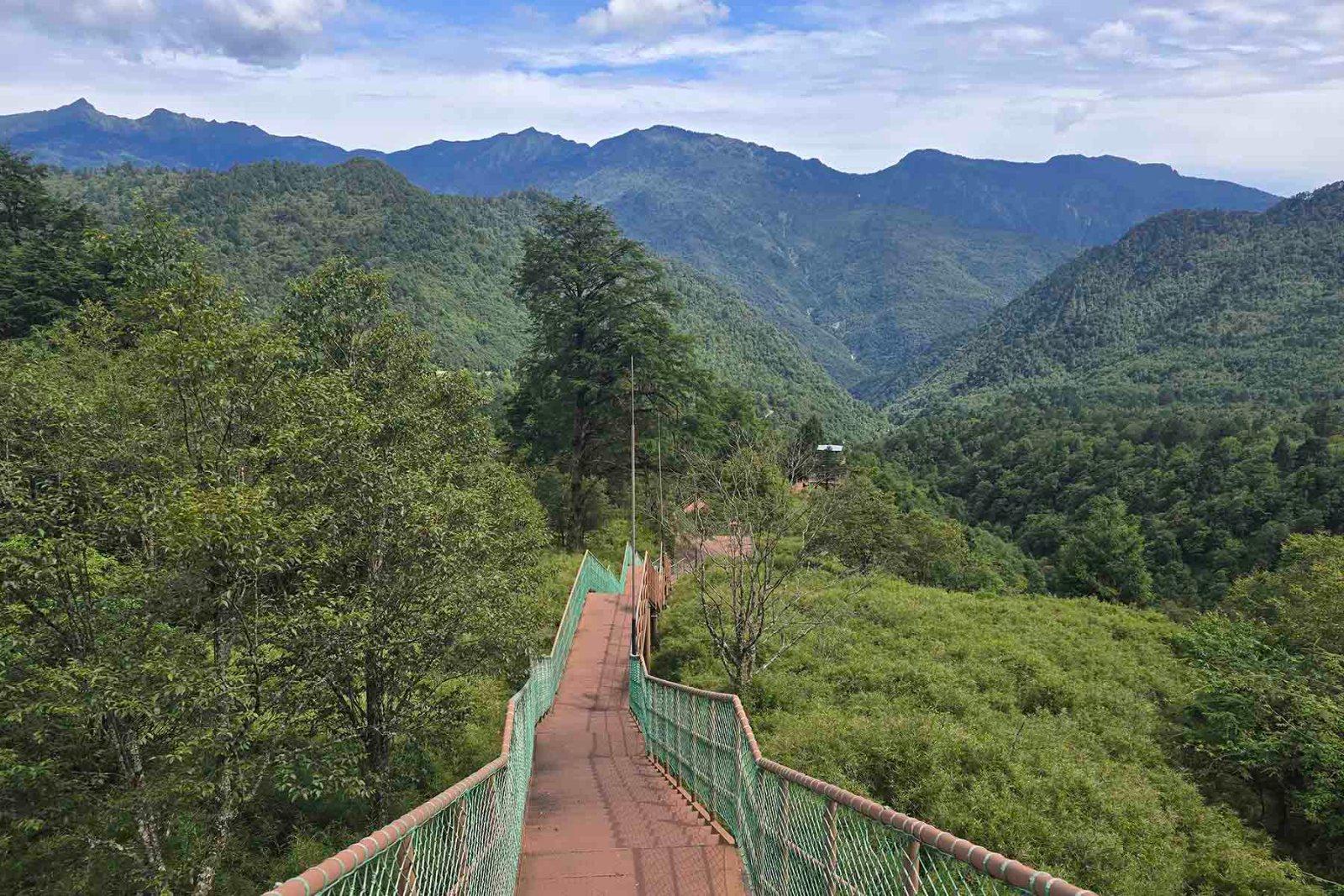
A green-railed boardwalk stairway descending through dense forest into a valley at Labahe Nature Reserve

Trekking / Nature reserve hiking tour

Private hiking tour

The nature reserve hiking tour.

Five days walking the protected mountains west and south of Chengdu — with four more days through the mammal country of the north as an extension. Red panda, takin, golden monkeys and pandas are the working targets.

  • Duration5 or 9 days
  • Nights4 or 8
  • Reserves4, then 7
  • Starts & endsChengdu
Ask about this itinerary

The boardwalks of Labahe · the first reserve on the trail

Reserves walked4 → 7

Labahe, Wawushan, Bifengxia, Wolong — then Baihe, Tangjiahe, Laohegou

Panda certainty100%

at the Bifengxia base; in the wild, tracks not animals

Red panda seasonLate Aug – Dec

when Labahe and Wawushan sightings run above 80%

Extension windowApr 1 – Nov 30

the nine-day version runs inside this season

Why this route

The reserves, walked properly.

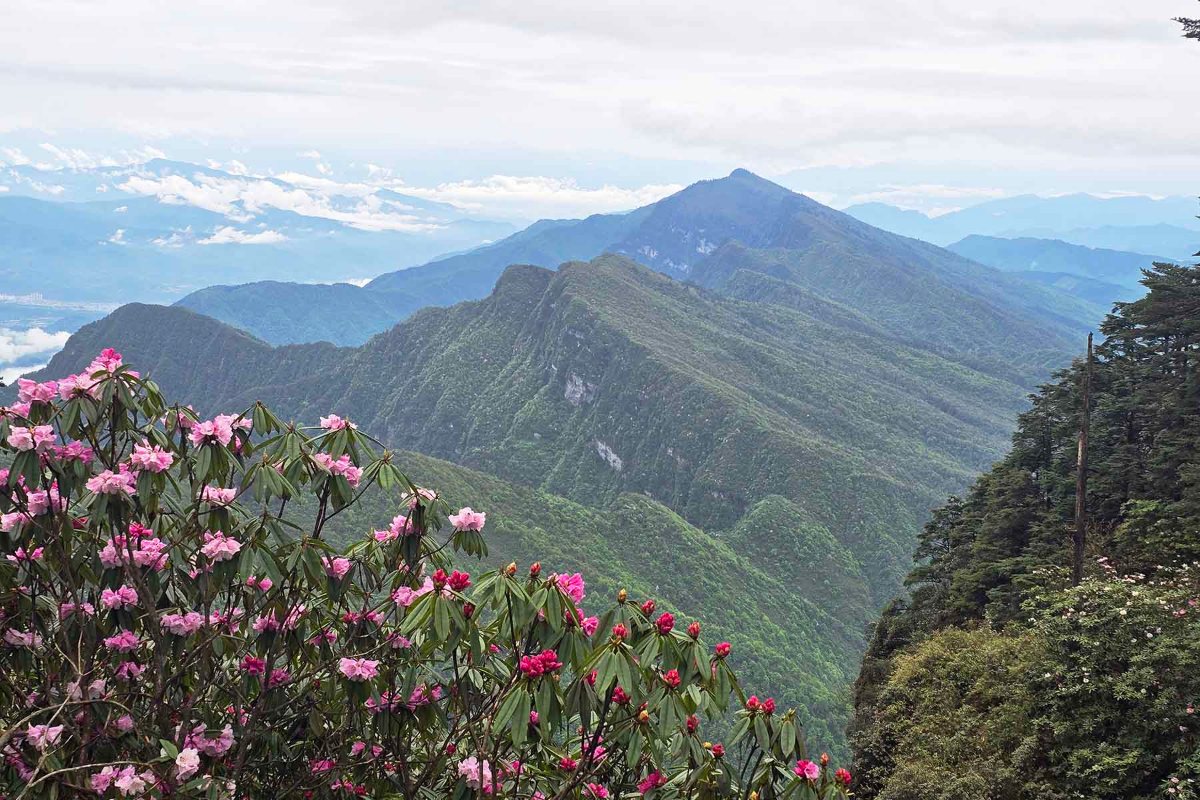
Forest-clad ridges of Wawushan under a cloudy sky, the flat-topped mountain's wooded summit
Wawushan · the flat-topped mountain, and the best wild red panda forest we know

Most visits to Sichuan's nature reserves drive through them. This trip walks them: full days on the trails of Labahe and Wawushan in the Qionglai mountains, the gorge at Bifengxia, and the high paths of Wolong — at a pace that gives the forest time to produce what lives in it. Wild red panda, sambar, Tibetan macaque, Sichuan takin and pheasants are the realistic targets; the giant pandas of the Bifengxia base are the certain one.

It is also one of the best family adventure trips we run — the walking is moderate, the reserves are comfortable, and children from six to seventy have done it well. The five-day version stands alone; four more days carry it north to Baihe's wild golden snub-nosed monkeys, the big mammals of Tangjiahe and the quiet valleys of Laohegou.

It is a private departure on your dates, customisable. The season matters more than the calendar: late August to June is the wildlife window, because the summer rains make the trails loud and the animals scarce.

The route

The line.

South-west to the Qionglai reserves for five days; the extension turns north through the panda counties to the Monkey Valley and home. One moving base at a time.

  1. Days 01–03Ya'an reservesLabahe, Wawushan and a panda base
  2. Days 04–05Bifengxia → Wolongthe pandas, then the high forest, home
  3. Days 06–09The north extensionJiuzhai, Baihe, Tangjiahe, Laohegou

Day by day

The days.

Five core days and a four-day extension. The walking is moderate throughout; distances are ranges you can work inside.

  1. Day 01

    Into the Qionglai range

    Chengdu → Labahe

    Three to four hours west into the Qionglai mountains — giant panda country — to Labahe Nature Reserve. The afternoon walks the riverside path from the waterfalls to Deer Pond, about four easy kilometres.

    The night is at the park hotel inside the reserve. Sambar come to the open ground in the evening, and in some seasons a spotlighting session after dark can be arranged for the night animals.

    • OvernightInside Labahe reserve
    • Drive3–4 hours
    • On foot4 km, easy
  2. Day 02

    The whole reserve, top to bottom

    Labahe

    A park vehicle lifts you to the high trailhead near 2,700 metres and the day walks down through it. An optional cable car reaches Jiaoshan at 3,500 metres, where a further 2 kilometres climb to 3,750 for cloud seas and — from April to June — the chance of Chinese monal, the great iridescent pheasant of these heights.

    The core of the day is the Panda Trail and the Red Rock trail through wild, unfenced forest: red panda, Lady Amherst's pheasant, Tibetan macaque, sambar and takin are the residents. The night drops to Ya'an city.

    • OvernightYa'an city
    • On foot12+ km, medium
    • OptionalJiaoshan cable car, 3,500 m
  3. Day 03

    The flat-topped mountain

    Wawushan

    An hour south to Wawushan, the table mountain. Two cable cars rise to the 2,700-metre summit and the day walks its flat-top circuit: about five gentle kilometres of boardwalk through mossy forest, with the Lanxi and Yuanxi waterfalls dropping more than 200 metres off the rim.

    This is one of the best wild red panda forests in Sichuan — late summer to early winter is their season — and its endemic parrotbills are a prize for birders. The fit can walk down the 3-kilometre stairway instead of riding. The night is back in Ya'an.

    • OvernightYa'an city
    • On foot8 km, optional +3
    • TargetRed panda, parrotbills
  4. Day 04

    Pandas, guaranteed, then a gorge

    Bifengxia

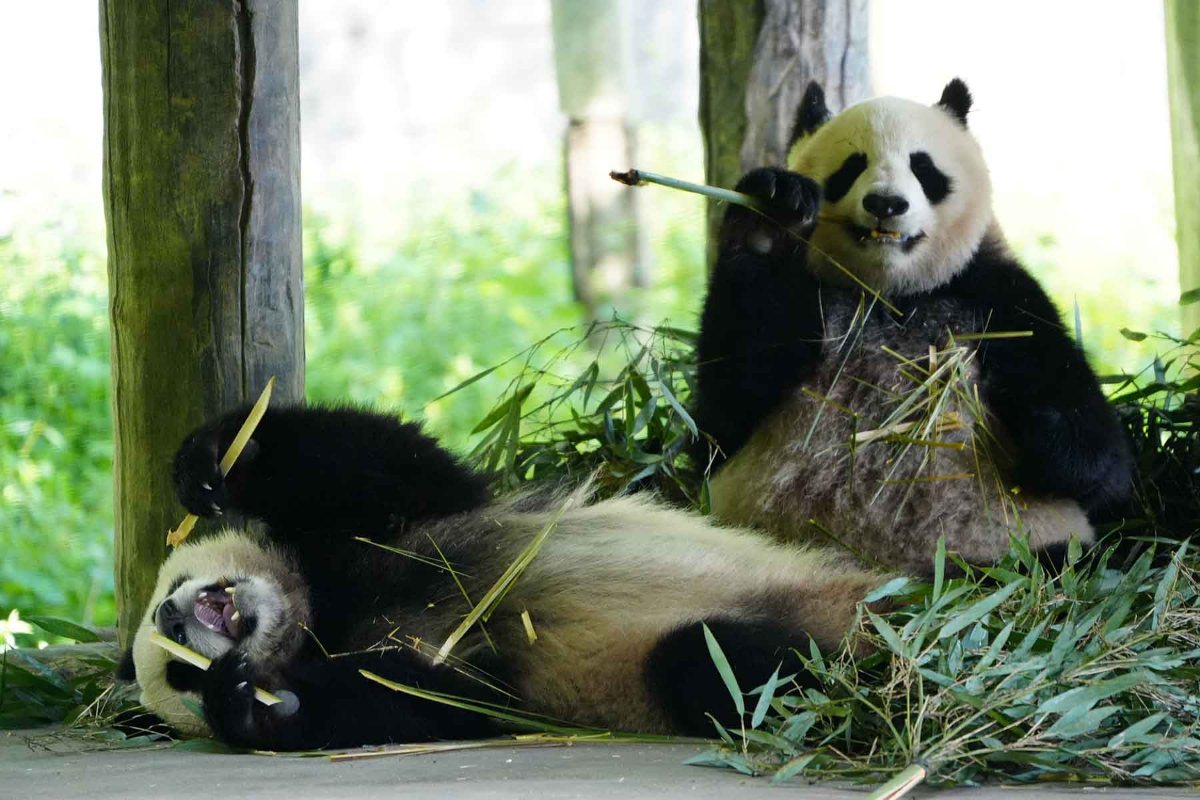
    A giant panda feeding in a forested enclosure at the Bifengxia base near Ya'an
    Bifengxia · the certain pandas of the trip

    Half an hour to the Bifengxia panda base, home to thirty or forty giant pandas in a forested valley and far quieter than the Chengdu base. Two or three hours with them is the certain wildlife of the trip.

    The afternoon walks the gorge below — a seven-kilometre stepped circuit through subtropical rainforest, with a lift for the climb out. The night moves north to Dujiangyan.

    • OvernightDujiangyan
    • On foot7–8 km, easy
    • CertaintyPandas, 100%
  5. Day 05

    The high forest at Wolong

    Wolong → Chengdu

    An hour to Wolong and the day splits by appetite. The strong option starts at seven and climbs from 2,250 to 3,000 metres — ten kilometres return, steep, with poles recommended; panda sign has been found near the top. The gentler option walks the Ganhaizi trails from 2,300 to 2,700 metres, eight kilometres return.

    The afternoon returns to Chengdu, where the five-day tour ends. The extension continues north from here.

    • EndsChengdu, evening
    • On foot8–10 km, medium or hard
    • ExtensionContinues north
  6. Day 06

    A pheasant and a long road

    Wolong → Jiuzhai

    An early hour in a valley near Wolong for the golden pheasant — China's most flamboyant bird, seen often enough to be worth the dawn but never guaranteed. Then the long drive north, six hours and more, to the Jiuzhai area for the night at 1,400 metres.

    • OvernightJiuzhai area, 1,400 m
    • Drive6+ hours
    • DawnGolden pheasant, best effort
  7. Day 07

    The monkey valley

    Baihe → Tangjiahe

    The morning belongs to the Baihe reserve — a valley holding more than 1,700 wild golden snub-nosed monkeys, of which around a hundred range where visitors walk them. They are fully wild; they are also, at this site, about as close to certain as wild monkeys get.

    A boardwalk morning of four to eight kilometres with the troop, then four hours of road south to Tangjiahe for the night.

    • OvernightTangjiahe, 1,000 m
    • On foot4–8 km, easy
    • TargetGolden snub-nosed monkey
  8. Day 08

    China's best big-mammal valley

    Tangjiahe

    A full day in the valley many consider the best place in China to see large wild mammals: over 430 vertebrate species in one protected valley. A park vehicle carries you to the top and the day walks back down the road — ten kilometres and more of it.

    Sichuan takin and Tibetan macaque are the regulars, with muntjac, serow, blood pheasants and, lower down, the chance of otter, black bear or yellow-throated marten. The night is the same hotel — the second evening in the valley doubles the chances.

    • OvernightTangjiahe, 1,100 m
    • On foot10+ km, medium
    • TargetsTakin · macaque · serow
  9. Day 09

    The quiet valley

    Laohegou → Chengdu

    An hour to Laohegou — China's first civil-society-funded reserve, more than a hundred square kilometres of forest with no buildings in it, and outside summer almost no people. Four to eight kilometres of its tracks, with takin, musk deer and wild boar sightings that swing with the season.

    Out by two in the afternoon and four hours back to Chengdu, where the nine-day tour ends in the evening.

    • EndsChengdu, evening
    • On foot4–8 km, medium
    • CharacterQuiet, unfenced, little visited

Species odds

What the reserves actually offer.

The field estimates we plan the trip around — published sighting rates for these sites in season, not a promise for any single week.

The five core days

Labahe · Wawushan · Bifengxia · Wolong

High
Giant panda (base) · sambar · Tibetan macaque
High in season
Red panda · Sichuan takin — above 80%, late August to May
Medium
Lady Amherst's pheasant · blood pheasant · serow
Low
Chinese monal (Apr–Jun, from Jiaoshan) · wild panda sign

The Bifengxia base is where pandas are certain; everywhere else they are a matter of sign and luck, and we plan for the sign.

The north extension

Baihe · Tangjiahe · Laohegou

Near certain
Golden snub-nosed monkey at Baihe — about 100% in the walking area
High
Sichuan takin at Tangjiahe, August to May
Medium
Tibetan macaque · muntjac · blood pheasant · golden pheasant (dawn)
Low
Otter · Asiatic black bear · yellow-throated marten · forest musk deer

Tangjiahe's 430+ vertebrate species make it the single best big-mammal valley in China; the extension exists mostly for it.

A high chance means the animals are met across most weeks in season, not that yours is guaranteed. Summer rain suppresses everything — which is why the trip has a season.

What's included

What is included, and what is not.

Guide, road, tickets, beds and visa help are in the price; the table and the extras stay yours.

Included

Arranged and paid for before you arrive.

  • An English-speaking guide

    Wildlife-literate, for the whole trip.

  • Entry tickets

    Every reserve and base on the route.

  • Private transfers

    Your own vehicle throughout.

  • Accommodation

    Twin share with breakfast — inside Labahe on the first night.

  • Visa assistance

    The paperwork and guidance for the China visa.

Not included

Yours, or yours to ask us about.

  • Meals

    All meals are outside the quote.

  • Spotlighting sessions

    Night drives at Labahe, arranged and paid on the day.

  • Single room supplement

    Quoted with the booking.

  • Tips and personal expenses

    At your discretion.

  • Getting to and from Chengdu

    Flights and trains are yours to book.

Best from late August to June; late June to early August is the rain season and the trails suffer. Ask with the enquiry and we will say honestly what the month you have in mind delivers.

Enquiry

Ask us about this one.

Tell us your dates, how many of you there are, and whether the nine-day extension interests you. We will come back with what each reserve is doing that month, and a written outline with a price.

Response time
One business day
Private tour
Your own dates
Versions
5 days, or 9 with the north

Read next: The Sichuan mammal tour · The red panda tour · Watching without disturbing · Where the red panda odds are real · Pandas and passes: both halves of Sichuan · The road days, and why they matter

Trip details

Fields marked are required. This enquiry is filed against this itinerary, so you do not need to repeat the outline. There are no fixed departures to pick — this route runs to your dates, so put them in and we build around them.