
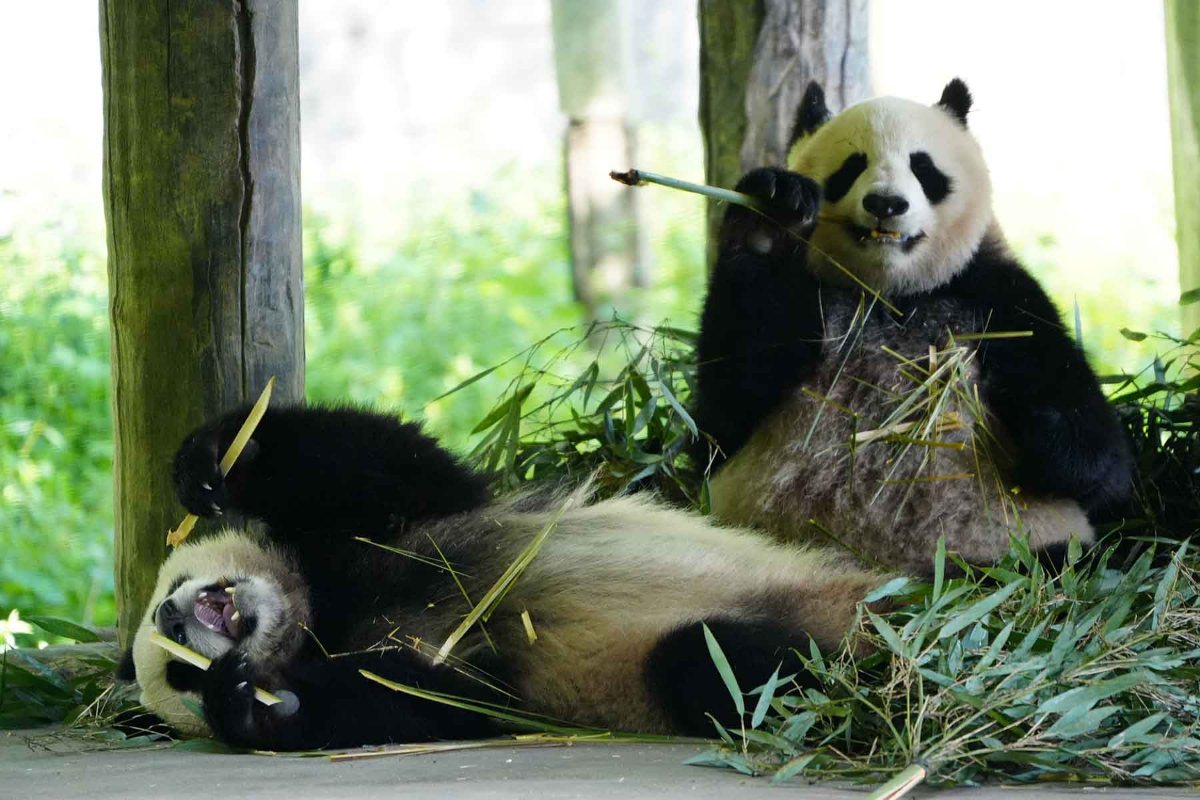
Sichuan is quietly two destinations stitched together. South and north of Chengdu, under 3,000 metres, sit the forest reserves: takin, sambar, red panda, the monkey troops, the bamboo half of the panda story. West and up sit the Kham treks: yak country, monastery towns, and passes from 4,500 to 4,950 metres. Most travellers pick one half. The best version of the province uses both — and combining them is a logistics puzzle we solve every season, so here is how the pieces fit.
The two halves.
The forest half: Labahe, Wawushan, Tangjiahe, Wolong, Bifengxia, the Pingwu and Baihe monkey valleys — everything the mammal tour, the red panda week and the reserve routes work. Walking is park paths and valley trails; the grading table puts all of it at the easy end. The high half is everything west of Kangding: the five Konka lines, Yala, Riwuqi, Yading, the plateau. The connective tissue is Chengdu — the front door both halves pour through.
Forests first, always.
The ordering rule comes from the sleeping ladders, not the scenery. The forest routes sit low and ask little of your lungs; the treks climb to 4,500-metre passes on day-counted acclimatisation ladders that begin at Chengdu or Kangding. Run the forests first and the treks’ ladders start fresh; run it the other way and you spend your first low day recovering from a pass instead of standing in a hide. The same logic puts the snow leopard week in whatever half you like altitude-wise — it lands at 3,680 metres and builds its own week — but its flights book from Chengdu either way.
The fixed-date anchor.
The practical trick is to let the fixed departures do the scheduling. The group trek, the mammal tour and the snow leopard week run on set dates with published prices; private routes flex around them. So build the calendar outward from the anchor: book the fixed departure first, then hang the private legs on either side with a Chengdu night between. The join-in page explains how the two price systems meet; the effect is a two-week trip where only one half needed a date you did not choose.
Three combinations that work.
The classic fortnight — 13 days plus buffer. The mammal tour (8 days, ending at the panda base) followed by a Chengdu night, then the Minya Konka panorama hike (5 days, beds all the way, walking to 4,500 metres). Forests, then the mountain in comfort; the least demanding high-half route pairing with the fullest wildlife week.
The autumn red-panda line — 12 days. The red panda tour (3 days, when the odds are best from late August) into the Western Sichuan tour (9 days), sharing the Chengdu hinge. This one also seasons cleanly: the red panda window and the trekking season overlap from late August to October, which is the whole trip in one sentence.
The anchor build — 11 days around a group trek. The golden monkey tour (2 days, any month to March) into the group trek’s fixed departure (9 days, April to November dates), with the Chengdu night as the seam. The cheapest two-week combination we run, and the monkeys do not care about your trekking fitness.
The honest costs.
Two things to accept before building. First, the halves rarely share a season edge perfectly: the reserve routes are at their best in the same months the highest passes are at their most scoured — the month-by-month calendar exists to find the overlap, and September–October is usually it. Second, every combination pays the Chengdu seam once per half — one night, one laundry cycle, one honest low-altitude dinner — and that seam is not dead time; it is the acclimatisation reset that lets the second half’s ladder start clean. Fourteen days is enough. Sixteen is comfortable.
Combination logic, day counts and season windows checked 7 November 2026 against the route pages.
Build one?
The Sichuan mammal tour, 8 days
How the fixed departures work