Dazhao
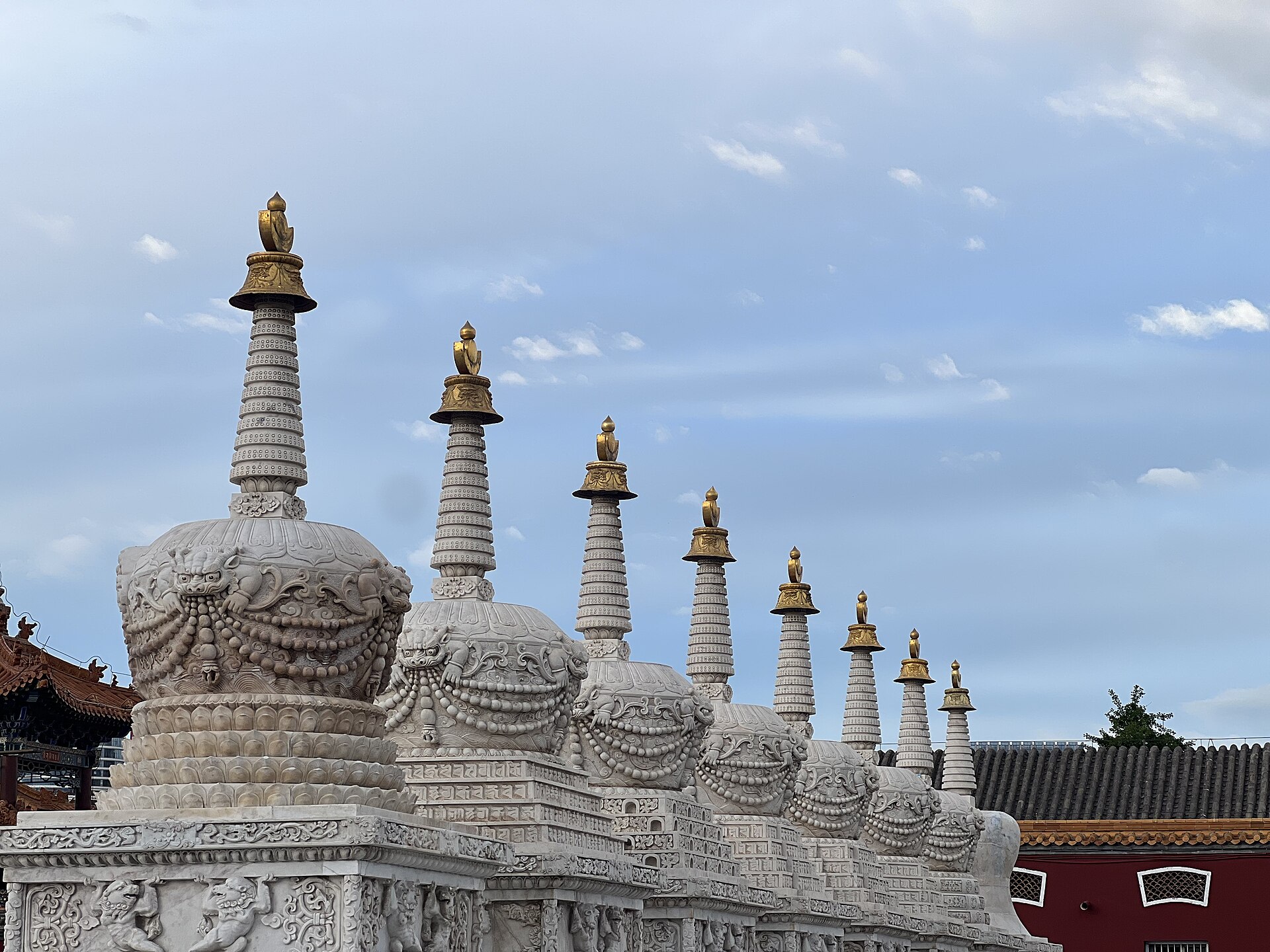
The oldest and most important Gelug temple in the region: a 3-metre silver Buddha, 10-metre gilded dragons on the columns, Ming murals, and eight stupas in the back courtyard.
 Start your enquiry
Destinations / Inner Mongolia / Hohhot
A temple city on the railway at about 1,050 metres, with the grassland everyone pictures two hours north — and a second, higher meadow beyond it.
Explore the guide ↓Central Inner Mongolia · the Tumd plain
Hohhot means “blue city” in Mongolian, and it has been the administrative centre of this part of the plateau since the Ming built Guihua here in the sixteenth century. The old town is a compact grid of Hui bakeries, temple courtyards and pedestrian streets; the new town is towers and motorways. Almost every Inner Mongolia journey passes through, and one full day is enough to see why it is worth more than a transfer.
Dazhao is the reason to come. Altan Khan began it in 1579 to receive the third Dalai Lama, finished it the following year, and filled the main hall with a silver Buddha about three metres high — which is why the temple is still called the Silver Buddha Temple. The courtyard behind holds eight white stupas in a row; the murals inside are Ming, and the roof is imperial yellow because the Qing treated the place as a family temple.
North of the city the land rises off the plain. Xilamuren, 90 kilometres out, is the closest big grassland: 720 square kilometres at about 1,700 metres, with the tourist camps that Inner Mongolia invented in the 1980s. Huitengxile, 135 kilometres east, is higher and emptier — a cold high meadow at 2,000 metres with ninety-nine small lakes and a wind farm on the ridge above it.
One temple, one museum, and two grasslands with different jobs.
The oldest and most important Gelug temple in the region: a 3-metre silver Buddha, 10-metre gilded dragons on the columns, Ming murals, and eight stupas in the back courtyard.
A serious provincial museum: dinosaur skeletons from the Gobi, Xiongnu gold, and the best explanation anywhere of how the steppe economy worked.
The nearest grassland, and the most developed. Yurt camps, horse rides, a temple at the river. Good for a first night on grass; not wilderness.
A high meadow of 600 square kilometres with small lakes, a wind farm along the ridge and 3–5 °C cooler days than Xilamuren. The better grassland, if you have the extra hour.
The city works all year; the grass does not.
The grassland window: green, warm by day, cold at night, with Naadam in late July. Book yurts ahead for the Naadam week and the national holidays.
Cool, clear and golden, with the hay cut and the camps winding down. The best month for the city and the grass together.
Cold and dry, with dust in spring. The temples and the museum are at their quietest and the grassland is brown, frozen or under snow.
A rail hub with two grasslands an hour or two north.
High-speed rail from Beijing is about two and a half hours; the airport is 15 km east of the city. Most journeys start here, spend a night, and drive north.
Xilamuren is 90 km on good road, about 1 hour 40. Huitengxile is 135 km and two and a half hours. Both are day trips in theory and overnight trips in practice.
The old town around Dazhao for the temples and the food; a yurt camp on the grass for the night sky. Two nights in the city is plenty.
Mongol, Han and Hui in one grid.
Mongolian, Chinese and Tibetan signage; Hui mosques and Lamaist temples within a block of each other; and a food culture that runs from hand-grabbed lamb to steamed mutton dumplings.
Walk clockwise around the stupas, do not photograph inside the assembly halls, and leave a small offering rather than a large one. The monastery is a working institution.
The provincial museum is the best single explanation of the steppe–farmland relationship that shaped this border for two thousand years. Two hours, ideally before the grassland.
Wind, dust and a fifteen-degree swing.
At about 1,050 metres the city asks nothing of anyone; Huitengxile at 2,000 metres is felt on the first climb and forgotten by the second day.
Thirty degrees at noon and twelve at dawn is normal. A windproof layer earns its place on the grassland more than any other item.
March and April bring yellow dust from the north, sometimes for days. If you are coming for the grass, come later; if you are coming for the temples, bring a scarf.
Tell us whether you want the nearest grassland or the emptier one, and whether a yurt night is the point or the compromise.
Start my journey brief ↗