The Hailar grassland
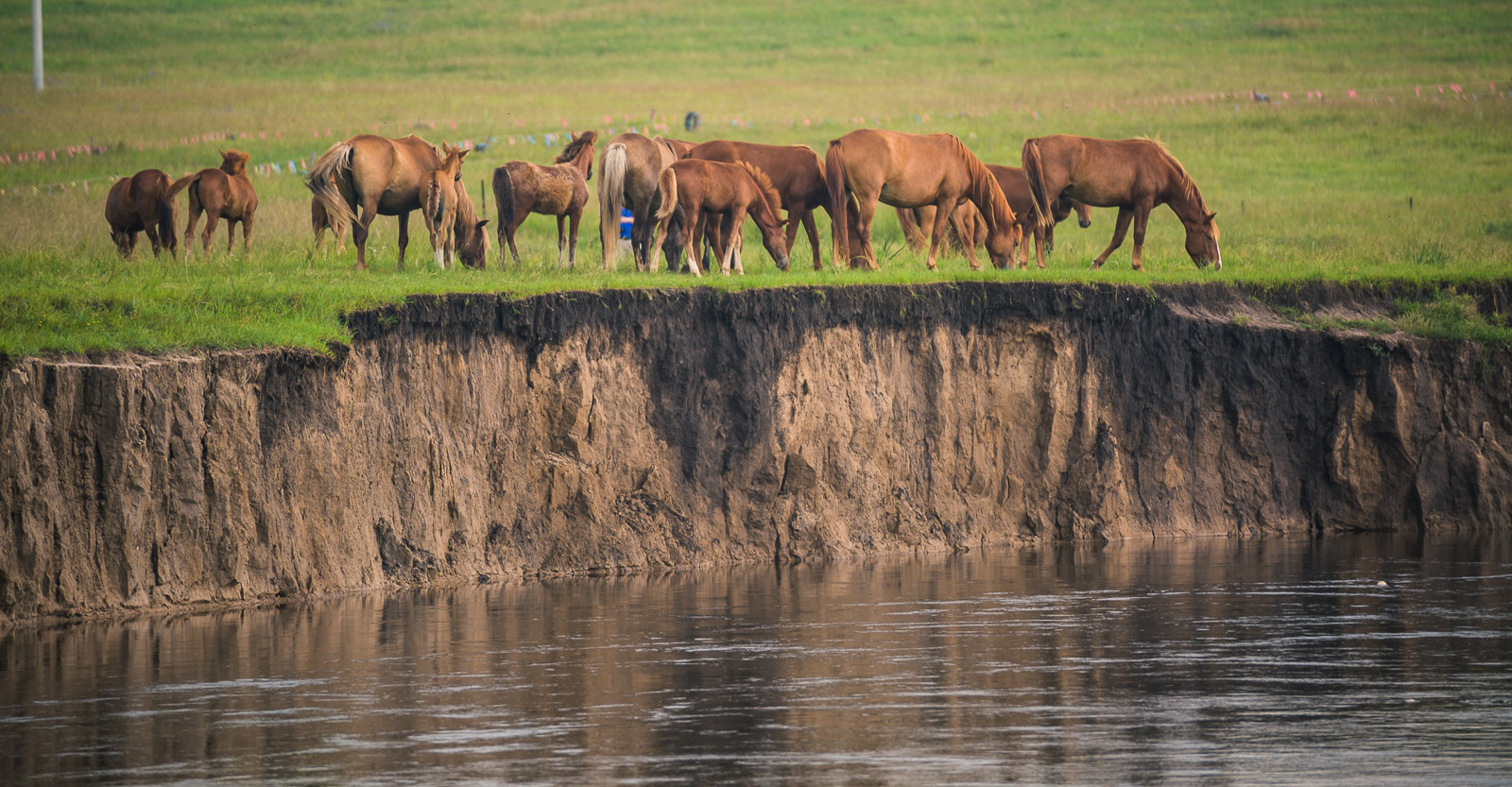
The belt north of Hailar: low hills, herds, and the wide light that makes the photographs. Best in the two hours after sunrise, when the shadows are long.
 Start your enquiry
Destinations / Inner Mongolia / Hulunbuir
253,000 square kilometres of grass, river and sky at 650 to 700 metres — larger than the United Kingdom, and the closest thing China has to a horizon.
Explore the guide ↓North-east Inner Mongolia · the Russian border
Hulunbuir is the grassland in every photograph of Inner Mongolia, and it is also the largest prefecture-level city in China by area: 253,000 square kilometres, bigger than the United Kingdom, with a population thinner than most countries’ mountain districts. The grass runs at 650 to 700 metres, which is low enough to feel soft, and the rivers — the Ergun, the Hailar, the Genhe — braid across it in loops that take an hour to drive around.
The name comes from Hulun Lake and Buir Lake, two large lakes on the Mongolian border. The landscape changes as you go north: open grass around Hailar, then the belt of birch and larch where the forest begins, then the Ergun river and the Russian border, where villages of log houses and onion domes sit among hay meadows.
It is a working landscape, not a park. Herds are moved on rotation, hay is cut in August and stacked for a winter that starts in October, and the tourist camps — yurts, horse shows, a fake wedding ceremony — are concentrated along two or three roads. Drive twenty minutes off them and you have the grassland to yourself.
Grass, a river border and one very large wetland.
The belt north of Hailar: low hills, herds, and the wide light that makes the photographs. Best in the two hours after sunrise, when the shadows are long.
The Ergun river splits into channels and oxbows north of Ergun town, with a boardwalk on the ridge above. Migratory birds in spring and autumn; mosquitoes in July.
Two border villages of log houses and Russian-speaking Buryat and Mongol families, with the river on one side and hay meadows on the other.
The fifth-largest freshwater lake in China, with sand ridges on the shore and a fish kitchen in the town. Birdlife in spring, crowds in August.
Twelve weeks of green, then gold, then white.
Full grass, warm days, cold nights and the hay still standing. July is the busiest month and the wettest; the grass is at its tallest in early July.
The best light of the year and the hay in stooks. Cold nights, clear days and a fraction of the visitors. The grassland is gold rather than green.
Winter: −20 to −40, snow on the grass, and the winter Naadam and ice festival in December and January. Beautiful, and genuinely hard.
Fly to Hailar, then drive a loop.
Hailar airport has direct flights from Beijing, Hohhot and Harbin, and the train from Harbin takes about twelve hours. Most journeys fly in and out of Hailar.
Hailar – Ergun – Enhe – Shiwei – Manzhouli is about 900 km and four to five days at a humane pace. The roads are good; the distances are the constraint.
Hotel in Hailar and Manzhouli, guesthouses in Enhe and Shiwei, and two nights with herder families on the grass if you want the silence rather than the show.
A grassland economy, and a line on the map.
Sheep and cattle in numbers that surprise people, moved between summer and winter pastures. A herder family’s year is a logistics operation, and the summer camp is its forward base.
The Ergun river is the frontier with Russia. Enhe and Shiwei were trading posts; the architecture is a mix of Chinese village and Siberian log house, and Russian is still spoken in kitchens.
Held in July and early August across the banners, with horse racing on the grassland rather than a track. Dates vary by banner; we confirm them each year.
Insects, wind and a long way between toilets.
July on the grassland is fly and mosquito season. Long sleeves, repellent with DEET and a head net for the evenings are not over-packing.
The light is strong at 700 metres and there is no shade on the grass. Hat, sunglasses, lip balm, and a jacket for the evening temperature drop.
Fill up in towns; there are stretches of a hundred kilometres with nothing. Carry water and cash — some guesthouses still do not take cards.
Tell us whether you want herds and families or space and silence. Hulunbuir can do both, but not on the same road.
Start my journey brief ↗