January – February
Snow above 1,500 metres, the Shennongjia summit road usually closed, and the canyon often in cloud. Wudang in snow is superb. Cold, and very few visitors.
 Start your enquiry
Destinations / Hubei / Calendar
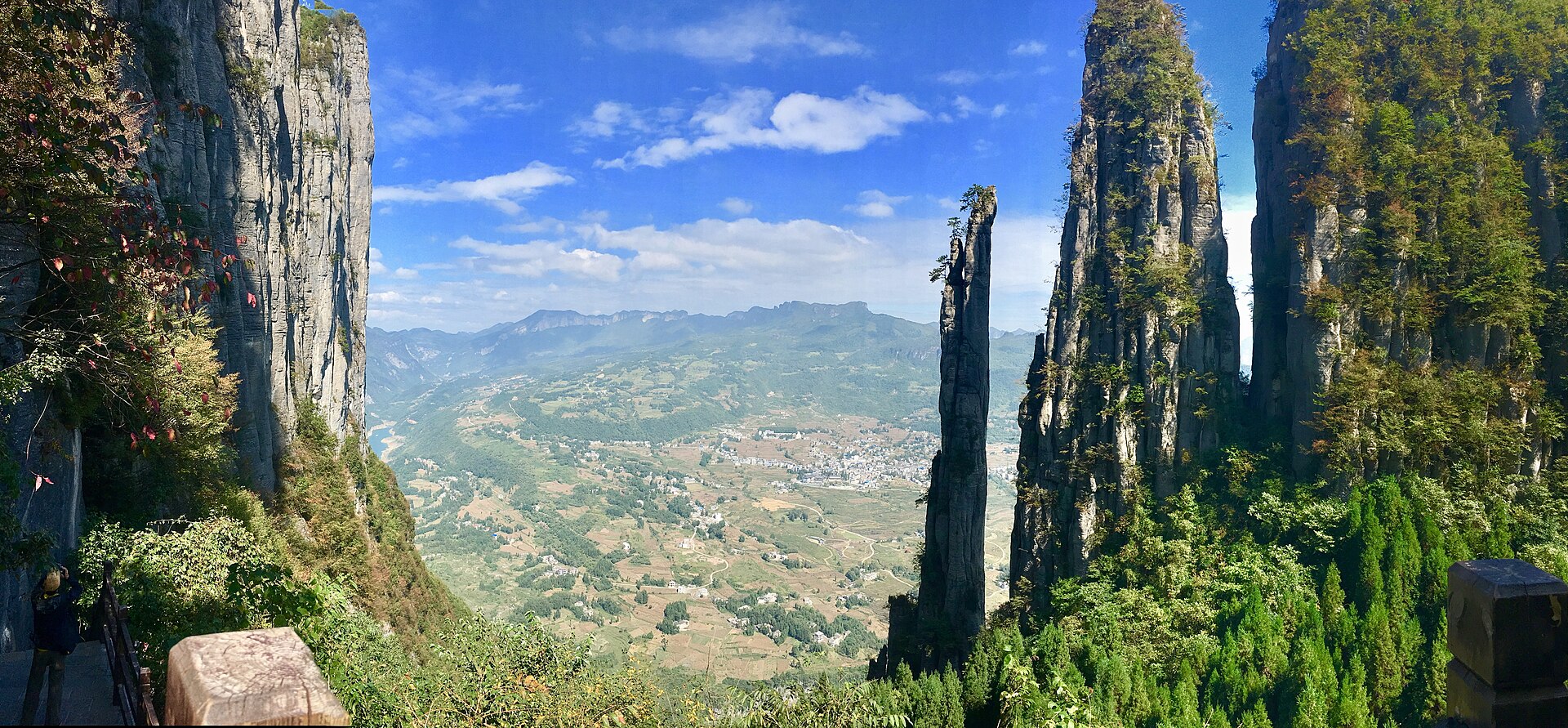
Twelve months across three mountains, one canyon and a river that is managed. The province has two good windows and a long, wet middle.
Explore the guide ↓Central China · 30–32°N
Hubei sits at the latitude where the subtropical monsoon gives way to the temperate zone, which is the reason Shennongjia has six vegetation belts and the reason the province has a monsoon season with a name. The plum rain — meiyu — arrives in the middle of June and leaves in the middle of July, and it is the single most important fact in this calendar: it decides the state of the canyon water, the visibility on the summits and the comfort of the stairs.
Either side of it are the two good windows. Spring, from late March to May, is green, cool and progressively busier. Autumn, from late September to November, is dry, clear and the best light of the year. Between them is a hot, wet summer that the mountains absorb better than the plain, and on either side of the year a winter that is genuinely cold above 1,500 metres.
What each month is actually good for.
Snow above 1,500 metres, the Shennongjia summit road usually closed, and the canyon often in cloud. Wudang in snow is superb. Cold, and very few visitors.
Rapeseed and tea on the low ground, cherry blossom in Wuhan, green returning to the canyon. April is the best single month for a first trip that mixes mountain and city.
Rhododendron on the Shennongjia ridges, dry-ish weather, and the last comfortable weeks before the rains. Busiest around the May Day holiday.
Wet, warm and misty: full waterfalls, brown tributaries, and the canyon at its most atmospheric and least photogenic. Build in a spare day.
Hot on the plain, tolerable at 1,500 metres, and the peak of the domestic mountain season. Early starts are the only defence.
The clearest air, the lowest humidity, and the reservoir at its highest. October is the best month in the province, and the busiest.
Cold, clear, and the first snow on the peaks. The canyon is empty and the light is low and hard.
Six weeks that decide the water.
A stationary front that sits over the middle and lower Yangtze from mid-June to mid-July, producing weeks of warm, steady rain and occasional downpours. It is not a typhoon and it is not continuous, but it is reliable.
Fills the canyon waterfalls, turns the Qingjiang green-brown, closes the cliff paths in thunder, and puts the Shennongjia summits in cloud for days at a time.
Either come for it deliberately — the canyon is at its most dramatic — or avoid the six weeks entirely. What does not work is a tight itinerary with no spare day in the middle of it.
Cold, clear and undervisited.
Above roughly 1,500 metres, which means Shennongjia, the upper Wudang stairs and the canyon rim. The valleys and Wuhan rarely see more than a dusting.
The Shennongjia summit road, sections of the canyon walkway after ice, and the Wudang cable car in high wind. The Wudang pilgrim stairs stay open but need care.
Rime on the forest, the canyon without crowds, and the best conditions of the year for the kind of photograph that needs mist. Bring real winter kit; the mountains are 6 to 10 degrees colder than the cities.
Four periods to avoid or book around.
The first week of May, when the whole country moves. The canyon and Wudang are at their worst; Shennongjia needs booking weeks ahead.
The first week of October, which is also the best weather of the year. Book everything, or shift to the second half of the month.
Late January or February depending on the year, when transport is at its tightest and many small restaurants close. Not a good week for a first visit.
July and August weekends bring the cities to the mountains. Weekdays in the same weeks are noticeably quieter.
Tell us the weeks you can travel and whether the canyon water or the summit visibility matters more. In Hubei those two pull in opposite directions.
Start my journey brief ↗